
Last updated October 31, 2026
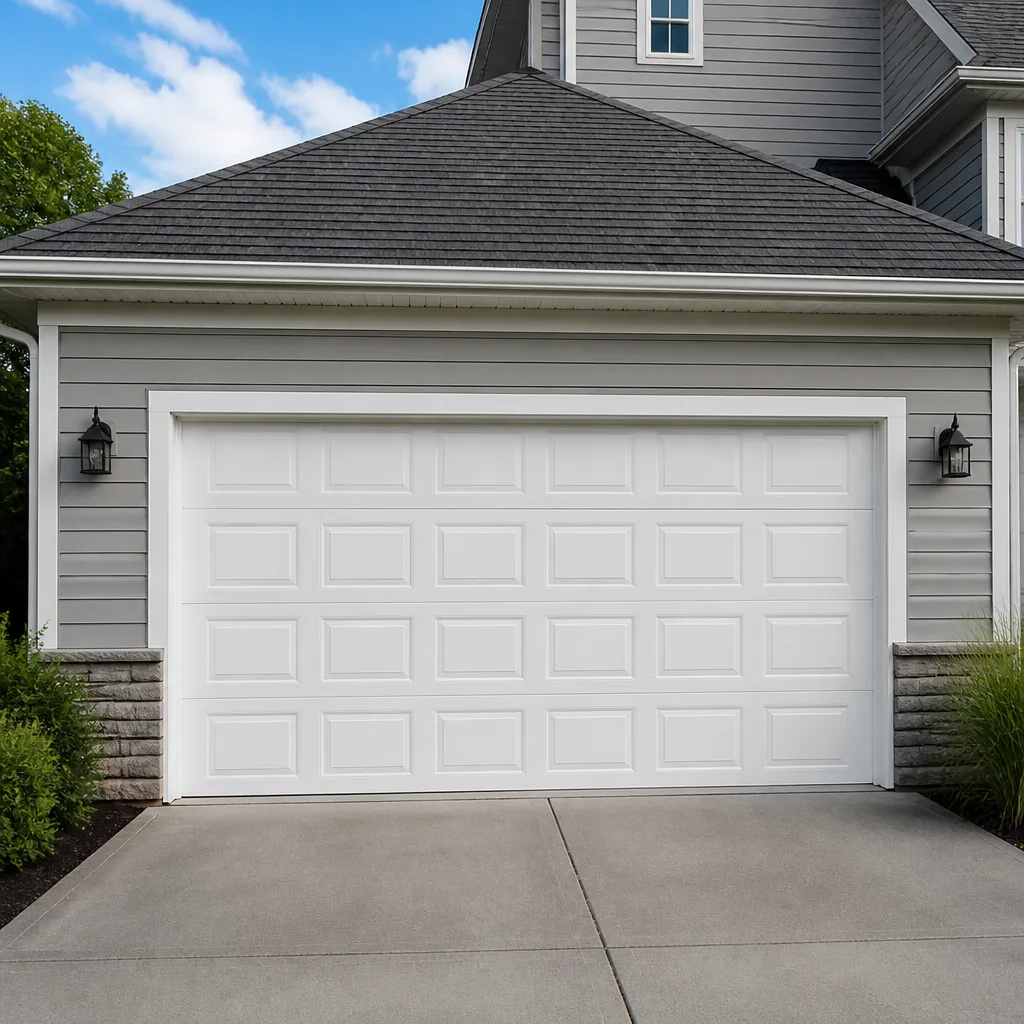 Raised-panel steel
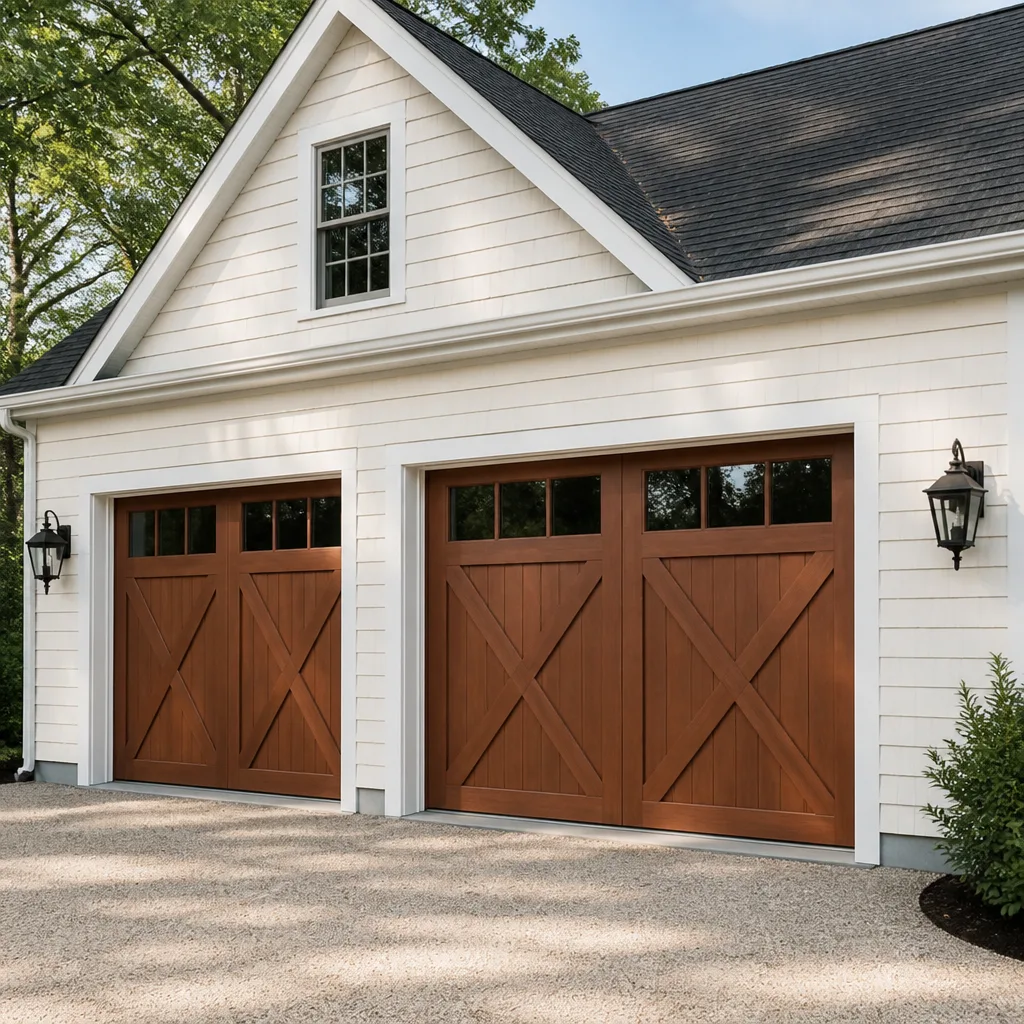 Carriage house
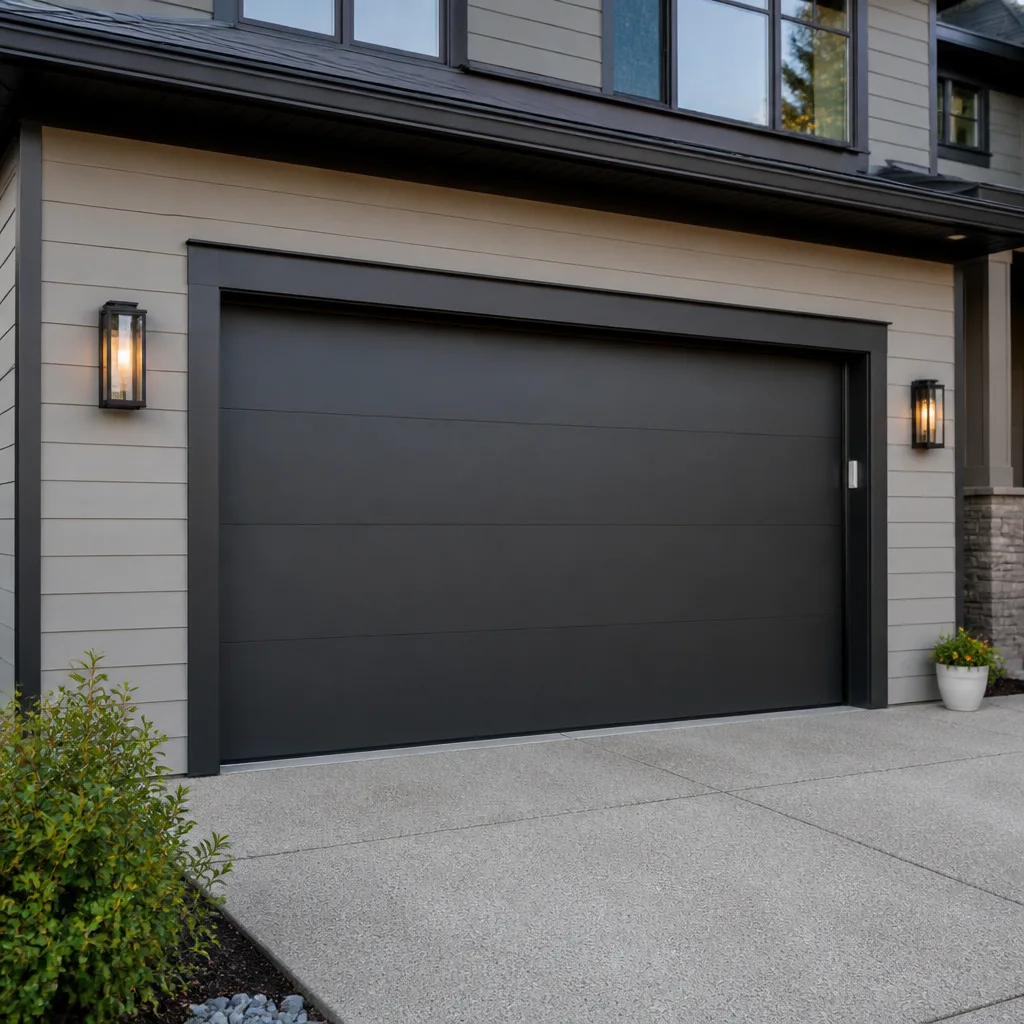 Modern flush
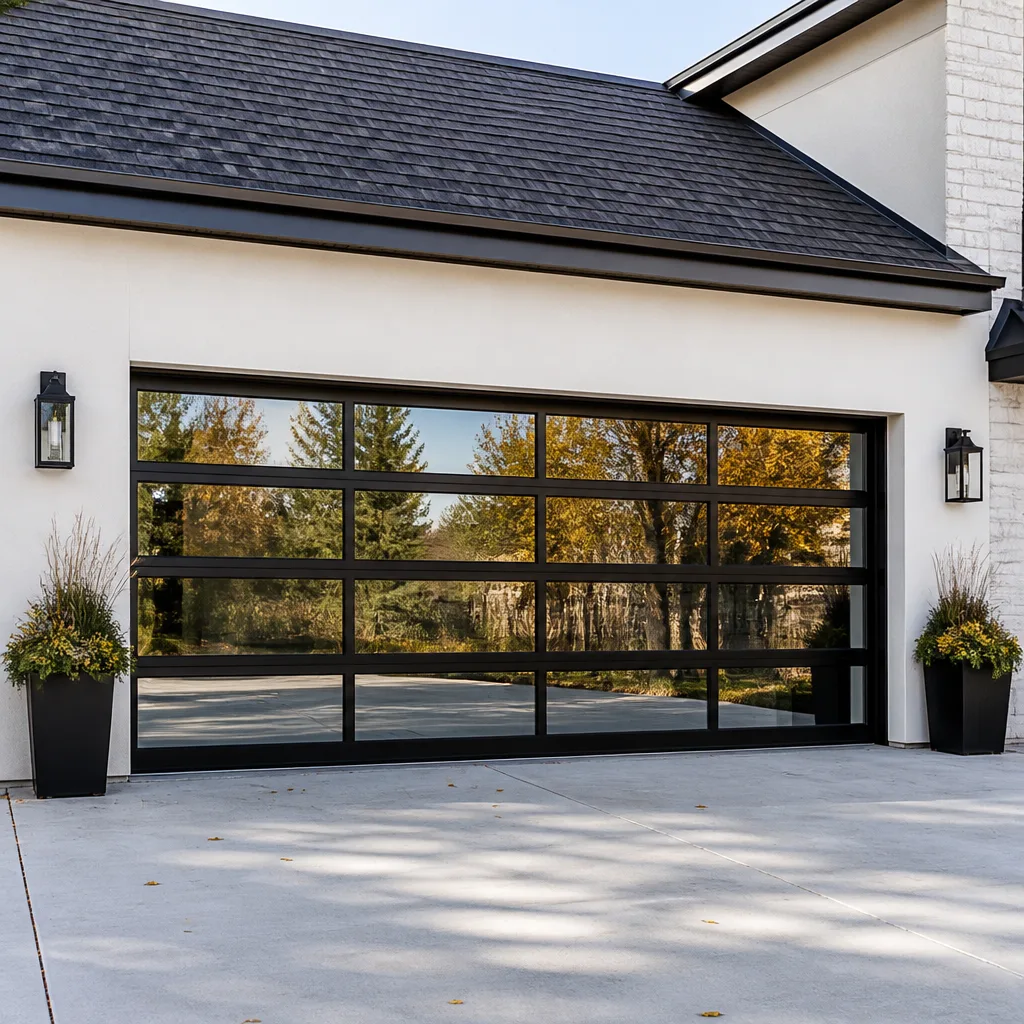 Full-view glass
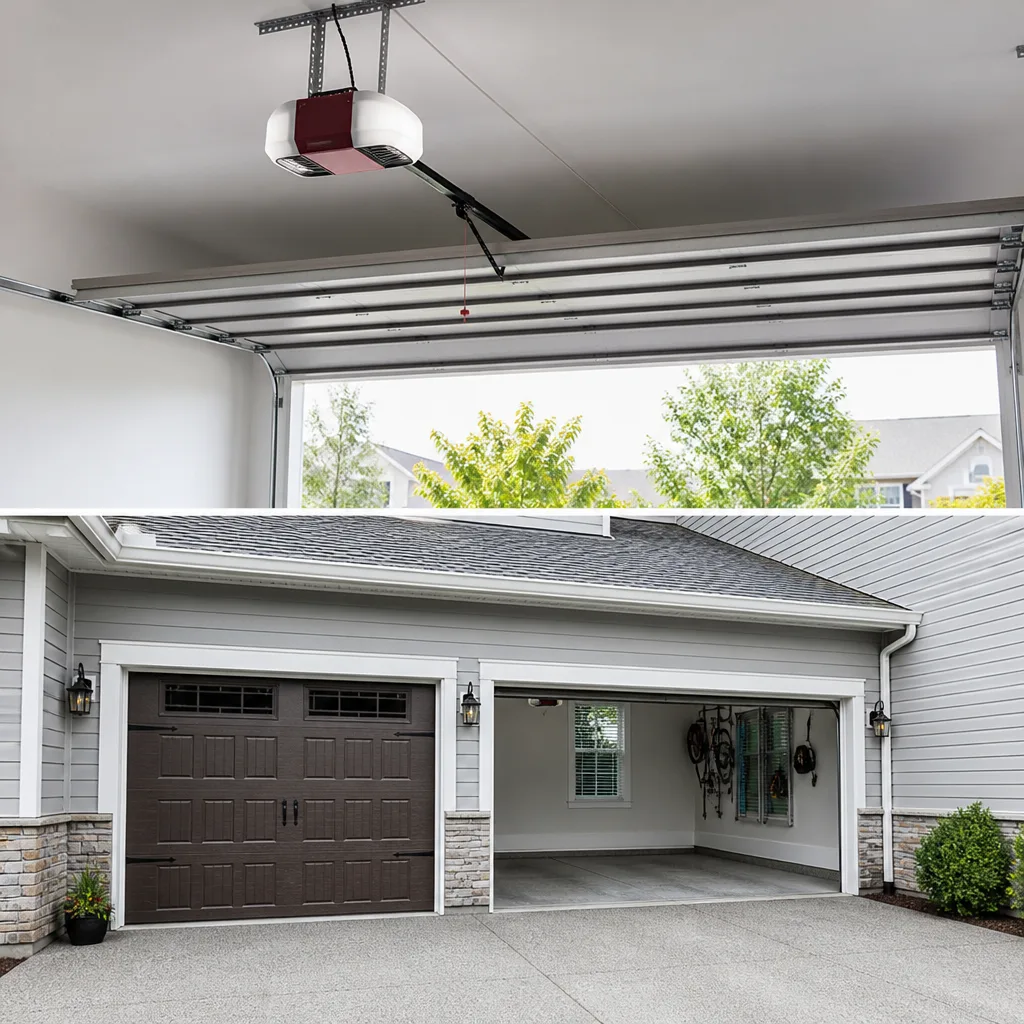 LiftMaster openers
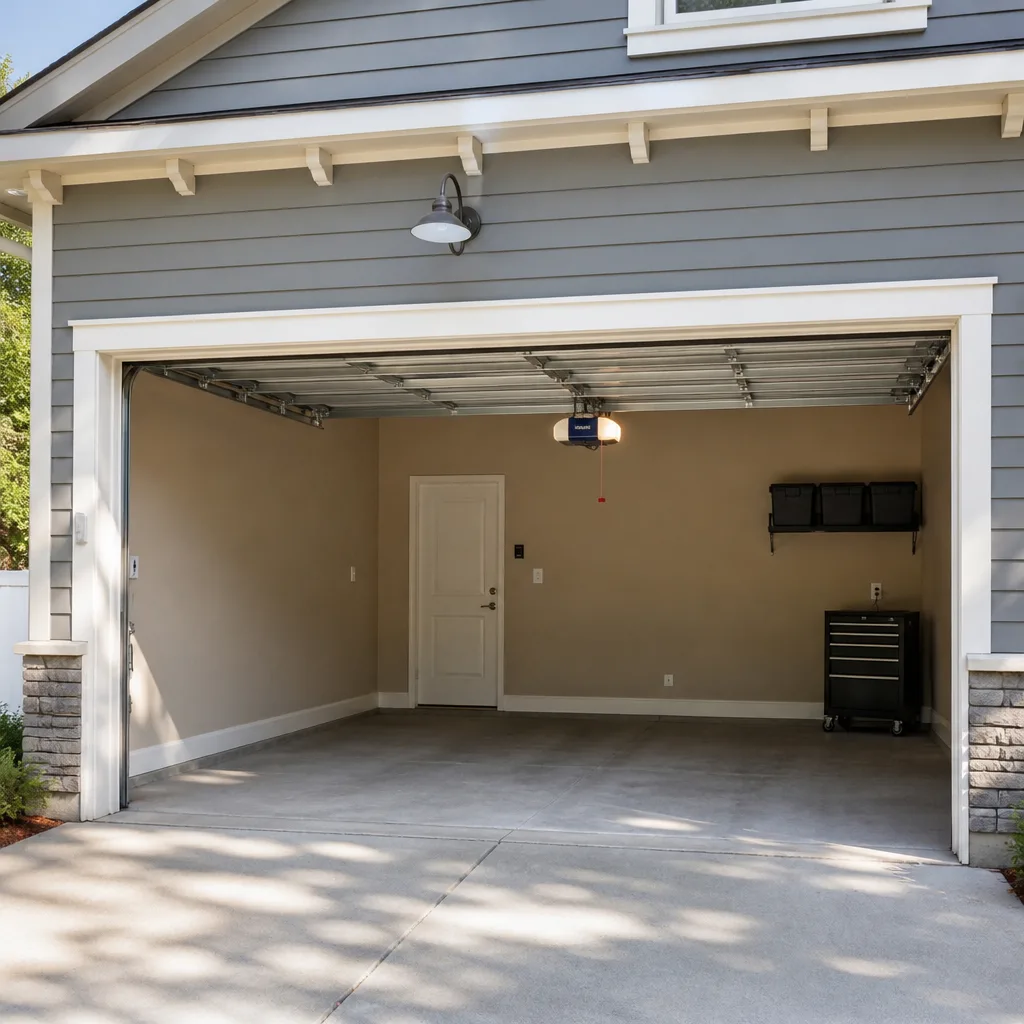 Chamberlain openers
Full 25-point door and opener safety check with every visit - springs, cables, rollers, tracks, and your LiftMaster or Chamberlain opener included
You get a price before we start. It does not change when the truck arrives.
Get your free estimateGarage Door Cost Breakdown: The The Villages Homeowner’s Reference for 2026
Most national garage door cost guides are about as useful as a weather forecast for a city you don’t live in. They average prices from Oregon, Texas, and Ohio and present that number as gospel for Central Florida. But The Villages has its own labor market, its own weather patterns that dictate which materials actually hold up, and its own supply chain realities. This reference breaks down what a garage door project actually costs here in 2026, line by line, so you can walk into any quote conversation knowing exactly where your money is going and where you have room to negotiate. We’ve built this from real project data across The Villages and the surrounding Florida market, not from a national cost calculator.
Styles & brands we work with
Quick Answer
A garage door replacement in The Villages typically runs between $1,400 and $4,200 in 2026, with most single-door steel installs landing around $2,200 to $2,800 including labor, haul-away, and a basic opener. The door panel itself usually accounts for less than half of that total. Single-car doors run lower, double-car doors run higher, and the single biggest variable is whether you’re replacing just the door or the door plus opener plus tracks.
Table of Contents
- The Real Line-Item Breakdown: Where Your Money Goes
- Single-Car vs. Double-Car: Why the Math Isn’t Double
- Material Costs: Steel, Aluminum, Wood Composite, and Fiberglass in Florida
- Why Two Quotes for the Same Door Can Be $800 Apart
- Where to Cut Corners (and Where You Absolutely Shouldn’t)
- Garage Door Opener Costs: The Line Item Most Quotes Separate
- Hidden Fees: Permits, Haul-Away, and the Stuff Nobody Tells You Up Front
- Common Mistakes to Avoid
- When to Call a Professional
- Frequently Asked Questions
- The Bottom Line
The Real Line-Item Breakdown: Where Your Money Goes
Here’s the statement most homeowners never hear: the garage door panel you pick from the showroom floor represents roughly 40 to 50 percent of your total project cost. The rest goes to hardware, labor, and the things that don’t photograph well in catalogs. In The Villages, where many homes are Spanish-style or Mediterranean-inspired designs with specific door dimensions, the labor component runs slightly higher than the national average because installers are handling heavier doors and longer track runs to accommodate Florida’s high ceilings and storage-friendly garages.
We walk through every quote with our customers so nothing sits hidden in a lump-sum line. Here’s what a typical mid-range single-car replacement actually contains in Central Florida right now:
- Door panel (steel, raised-panel, insulated): $600 to $1,100 depending on gauge, insulation rating, and finish
- Torsion springs (pair): $150 to $280. In our experience, Florida humidity and salt air shorten spring life compared to inland states. Buy the higher-cycle springs.
- Tracks and hardware: $180 to $350. This includes vertical and horizontal track sections, brackets, rollers, and fasteners
- Opener (belt-drive, mid-tier): $250 to $450 if bundled, $400 to $600 if quoted separately later. More on this below.
- Labor: $400 to $700 for a straightforward same-size replacement. The Villages homes built with vaulted or finished garage ceilings add time, and time is money.
- Permit: $75 to $200 in Sumter County depending on scope. Not always required for a same-size door swap, but required if you’re changing the opening or adding structural support.
- Haul-away and disposal: $75 to $150. Old doors, springs, and track metal can’t go in your curbside bin.
So when a national guide tells you “average garage door replacement: $1,200,” what they’re really quoting is the panel and maybe the labor for a budget steel door in a low-cost state. That number doesn’t survive contact with a real quote in The Villages for anything other than the most basic uninsulated door with no opener and a hand-tightened spring conversion.
The Villages Garage Door Service gives you this same breakdown on every written estimate, so you can compare quotes apples to apples. If another company hands you a single number with no detail, ask them to break it out. If they won’t, that’s information too.
Single-Car vs. Double-Car: Why the Math Isn’t Double
It seems logical that a two-car garage door should cost exactly twice what a one-car door costs. It doesn’t. And understanding why just saved you from overpaying or under-budgeting.
A double-car door does use more steel, more insulation, and wider hardware. Panels run $900 to $1,700 versus $600 to $1,100 for a single. But here’s the key: labor for a double door is only about 30 to 40 percent higher than a single, not 100 percent. The install crew still makes one trip, still does one setup, still runs one set of measurements. The work itself takes maybe two hours longer at most. So the labor line item scales modestly while the material line item scales more meaningfully.
The result: a double-car door replacement in The Villages typically lands between $2,300 and $4,200, while a single-car runs $1,400 to $2,800. The ratio is roughly 1.6 to 1, not 2 to 1. Knowing this protects you from both directions: you won’t panic when a double-door quote comes in high, and you won’t accept a single-door quote that’s padded with double-door labor assumptions.
One more local angle: many homes in The Villages use a double-car garage with a single oversized door rather than two separate doors. That configuration requires a wider torsion spring assembly and sometimes a center reinforcement strut, adding $100 to $200 to hardware cost. Builders chose this layout because it maximizes usable parking width, and the trade-off shows up in your replacement quote.
What Actually Scales vs. What Doesn’t
- Scales with door size: panel material, insulation, spring gauge, number of hinges and rollers
- Scales modestly: track length, weatherstripping, labor hours
- Doesn’t scale at all: trip fee, setup time, permit filing, disposal logistics
Material Costs: Steel, Aluminum, Wood Composite, and Fiberglass in Florida
Material choice in Florida isn’t an aesthetic decision. It’s a durability calculation. The Villages sits in a climate that punishes certain materials harder than almost anywhere else in the country: intense UV exposure, summer humidity that rarely drops below 70 percent, afternoon thunderstorms, and the occasional hurricane-force wind event. Here’s how the four main door materials hold up here.
Steel (galvanized, insulated): The dominant choice in The Villages for good reason. A quality 24-gauge insulated steel door runs $600 to $1,400 as a panel and survives Florida conditions better than anything else on the market. Insulated steel doors with a polyurethane core also help keep garage temperatures manageable in July, which matters when your garage doubles as a workshop or golf cart storage. Higher gauge numbers mean thinner steel; you want 24-gauge or lower-number gauge for dent resistance.
Aluminum: Lightweight and rust-resistant, which sounds perfect for Florida until you account for hail and impact. Most aluminum doors use thinner panels that dent more easily than steel. They run $500 to $1,000 for the panel and make sense for carriage-house style looks or when weight is a concern. But if you’re parking golf carts and cars in a high-traffic garage, steel will hold its looks longer.
Wood composite and wood-look: Real wood doors are gorgeous and rare in The Villages for a reason: they warp, swell, and demand refinishing every two to three years in Florida humidity. Wood composite doors (fiberboard or MDF core with a wood-grain vinyl skin) give the look without the maintenance headache, at $800 to $1,600 per panel. True solid wood starts around $2,000 and goes up fast. We install wood-look doors regularly for homeowners who want that estate aesthetic on stucco-fronted homes without the upkeep bills. The garage door installation team can walk you through the trade-offs.
Fiberglass: The niche player. Fiberglass doors resist salt corrosion better than steel, which matters within a few miles of the coast, but The Villages sits inland enough that salt exposure is minimal. Fiberglass runs $700 to $1,300 and makes sense mostly for custom shapes or translucent panel designs. Unless you have a specific reason, steel remains the value pick in this market.
Whatever material you choose, Florida building code requires wind-load rating documentation for garage doors in most of the state. A reputable installer pulls this certification as part of the permit application. If your quote doesn’t mention wind load, ask.
Why Two Quotes for the Same Door Can Be $800 Apart
You’ve done the homework. You’ve picked the exact same Clopay steel door, the same LiftMaster opener, the same insulation spec. Two companies quote you. One is $800 higher. What’s happening?
Usually one of four things, and none of them is mystery pricing:
- Brand markup: Some installers carry one primary door brand and charge a premium for anything outside their supply chain. We service and install across Clopay, Amarr, Wayne Dalton, Raynor, and the major opener brands including LiftMaster, Chamberlain, and Genie. Because we’re factory-familiar with the brand you already own, we’re not force-fitting a replacement through a single distributor’s price list. That distribution flexibility shows up in the final number.
- Travel and overhead structure: A company based 45 minutes from The Villages builds that drive time into every quote. A company running a large fleet and a call center builds in more. Local operation means local truck routes.
- Scope assumptions: One quote might include new photo-eye sensors. Another might assume the existing ones work. One might include replacing the weather seal on the bottom of the door. Another might not. We spell out every component on our estimates so you know exactly what you’re comparing.
- Spring quality: An $800 difference sometimes hides in the springs. Standard springs are rated for 10,000 cycles, which in a Florida garage with daily use translates to roughly 6 to 8 years. High-cycle springs rated for 25,000 to 30,000 cycles cost $100 to $150 more per pair. A quote that seems “cheaper” might be installing the shorter-life part. We always quote high-cycle springs and note it on the estimate.
Ask every bidder the same three questions: What exactly is included? What spring cycle rating am I getting? Are you replacing the weather seal and sensors? Our team at The Villages Garage Door Service answers these before you even ask, because we’d rather have a customer who understands their quote than one who’s surprised later.
Where to Cut Corners (and Where You Absolutely Shouldn’t)
Most homeowners hear “where can I save money” and brace for a sales pitch. Here’s the honest version from someone who’s been doing this in The Villages for years, plus a maintenance checklist to protect your investment. There are exactly three places you can trim cost without creating a future problem, and exactly three places where saving $100 now becomes a $400 repair in eighteen months.
Where You Can Save Without Regret
- Opener tier: You don’t need the top-of-line smart opener with camera, battery backup, and app control if your current opener’s job is “opens and closes.” A solid belt-drive Chamberlain or Genie mid-tier unit covers 95 percent of daily use. Save $150 to $250 here if the budget is tight.
- Panel finish: Faux woodgrain finishes and custom colors add $200 to $400 to the panel cost. A clean white or almond raised-panel steel door does the same structural job. This is the easiest place to trim the total.
- Decorative hardware: Magnetic or installed decorative hinges and handles run $80 to $200. They’re purely aesthetic. Skip them now, add them next year if you want the look.
Where Cutting Corners Is a Bad Idea
- Springs: This is the worst possible place to save money. Low-cycle springs fail, and when a torsion spring fails under tension it’s dangerous. The repair costs more than the initial savings because you’re paying for emergency labor plus the spring you should have bought in the first place. Always buy high-cycle springs. No exceptions.
- Installation labor: A poorly hung door operates loud, wears out components prematurely, and eventually falls out of square. Florida humidity makes alignment issues worse because wood frames swell and shift. Pay for a crew that measures, levels, and tests under load.
- Track replacement: Some installers will reuse old track to shave cost. If the old door failed, the track has been through the same wear. Bent or worn track against new rollers shortens the life of everything. This is a false economy.
We frame every quote as a repair-vs-replace decision because we handle both. If your door can be safely repaired for $300 and give you three more years, we’ll tell you that. The garage door repair side of our business exists precisely because we don’t push replacement when repair makes more sense.
Garage Door Opener Costs: The Line Item Most Quotes Separate
Here’s a quiet industry practice that drives homeowners crazy: many installers quote the door replacement and then mention, almost as an afterthought, that the opener is “separate.” Suddenly a $2,200 quote is a $2,800 project. Knowing the opener cost landscape before you sit down with any installer puts you in control of that conversation.
In The Villages, garage door opener costs for 2026 break down roughly like this:
- Chain-drive, basic, no smart features: $180 to $280 installed
- Belt-drive, quiet, basic smart features: $300 to $450 installed
- Belt-drive, quiet, full smart integration, battery backup: $450 to $650 installed
- Wall-mount (jackshaft) opener, ideal for high ceilings: $500 to $800 installed
The belt-drive recommendation is standard for The Villages because many garages sit directly beneath or adjacent to living space and bedrooms. The rubber belt operates significantly quieter than a chain. If your garage is detached or you genuinely don’t care about noise, a chain-drive saves you $100 to $150.
We work on and install LiftMaster, Chamberlain, Genie, and Raynor openers, which covers the majority of what’s already mounted on ceilings in The Villages. If your current opener is failing but the door itself is fine, a garage door opener repair might solve the problem for a fraction of replacement cost. Motors, remotes, keypads, and smart-home integration are all repairable components in most cases.
Opener Questions to Ask Before You Buy
- What’s the horsepower rating, and does it match my door weight? A heavy wood-look door needs more motor.
- Does the opener include a battery backup for power outages? Summer storm season makes this more relevant in Florida.
- Is the installation including new sensors and wall control, or just the motor unit?
- Will the opener integrate with my existing smart-home system, or does it require proprietary apps?
Hidden Fees: Permits, Haul-Away, and the Stuff Nobody Tells You Up Front
The single biggest source of sticker shock in garage door projects is not the door. It’s the fees that don’t appear until the final invoice. We list these on every written estimate from the start, because a customer who sees the total picture up front is a customer who can plan their budget.
Permits: Sumter County requires a permit for garage door replacement when the work involves structural changes, new openings, or certain retrofit work. A straightforward same-size door swap often doesn’t require one, but doors with wind-load considerations or homes in designated wind zones sometimes do. Your installer should know whether your specific project triggers a permit requirement and include the fee if it does.
Haul-away: Your old garage door weighs 150 to 300 pounds depending on size and material. The springs are under tension and need safe removal. The tracks are metal. None of this belongs in residential trash pickup. Professional haul-away runs $75 to $150 and is worth every dollar versus the alternative of trying to transport a 16-foot steel door yourself.
Old opener removal: If you’re replacing the opener along with the door, most companies include removal with the new install. Some charge separately. Clarify this.
Sensor and wiring updates: Building code now requires photo-eye sensors on all residential garage doors. If your current setup predates that requirement or the sensors are damaged, new ones add $80 to $150. This is safety equipment, not an upsell.
Spring conversion: If your existing door uses extension springs (the long ones running parallel to the tracks) and you’re upgrading to a torsion system (the one mounted above the door opening), that conversion adds $200 to $350. Most modern doors in The Villages already use torsion systems, but older homes occasionally surprise us.
The way to avoid surprises is simple: demand a line-item written estimate before signing anything. If a company won’t provide one, that’s a red flag. Every estimate we write shows the full project cost broken down by component, with the price locked before any work begins. You’ll know the total before we start, and that total doesn’t change once we see the job.
Common Mistakes to Avoid
- Buying the cheapest spring to save $100 now. In Florida humidity and with daily use, a 10,000-cycle spring fails in 6 to 8 years. The 25,000-cycle spring costs marginally more and roughly triples the lifespan. Cheap springs fail most often when the door is partially open, which is exactly when a spring failure is most dangerous.
- Assuming the opener is included in the door quote. Ask explicitly. If the quote doesn’t say “including opener,” it doesn’t include an opener.
- Skipping insulation to save money. An uninsulated steel door in a Florida summer turns your garage into an oven and raises cooling costs for any adjacent living space. The insulation payback in The Villages is real, and it also makes the door quieter.
- Trying to DIY a torsion spring replacement. We’ll be blunt: this is the one repair where the injury risk is severe enough that even seasoned installers treat the process with respect. Winding a torsion spring releases stored energy that can cause serious injury. Call a professional.
- Not asking about wind-load compliance. Florida code isn’t optional. A door without proper wind-load documentation can fail inspection and complicate insurance claims. Any legitimate installer in The Villages handles this automatically, but you should hear it mentioned.
- Choosing a company without local presence. A remote dispatcher booking jobs from another county means longer wait times for service and less accountability when something needs follow-up. Your neighbors’ garage door specialist works in The Villages because their reputation here is their business model.
When to Call a Professional
Some garage door work is genuinely dangerous, and knowing where the line sits protects you and your family. Call a professional for any torsion spring replacement or adjustment, any work involving the cables under tension, any track realignment on a heavy double door, and any opener replacement involving electrical wiring. If your door is off its track, do not attempt to force it back into place while the springs are still loaded. Disconnect the opener and leave the door alone until help arrives.
For everything else: unusual noises, slow operation, remote issues, or a door that simply looks worn. Start with a phone call. The Villages Garage Door Service offers free estimates in The Villages. Call (855) 382-0952 and we’ll diagnose the issue and give you an honest recommendation whether repair or replacement makes better financial sense. If repair is the right call, we’ll say so. If replacement is the right call, you’ll know exactly why and exactly what it costs before anything starts.
Frequently Asked Questions
Expect $1,400 to $4,200 depending on door size, material, insulation, and whether you’re replacing the opener at the same time. Most single-door steel replacements in The Villages land between $2,200 and $2,800 including labor and haul-away. Call (855) 382-0952 for a free written estimate with a complete line-item breakdown.
Not automatically. Many installers quote the door separately from the opener. A new belt-drive opener adds $300 to $450 installed. If your existing opener is less than 8 to 10 years old and still works, you can often keep it. We’ll give you an honest assessment of your current opener’s remaining life before recommending a replacement.
For broken springs, doors off track, or a door that won’t close, we prioritize safety issues and work to get someone to your home as quickly as possible. Same-day service is often available for spring failures and other urgent repairs in The Villages. Call (855) 382-0952 and we’ll tell you exactly when we can be there.
No. The price we quote in writing is the price you pay, and it’s confirmed before any work begins. We can quote most replacements accurately over the phone using your current door’s measurements, and we’ll confirm those measurements on site before starting. If anything about the scope changes, we tell you before proceeding, never after.
For repairs, yes. Our trucks are stocked with common springs, rollers, cables, sensors, and opener components across the major brands we service. For full door replacements, your specific panel is ordered from the manufacturer and scheduled for installation when it arrives.
A standard single-car door replacement takes 3 to 5 hours including removal of the old door, new hardware installation, opener mounting, and full testing. Double-car doors take 4 to 6 hours. We schedule the work for a single visit so you’re not living with a gaping garage opening overnight.
The Bottom Line
A garage door replacement in The Villages is a $1,400 to $4,200 decision where the visible part, the panel, is less than half the total cost. The rest goes to springs, tracks, opener, labor, and the fees that separate an honest quote from a lowball one. You save real money by choosing a mid-tier opener, skipping decorative upgrades, and working with an installer who services multiple brands rather than marking up a single line. You lose money in the long run by cheaping out on springs, skipping insulation, or hiring based on price alone. The Villages Garage Door Service gives you the full breakdown on every estimate because understanding your quote is the first step toward trusting it. For more guides & resources, visit our blog.
Written by the team at The Villages Garage Door Service, serving The Villages since 2016.
See the difference
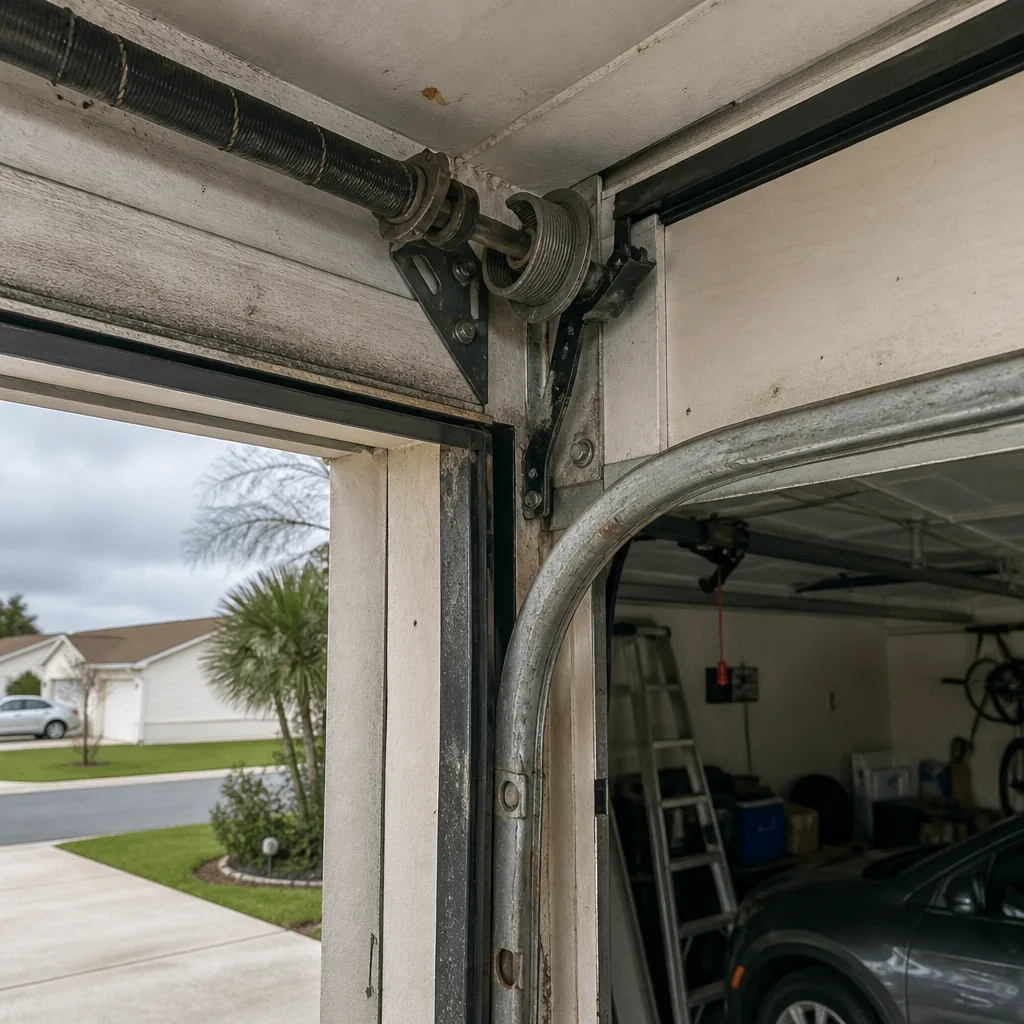 Before
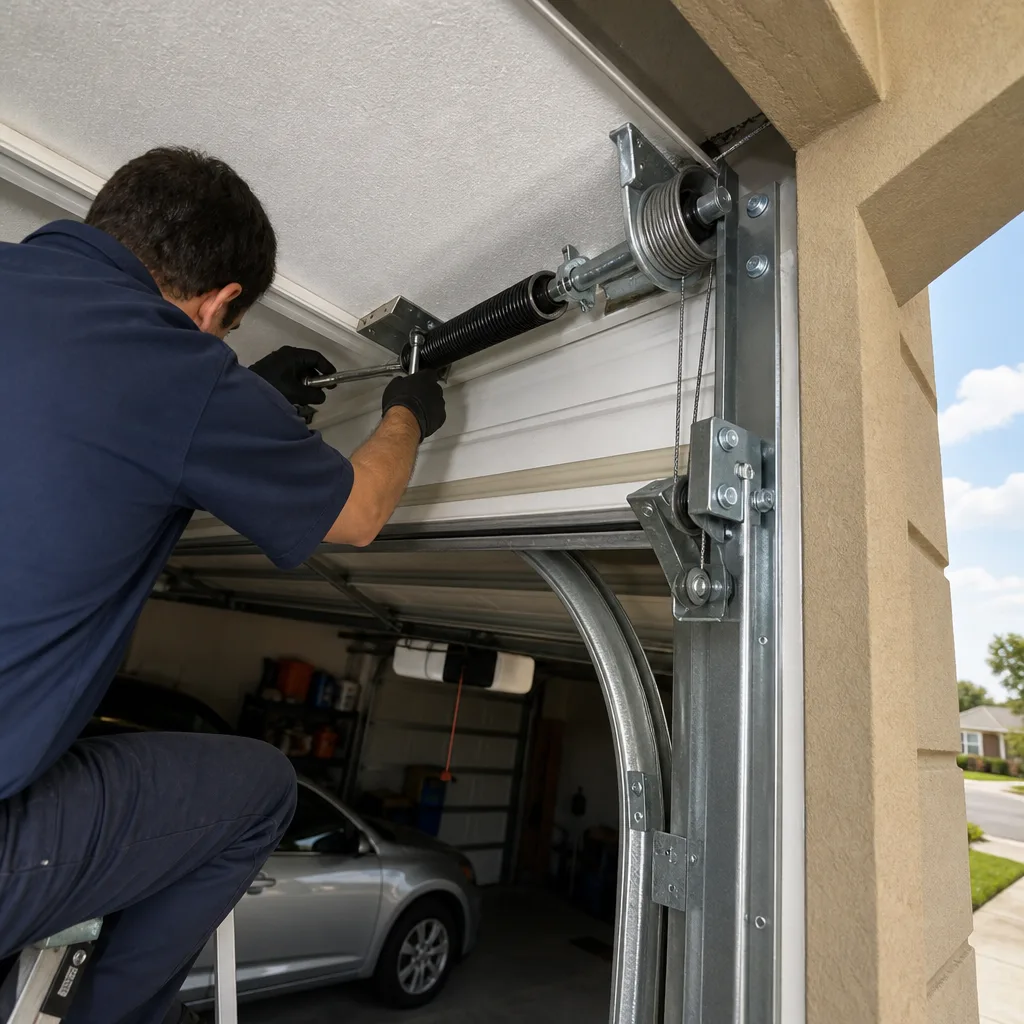 After
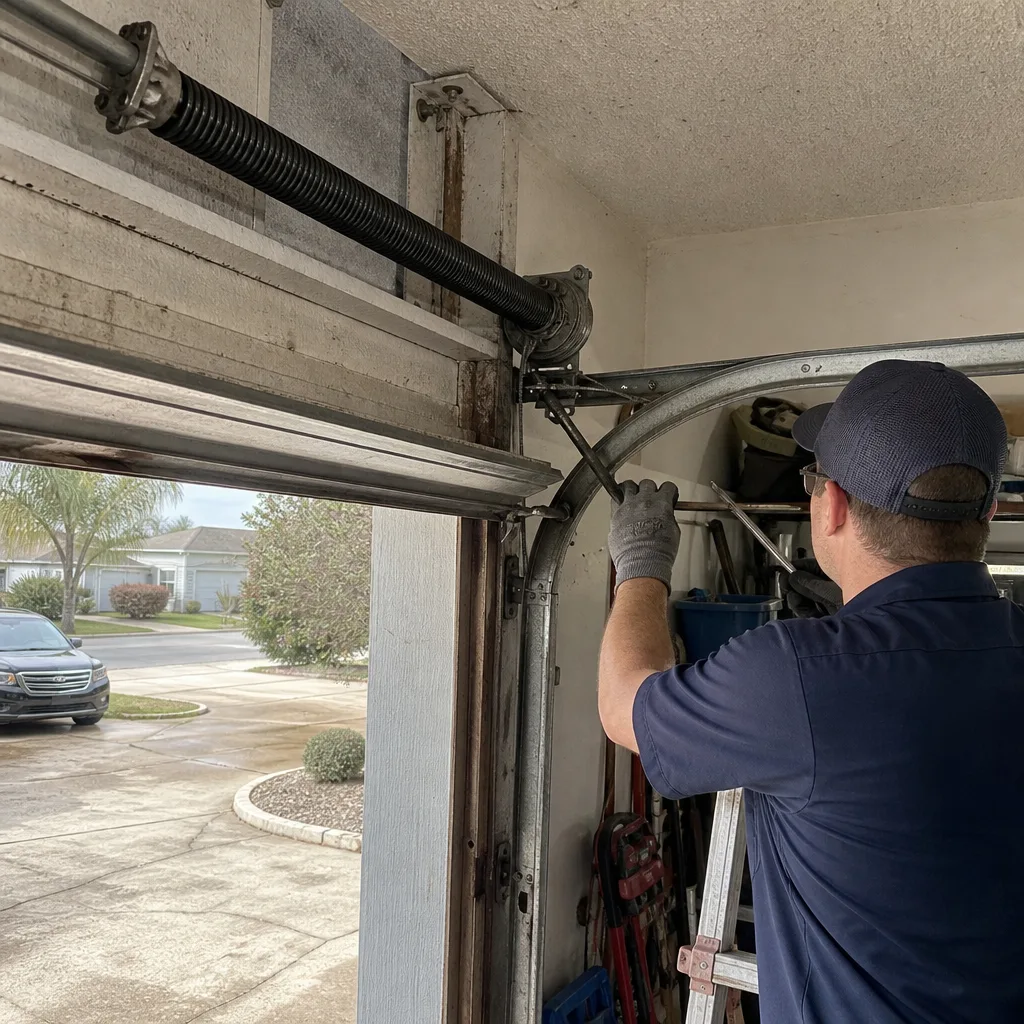 Before
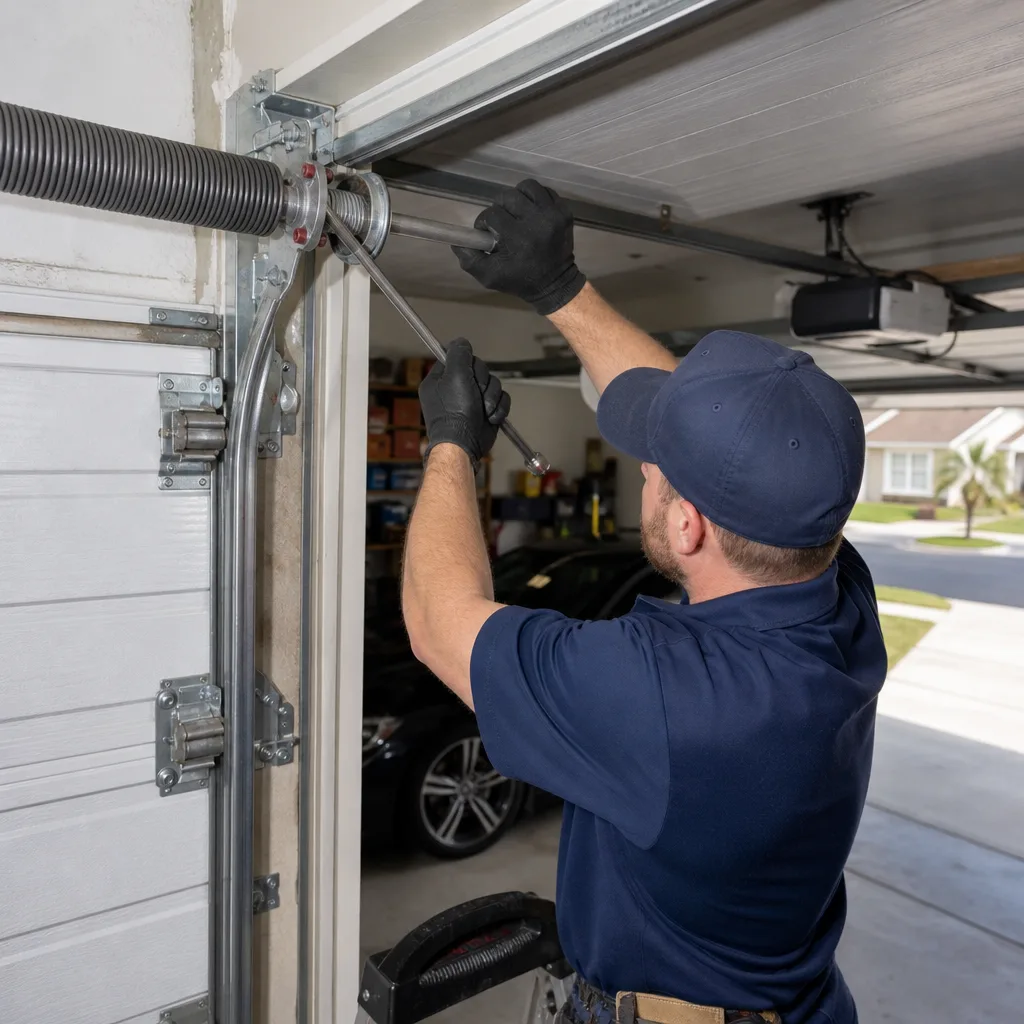 After
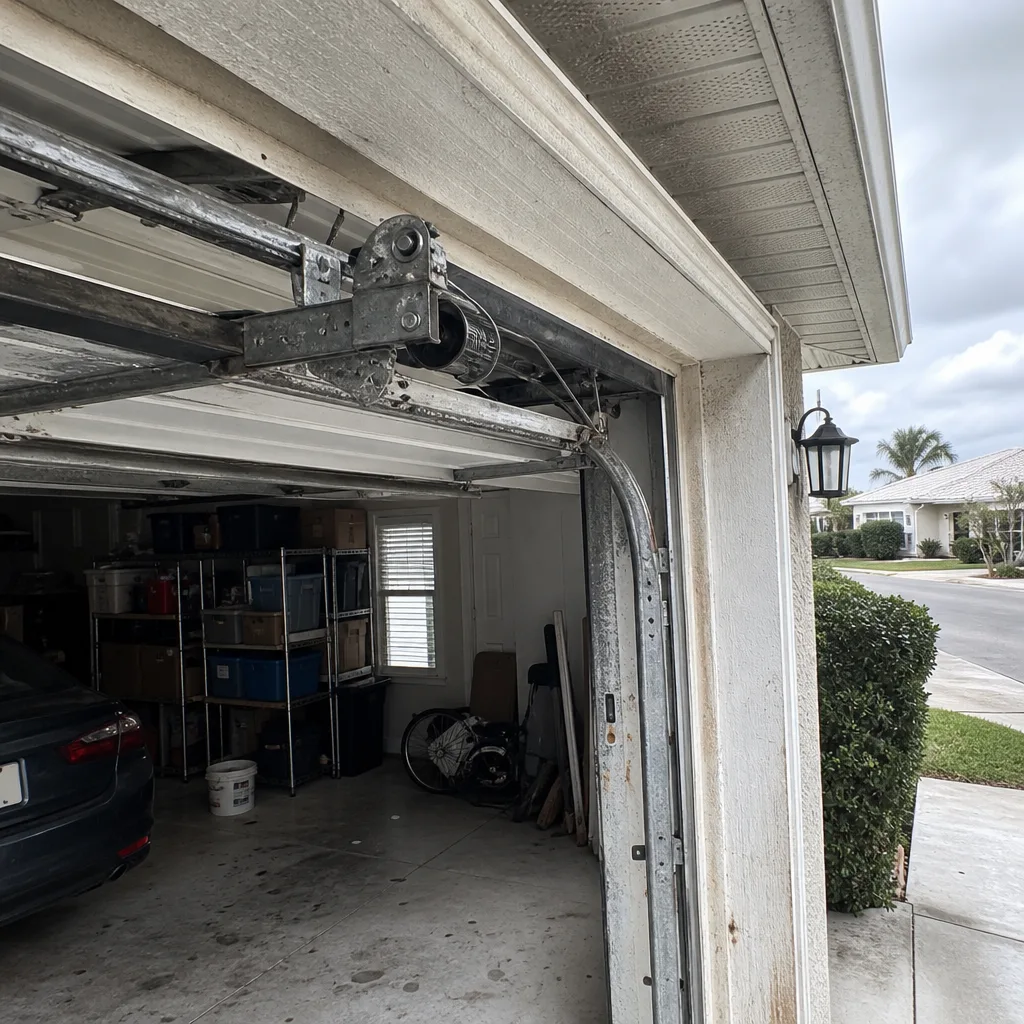 Before
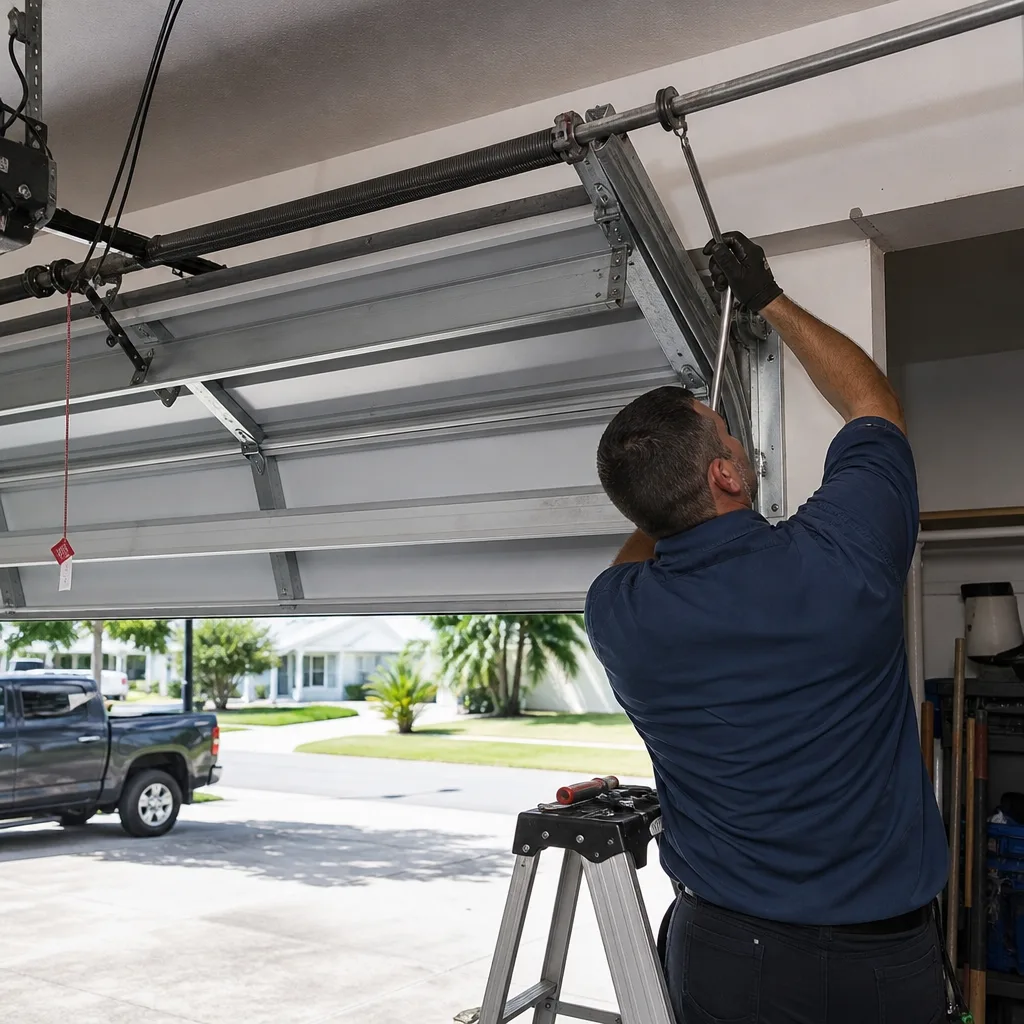 After