
Last updated October 31, 2026
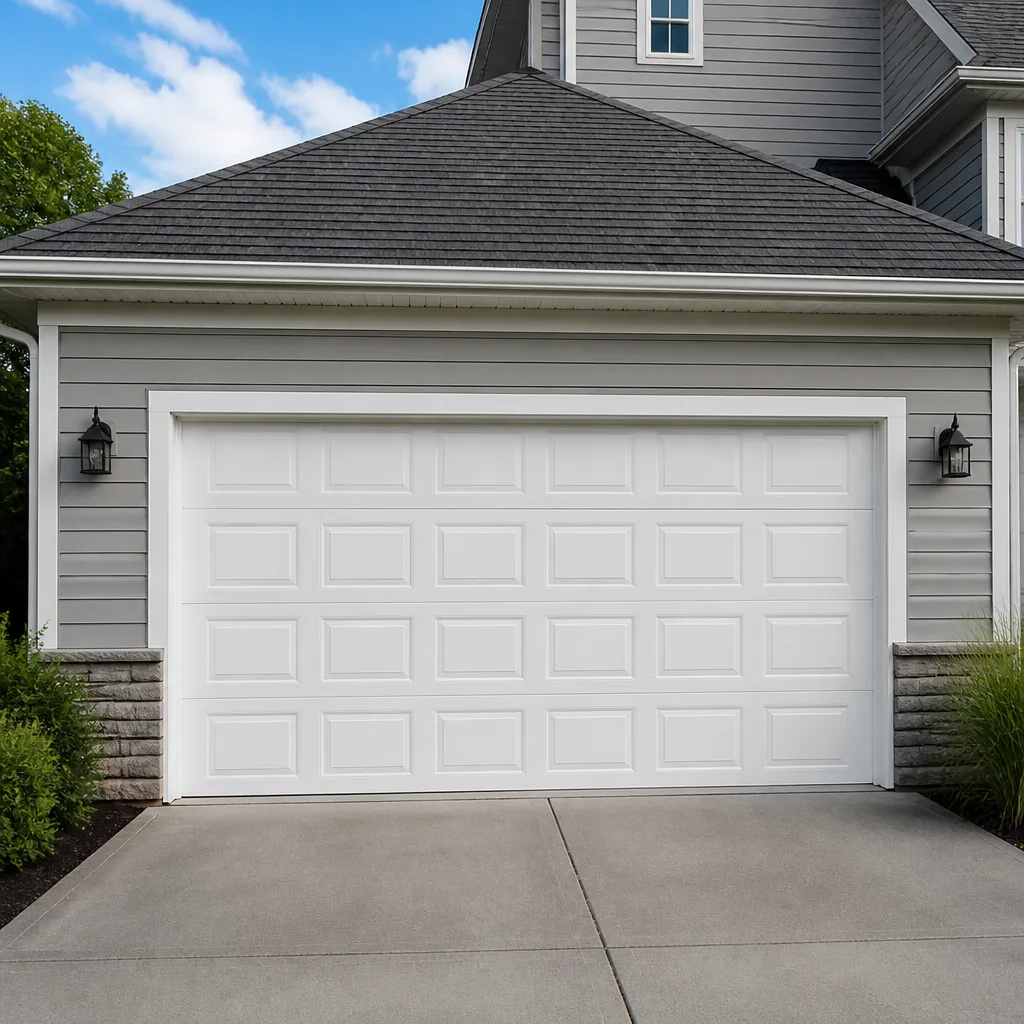 Raised-panel steel
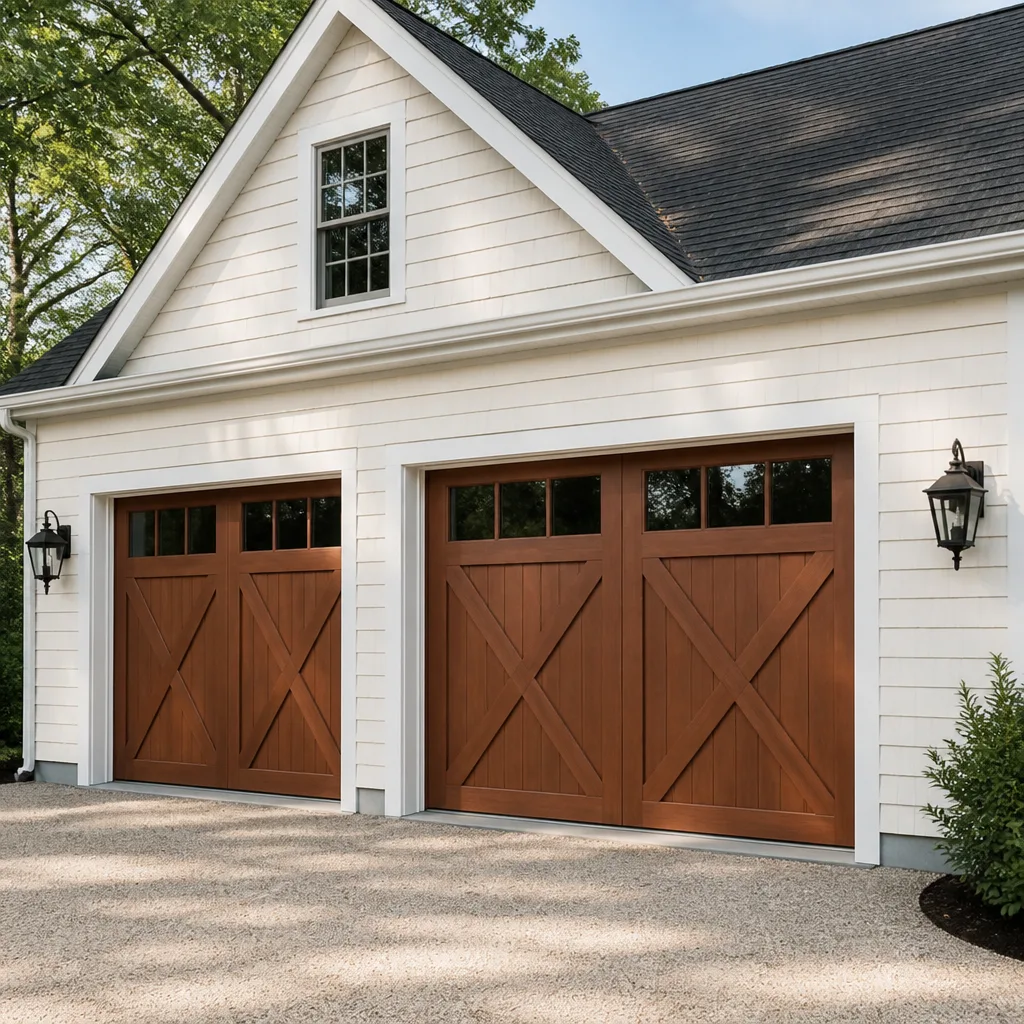 Carriage house
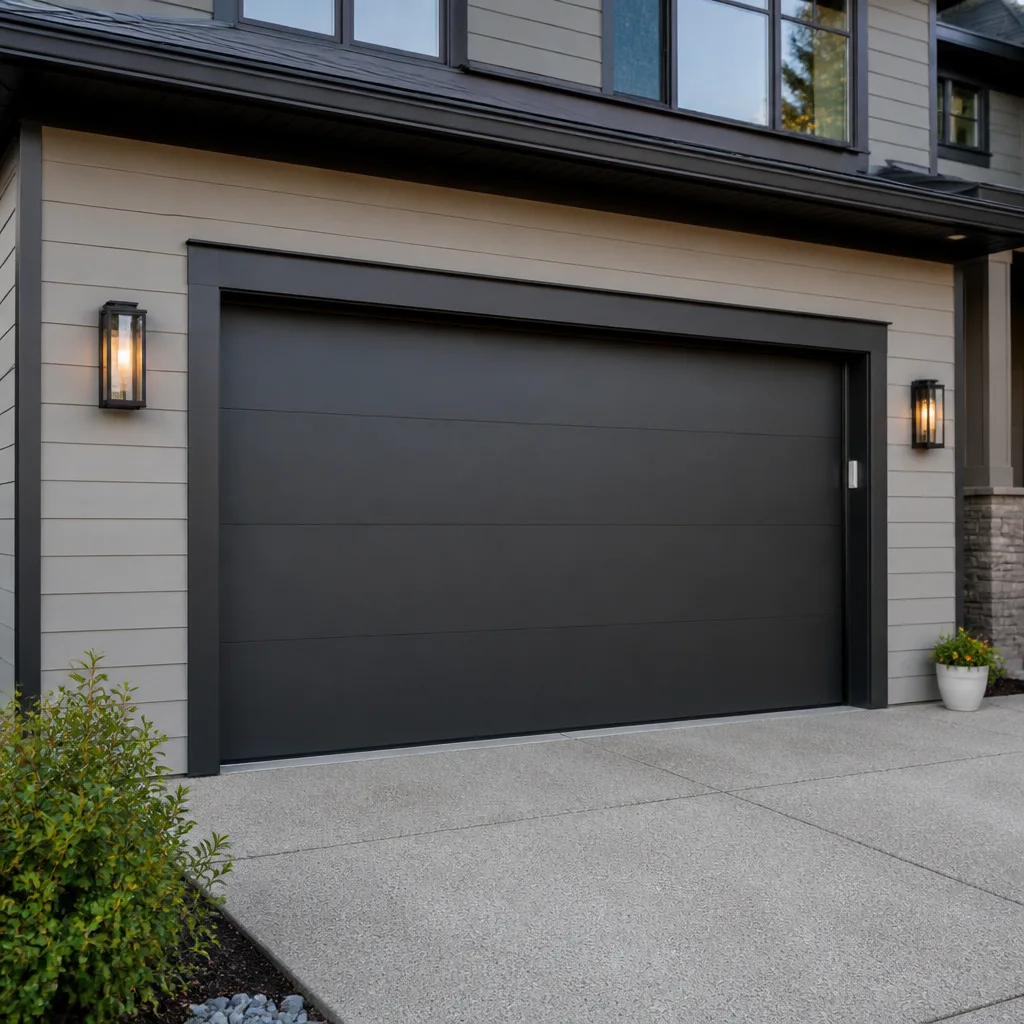 Modern flush
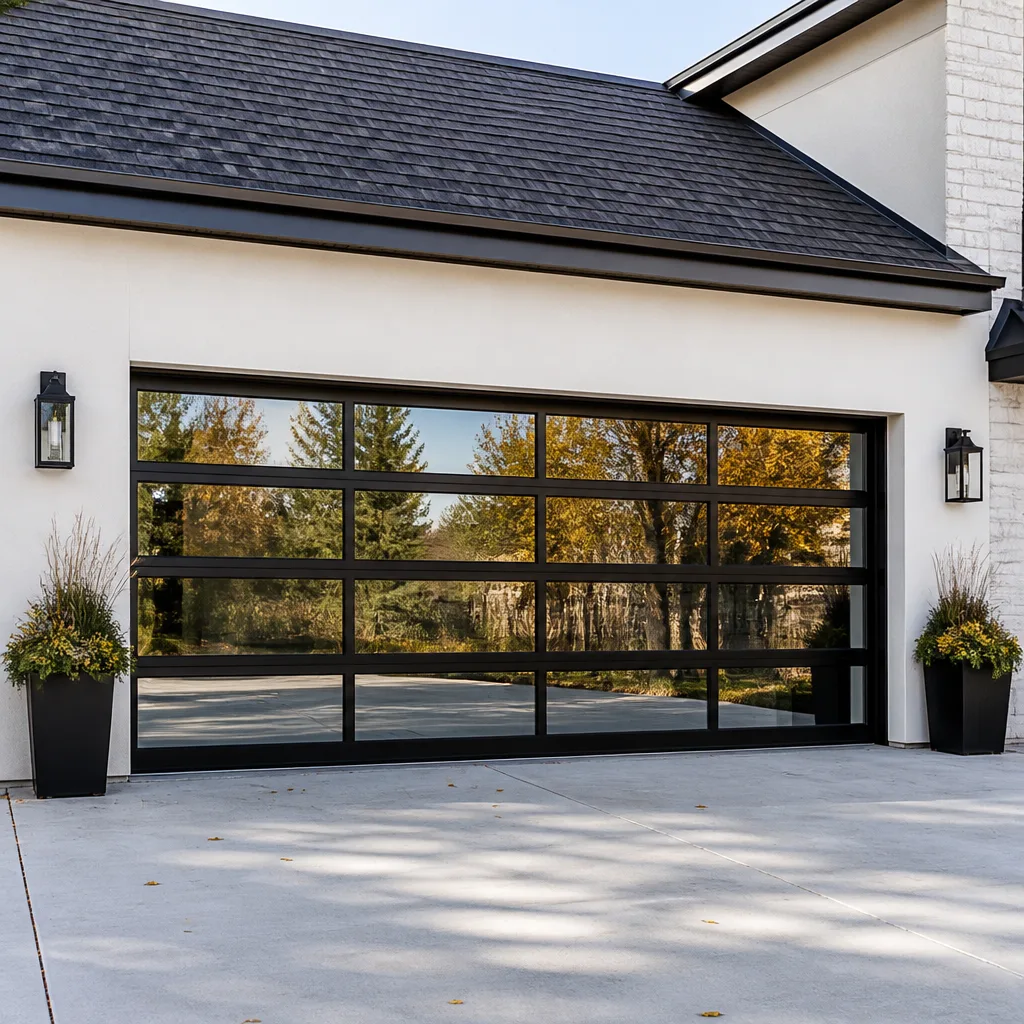 Full-view glass
 LiftMaster openers
 Chamberlain openers
Full 25-point door and opener safety check with every visit - springs, cables, rollers, tracks, and your LiftMaster or Chamberlain opener included
You get a price before we start. It does not change when the truck arrives.
Get your free estimateGarage Door Permits, Codes & Inspections in FL: What You Need to Know
Here’s a number that surprises most homeowners we talk to: a garage door that meets Florida’s wind-load code can withstand gusts up to 150 mph, while a non-compliant door can fail at half that speed. That difference determines whether your home stays sealed during a hurricane or becomes a wind tunnel that lifts your roof from the inside. Florida’s garage door rules are stricter than nearly every other state, and what applies in one county may not match the next one over. This guide from The Villages Garage Door Service covers exactly what you need to know about permits, code requirements, and inspections before you touch that garage door, and you can find Garage Door Repair Maintenance Checklist for The Villages Homeowners in our other resources.
Quick Answer
In Florida, a permit is required for new garage door installations and most structural replacements, but not for routine repairs like spring replacement, panel realignment, or opener swaps. Garage doors in Florida must meet Miami-Dade or Florida Building Code wind-load standards depending on your location, and any permitted installation requires a final inspection before the job is legally complete. Skipping the permit typically costs less than $100 in fees but can trigger fines, insurance claim denials, and title problems when you sell.
Styles & brands we work with
Table of Contents
- Why Florida Garage Door Codes Are Different From Other States
- When a Permit Is Required (and When It Isn’t)
- Florida Wind-Load Requirements: What Your Door Actually Needs
- The Permit Process Step by Step
- What the Inspector Checks (and How to Prepare)
- What Happens If You Skip the Permit
- Contractor-Pulled Permits vs. Owner-Builder Permits
- Mascotte and Lake County: Local Enforcement in Practice
Why Florida Garage Door Codes Are Different From Other States
Florida adopted the Florida Building Code (FBC) after Hurricane Andrew tore through Miami-Dade in 1992 and exposed how poorly residential structures held up. Since then, the state has continuously tightened requirements for every building component that faces wind pressure, and garage doors sit at the top of that list. Here’s the physics that drives the code: a garage door is the largest single opening in most homes, usually covering 70 to 100 square feet. When high winds hit a non-reinforced door, it flexes, pops out of its tracks, or blows inward. Once that opening breaches, wind rushes into the garage, pressurizes the interior, and pushes upward on the roof decking. That pressure differential is what lifts roofs off houses.
The code treats garage doors as part of the building envelope, not as an accessory. That means the door, the tracks, the hinges, the struts, and the mounting hardware must all work as one engineered system. In our work across The Villages communities, we consistently see doors that have the right panel rating but the wrong gauge track or struts that were never installed. Compliance isn’t about picking a rated door off a shelf. It’s about the full assembly matching the product approval documents.
Two code paths govern Florida garage doors. The first, used in Miami-Dade and Broward counties, requires products with a Notice of Acceptance (NOA) from Miami-Dade County. The second, used everywhere else in the state including Lake County, accepts products tested under the Florida Building Code’s wind-load criteria per ASCE 7. A door approved under one path doesn’t automatically satisfy the other, which matters if you’re shopping online and find a tempting price on a door rated for another region.
Temperature and humidity add a second layer. Florida’s heat expands metal components, and the state’s humidity accelerates rust on ungalvanized hardware. The code addresses this through corrosion-resistance requirements for track and hardware. In coastal-adjacent zones, hardware must meet additional salt-exposure standards. Even in inland areas like The Villages, humidity alone justifies stainless or galvanized components rather than standard steel. A door that meets code on paper but uses cheap uncoated hardware will degrade faster than the typical 10-to-15-year lifecycle, and we’ve replaced hardware on doors less than five years old in The Villages because the original installer cut corners on coatings—something you can spot early with our Garage Door Warning Signs: A The Villages Homeowner’s Reference Guide.
When a Permit Is Required (and When It Isn’t)
The single most common question we hear is “Do I need a permit for this?” The answer splits cleanly along one line: is the structural opening changing, or is a component being swapped in place? Florida Building Code section 105.2 lists work exempt from permits, and garage door work falls on both sides of that line depending on scope.
A permit is required when: you’re installing a new garage door where one didn’t exist before, you’re replacing the entire door assembly including track and jambs, you’re widening or altering the rough opening, or you’re doing structural repair to the door frame or header. A permit is also required if the door’s wind-load rating changes as part of the replacement, which happens regularly when homeowners upgrade from a builder-grade door to a code-compliant replacement.
No permit is needed when: you’re replacing broken springs, swapping out cables, replacing rollers, adjusting the opener, installing a new opener on an existing door, or replacing individual panels without altering the structural connection points. Opener installation deserves its own clarification: the FBC exempts “minor electrical work” under a specific threshold, and a 120V garage door opener plugged into an existing outlet falls under that umbrella. If you’re running new wiring from the panel to the garage, that’s an electrical permit. If we’re mounting the opener and plugging it into existing power, no permit is typically required. This is exactly the kind of question we answer every day, and for deeper DIY guidance see our Garage Door Repair Troubleshooting: Common Problems and How to Fix Them; the opener work itself is a distinct service we handle separately from door work.
Here’s the telling detail most homeowners miss: the permit obligation follows the contractor, not the homeowner, when you hire one. Florida law requires the licensed contractor to obtain the permit and schedule the inspection. If a contractor tells you a permit isn’t needed for a full door replacement, that’s a red flag. In our experience at The Villages Garage Door Service, some handyman operations will classify a full replacement as a “repair” to avoid permit fees and inspection delays. That classification won’t hold up when you sell the home or file an insurance claim.
Florida Wind-Load Requirements: What Your Door Actually Needs
Every garage door sold for installation in Florida carries a design pressure (DP) rating expressed as a positive and negative number, such as DP 50 or DP 55. The positive number measures how much outward pressure the door resists, and the negative number measures inward suction. Both matter, and the required DP varies by location. The Florida Building Code maps the state into wind-speed zones based on ASCE 7. Lake County, including Mascotte and the broader The Villages footprint, sits inland and typically requires a lower design pressure than coastal counties. But “lower” doesn’t mean low. Most homes in this region need a garage door rated for 130 to 150 mph wind speeds, which translates to a DP 35 to DP 50 assembly depending on the specific site exposure and building height.
Here’s what the rating actually means in practice. A DP 50 door has been tested and approved to withstand sustained pressure of 50 pounds per square foot, positive and negative, while remaining in its opening and attached to the structure. The testing simulates flying debris, cyclic wind loading, and rain penetration. A door that passes gets a product approval number, either from the Florida Department of Business and Professional Regulation or from Miami-Dade County. Manufacturers including Clopay and Amarr publish their Florida product approvals online, and any compliant installation should reference that approval number on the permit application.
Four components make a wind-rated door different from a standard door. First, the door sections themselves are reinforced with additional steel and interior struts. Second, the track is heavier-gauge steel and mounted with more fasteners per linear foot. Third, the jamb brackets are larger and anchor into structural framing rather than just the jamb board. Fourth, the top panel carries a reinforced strut that spans the full width. If any one of these four is missing, the assembly is not code-compliant even if the panels carry a sticker. We’ve seen installations where the door was rated correctly but the installer skipped the vertical track reinforcement, and honestly, that’s what worries us most about unlicensed labor.
Storm shutters and impact-rated windows don’t substitute for a rated door. The code requires the garage door to stand on its own. That said, some homeowners in The Villages choose to add a horizontal removable bar or a wind-lock retrofit to an existing door rather than replacing it. Those retrofits require a permit when they involve structural attachment, and the retrofit must be approved for the specific door model. A universal bar from a hardware store won’t pass inspection.
The Permit Process Step by Step
Understanding the process removes most of the friction. Here’s the sequence from start to finish for a typical garage door replacement in Florida, written the way we walk customers through it:
- Confirm the scope with the contractor or building department. Is this a swap-out replacement using the existing opening, or are structural changes involved? The answer determines the permit type and the review path. For a straightforward replacement, most jurisdictions including Lake County use an over-the-counter or same-day review process. Structural changes may require plan review, which adds time and cost.
- Obtain the product approval documentation. The door manufacturer’s Florida product approval number, the design pressure rating, and the installation instructions must be submitted with the permit application. We keep these documents on file for the brands we service, including Clopay, Amarr, and Wayne Dalton, because pulling them from manufacturer portals is half the delay for homeowners doing it themselves.
- Submit the permit application with the building department. If we’re doing the work, we handle this step and the permit fees are itemized on your quote. If you’re acting as owner-builder, you’ll complete the application yourself and sign an owner-builder disclosure form. Expect the permit fee to fall between $50 and $200 depending on the jurisdiction and the valuation of the work.
- Schedule the installation after the permit is issued. Florida law prohibits starting work before the permit is active. The inspector needs access to the job site, and most departments require the permit card to be posted in a visible location during the work.
- Complete the installation and call for inspection. Once the door is hung, the permit holder calls the building department to request the final inspection. Most Lake County inspections are scheduled within one to three business days.
- Pass the final inspection and close the permit. The inspector signs off, the permit is closed, and you receive documentation proving the work complied. Keep that document. You’ll want it when you sell and if you ever file a storm damage claim.
One nuance worth stating plainly: the permit belongs to the property, not the person who pulled it. If you hire a contractor who pulls the permit, then fall out with that contractor mid-job, the permit is still tied to your address and you’ll need to resolve it with the building department. This is one reason we recommend working with a company you can call back months later and find the same person answering.
What the Inspector Checks (and How to Prepare)
The inspection takes 15 to 30 minutes and follows a standard checklist. Knowing what the inspector looks for reduces the chance of a failed inspection and a second visit fee. We’ve sat through hundreds of these inspections for installations throughout The Villages, and the points below cover what actually gets checked, in order.
- Product approval matching. The inspector verifies that the installed door matches the product approval on file: brand, model, dimensions, wind-load rating, and reinforcement layout. If the approval documents specify a top strut and it’s missing, the inspection fails on the spot.
- Fastener type and spacing. The inspector checks that the track and jamb brackets are attached with the right fastener type at the right spacing. Florida’s code is specific here, and inspectors carry a tape measure. A bracket attached with drywall screws instead of structural screws fails immediately.
- Track gauge and reinforcement. Wind-rated doors require heavier vertical track with additional anchors. The inspector confirms the track matches the approval documents and is secured to the framing.
- Opener connection. If an opener is installed or replaced as part of the job, the inspector checks that the opener’s emergency release and safety reverse function properly. The door should be balanced so it stays in place when disconnected from the opener and opened by hand, about three to four feet off the floor.
- Weather sealing and flange attachment. The inspector confirms the door seals against the opening to prevent water intrusion. Gaps that let light through at the jamb will likely be flagged.
- Overall operation. The door should open and close smoothly without binding, and the safety reverse should reverse the door when it contacts an obstruction. This is a functional test, not a paperwork formality.
Preparation is simple. Make sure the area around the garage door is clear, the permit card is posted, and someone over 18 is present to operate the door if the inspector asks. If the opener is being inspected, test the safety reverse the day before. A failed inspection isn’t the end of the world, but it means a correction visit and a re-inspection fee that varies by municipality. In some Lake County jurisdictions, the first re-inspection is free; in others, it’s $50 to $75.
What Happens If You Skip the Permit
The most expensive garage door is the one installed without a permit that later becomes a bill. Skipping the permit process might save $100 in fees and a few hours of waiting, but the downstream costs can run into the thousands. Here’s what actually happens when unpermitted work surfaces.
First, homeowner’s insurance. Florida insurers are notoriously strict about wind mitigation credits and code compliance. If you file a claim for storm damage to your garage door, the adjuster will check whether the door was permitted and inspected. An unpermitted installation gives the carrier a defensible reason to deny the claim or reduce the payout, even if the door itself performed adequately. More than one homeowner in Florida has learned this the hard way after a named storm, and we hear versions of the same story from residents every season.
Second, the resale issue. When you sell your home in Florida, the standard real estate contract asks whether any work was done without permits. Lying exposes you to a post-closing lawsuit. Disclosing it triggers negotiation, repair costs, or a price reduction. Title companies in Lake County do flag unpermitted work during their searches, especially when the work is visible and recent. The lien search won’t catch it, but an astute buyer’s inspector will, and the question then lands on you.
Third, fines and abatement. Florida building departments can issue code enforcement citations for unpermitted work, with fines that accrue daily until the work is brought into compliance. The worst-case sequence: the county discovers the unpermitted door, issues a citation, requires you to take the door down so an inspector can see the framing, then rebuild it with the proper permit. You pay for the door twice, the fine, and the inspection fees. All to save the original permit fee.
There’s a path to correct unpermitted work. Call the building department, explain the situation, and in most cases they’ll allow you to pull an after-the-fact permit. The inspector will need to verify what they can, which might mean exposing fasteners or removing trim. It’s better than waiting for the problem to find you. In our work at The Villages Garage Door Service, we’ve helped homeowners navigate this correction process, and the departments here are more reasonable than people expect, as long as you’re the one initiating the contact.
Contractor-Pulled Permits vs. Owner-Builder Permits
Florida offers two paths to getting a permit: have the licensed contractor pull it, or pull it yourself as an owner-builder. Both are legitimate, and both carry specific risks. Understanding the difference helps you make a smarter choice before the work starts.
Contractor-pulled permit: The contractor applies, pays the fee, schedules the inspection, and carries the responsibility for compliance. If the inspector flags something, the contractor fixes it. If the work fails later, the contractor’s license is on the line. This is the lower-risk path for the homeowner, and it’s what we do on every permitted installation.
Owner-builder permit: You sign an affidavit stating that you’re performing (or directly supervising) the work on your own home. You accept the liability for code compliance, you schedule the inspections, and you answer to the building department directly. The risk: if the work fails, the liability sits with you, and the contractor you hired has no legal responsibility because they were working under your permit. The courts have repeatedly ruled that contractors working under an owner-builder permit cannot be held to contractor liability standards. Some contractors push owner-builder permits because it shields them from scrutiny. We consider that a warning sign.
Here’s a practical breakdown of what each path looks like in The Villages and Lake County:
- Contractor-pulled permit cost: Typically $75 to $200 for the permit plus contractor overhead. You see the line item on the quote.
- Owner-builder permit cost: The same fee range, paid directly by you to the department. No contractor markup, but you own every liability.
- Inspection scheduling: Contractor schedules; owner-builder schedules. Some departments give contractors preferred windows because they have multiple inspections per week.
- If something goes wrong: Contractor fixes it under their license. Owner-builder negotiates with whoever did the work, with no state licensing board as backstop.
Our honest recommendation: for a garage door replacement that requires a permit, let the contractor pull it. The fee difference is minimal, and the liability protection is worth it. We pull permits on every job in our service area where the code requires it, including work in and around Mascotte. It protects you, and it keeps the county’s records clean, which keeps your property value intact.
Mascotte and Lake County: Local Enforcement in Practice
Mascotte sits in south Lake County, and its building department follows the Florida Building Code with local amendments that mostly concern administrative process rather than technical standards. The wind-load requirements for the Mascotte area are set by the FBC’s inland wind zone, which is less demanding than coastal Miami-Dade but still requires a tested and approved assembly. If you’re in Mascotte or nearby Lake County communities, the practical difference from coastal rules is the required design pressure: most residential doors here need DP 35 to DP 45, while coastal doors often require DP 50 or higher.
Lake County’s building department handles permits for Mascotte residents, unless the city has its own permitting authority. Regardless of which office issues the permit, the process follows the same steps outlined above. Local inspectors in Lake County are thorough about wind-load compliance, and in our experience, they check the product approval sticker on the door against the documents. A missing sticker or an unreadable label will send the job into a correction cycle.
One local nuance: many homes in The Villages area were built in phases over the last three decades, and the code was different when each phase was constructed. A garage door permitted in 2005 met the code at the time but may not meet today’s standard. When you replace that door, you trigger current code requirements, which can mean reinforcement of the opening or upgraded framing if the existing structure doesn’t meet present standards. That’s not a penalty; it’s the code protecting the structure as it exists now, and a good installer will factor it into the quote rather than surprising you mid-job.
For homeowners in Mascotte specifically, the most common permit trigger we see is the full door replacement. Repair work, garage door repair in Mascotte included, rarely requires a permit. Opener work runs the same way: garage door opener repair in Mascotte typically falls under the permit exemption unless new wiring is added. New doors are a different story, and garage door installation in Mascotte should always include a permit question in the initial conversation.
Common Mistakes to Avoid
- Assuming all garage door replacements are permit-free. A full replacement is structurally significant work under Florida code, and treating it as a repair puts your insurance and resale at risk. The exemption applies to component swaps, not complete assemblies.
- Buying a door online without Florida product approval. Many e-commerce doors carry ratings for other states or no ratings at all. A door without a Florida product approval number cannot pass inspection in this state, no matter how sturdy it looks.
- Letting the contractor pull an owner-builder permit. This shifts liability to you while the contractor keeps the profit. Insist the contractor pulls the permit under their license.
- Mixing wind-rated parts with standard hardware. Installing a rated panel on unrated track with generic brackets invalidates the entire assembly. The approval covers the system, not the individual pieces.
- Failing to keep the permit records. The closed permit is proof of compliance. Without it, an insurance adjuster or home inspector will treat the door as unpermitted regardless of what actually happened.
- Skipping the inspection because the door works fine. A door that opens and closes isn’t the same as a door that passes inspection. The inspection confirms the connection to the structure, not the mechanical operation.
See the difference
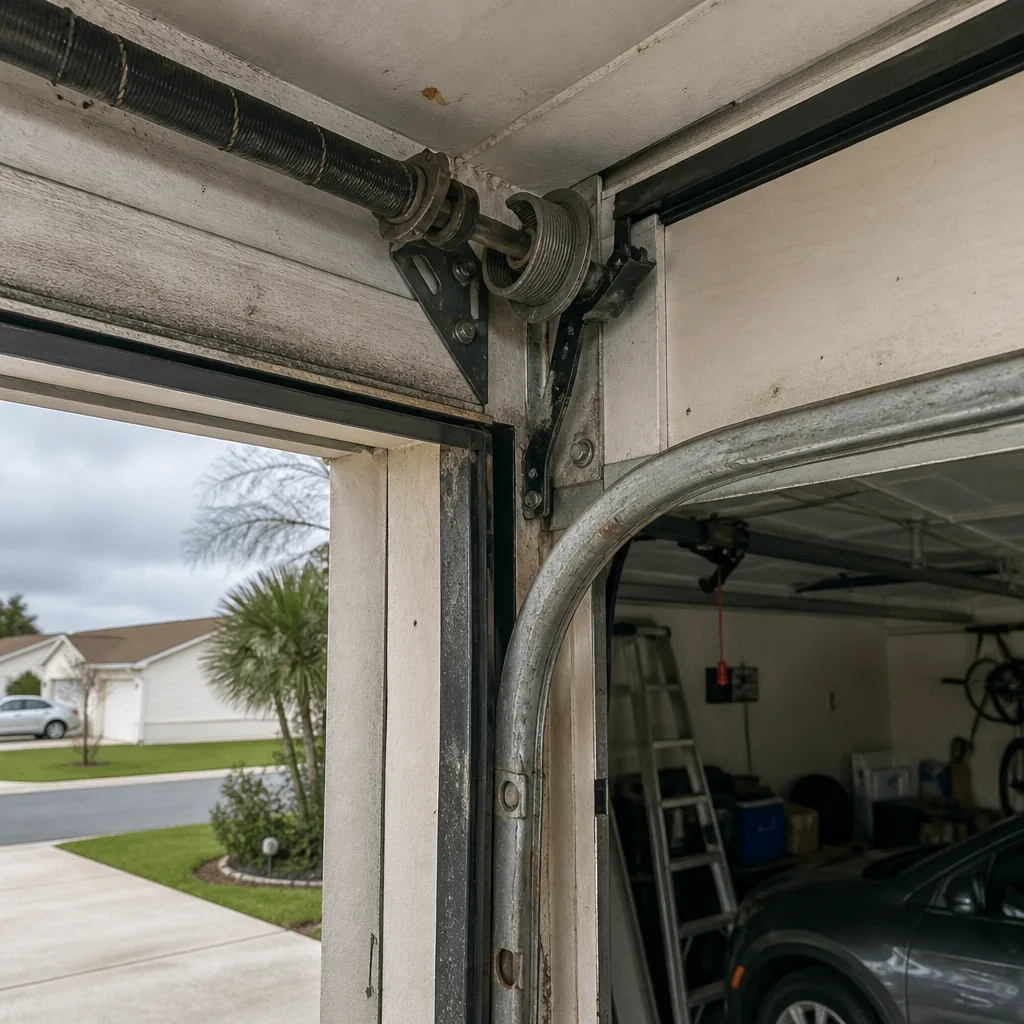 Before
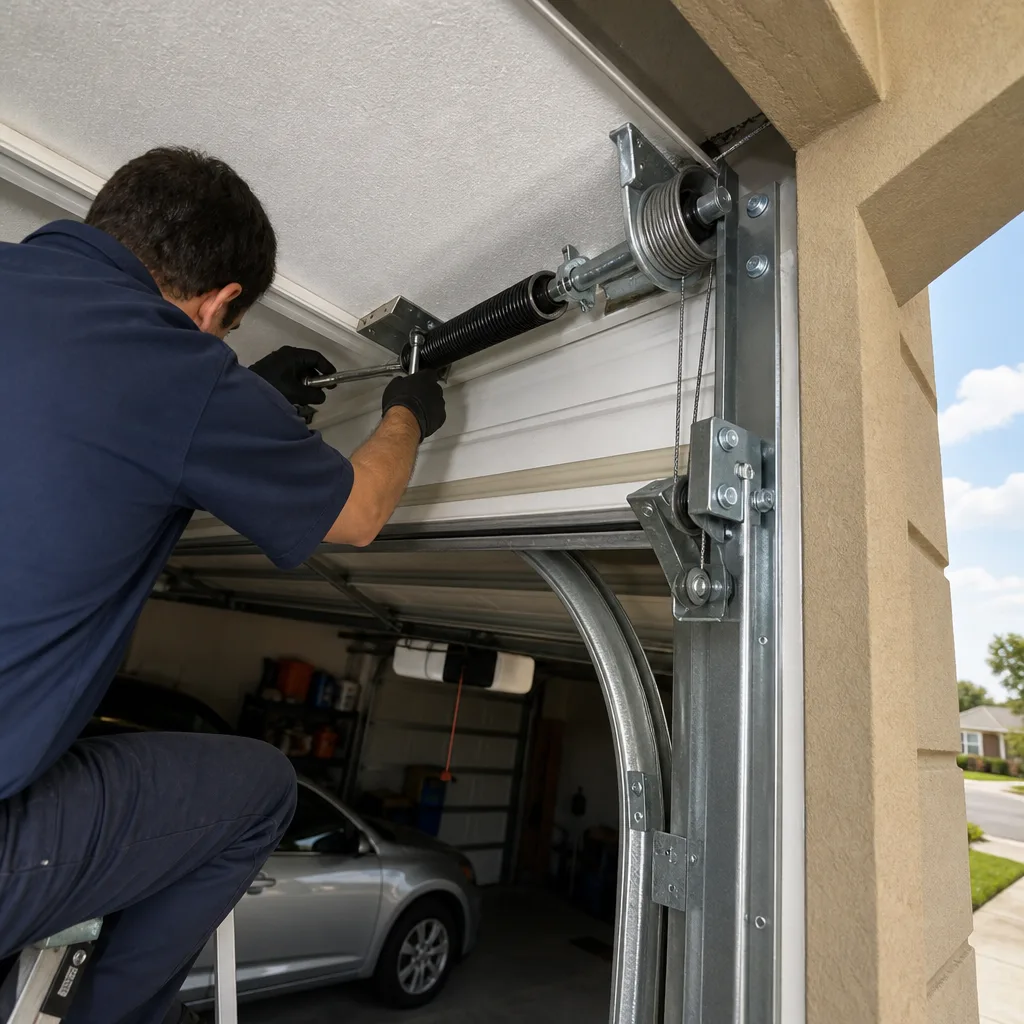 After
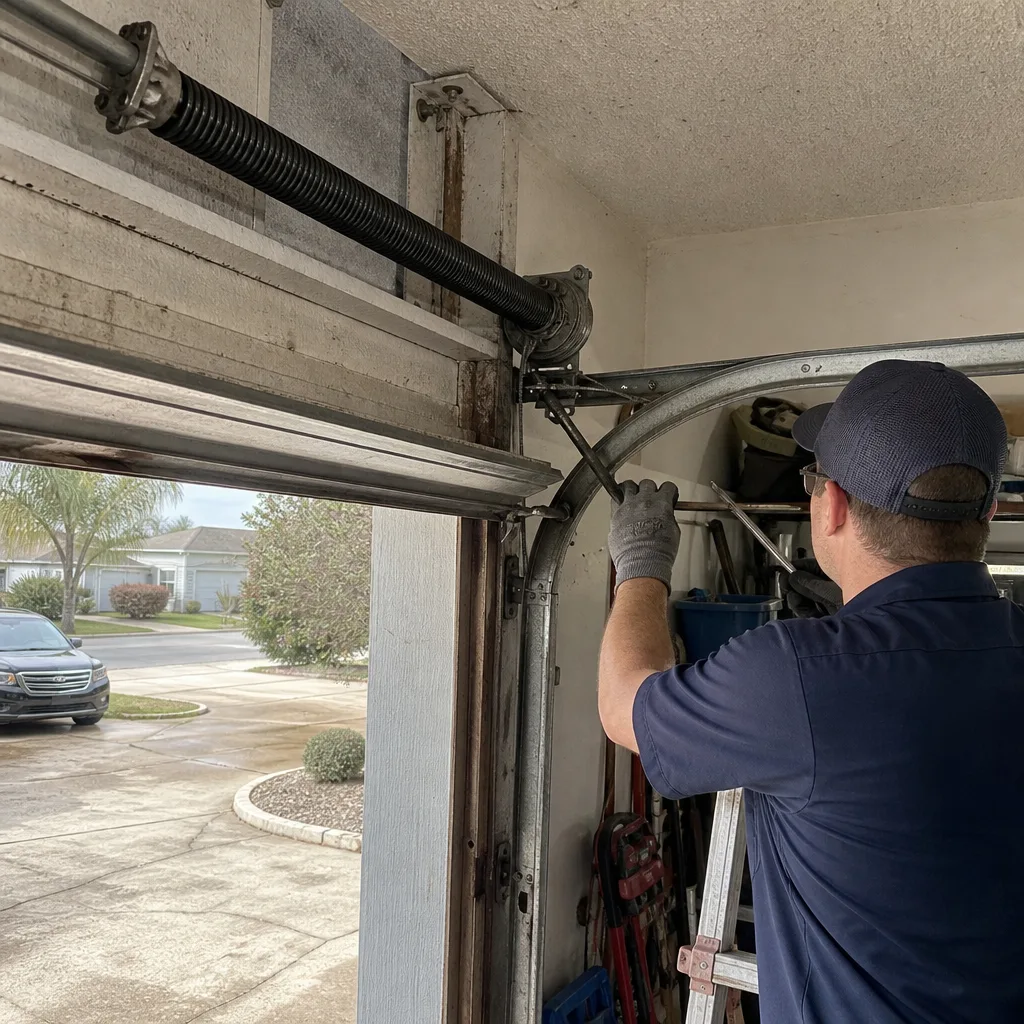 Before
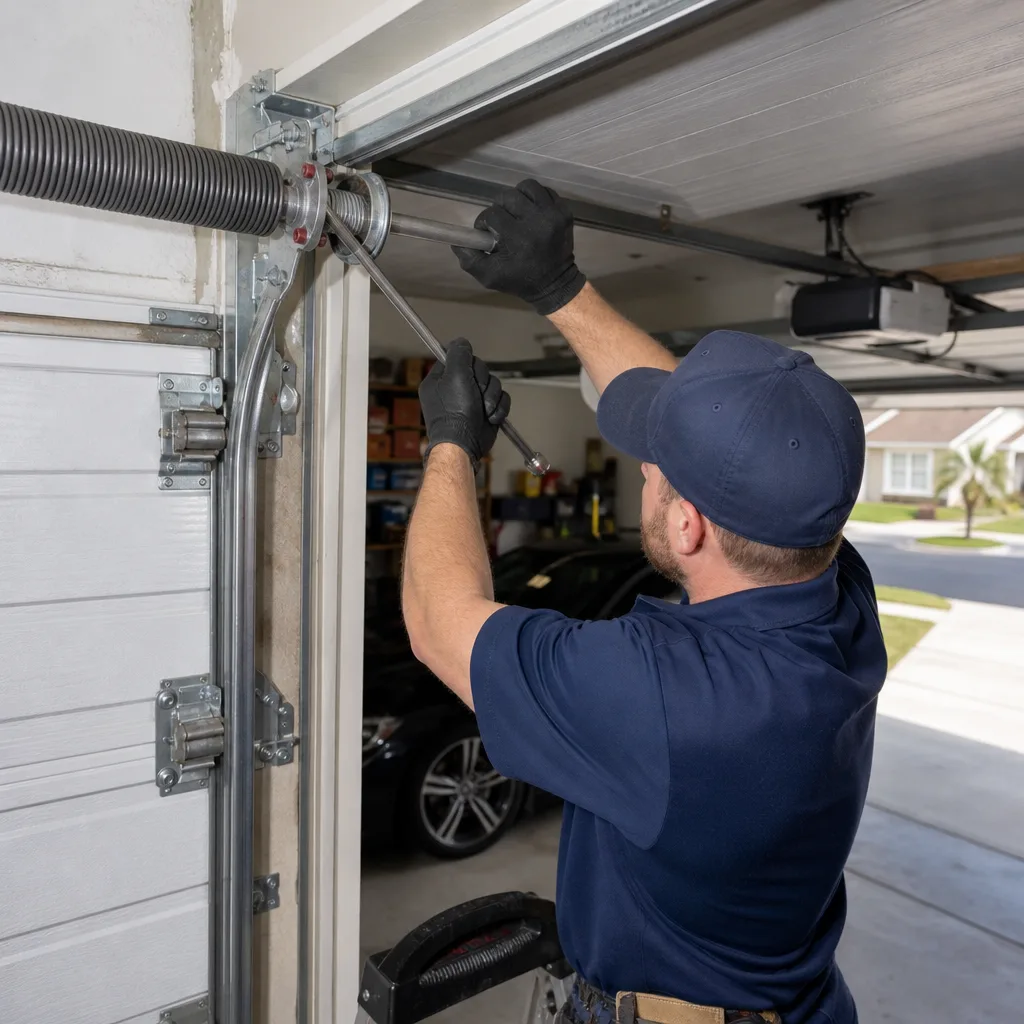 After
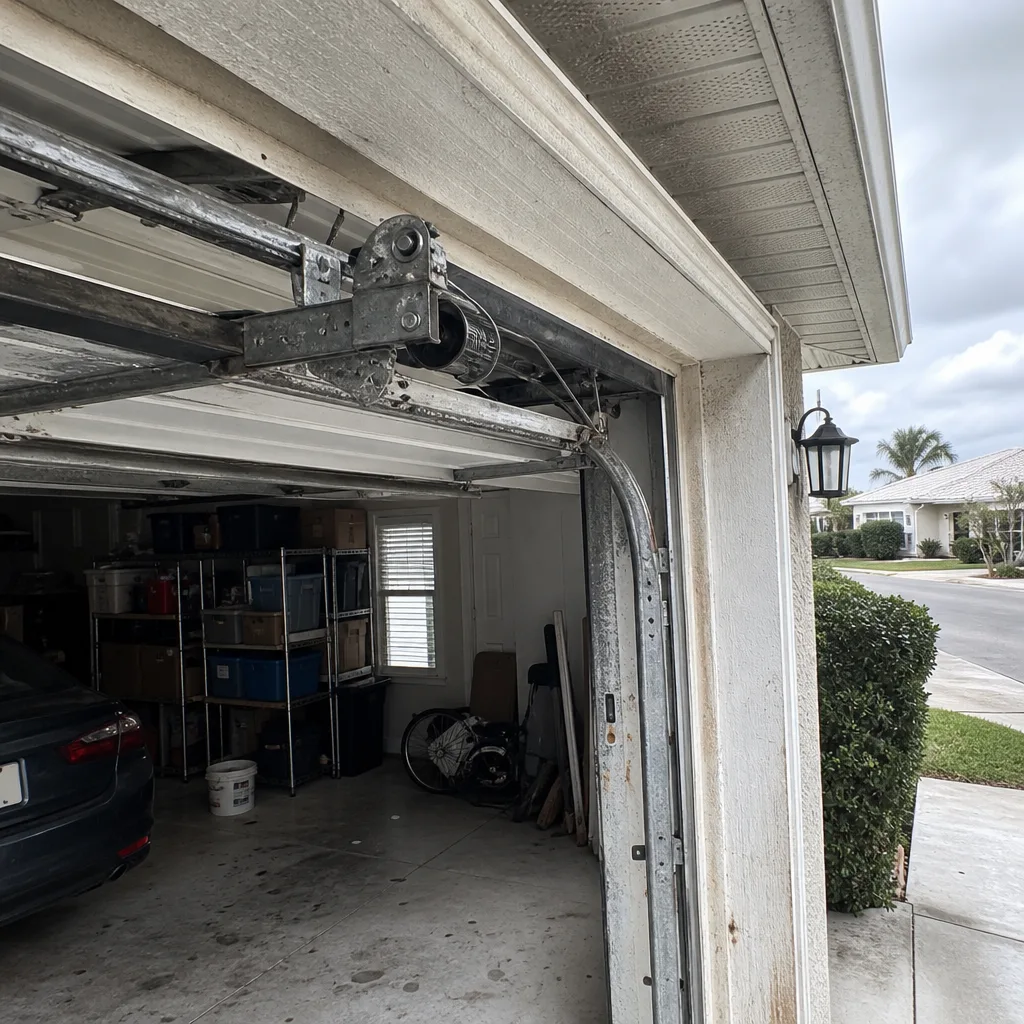 Before
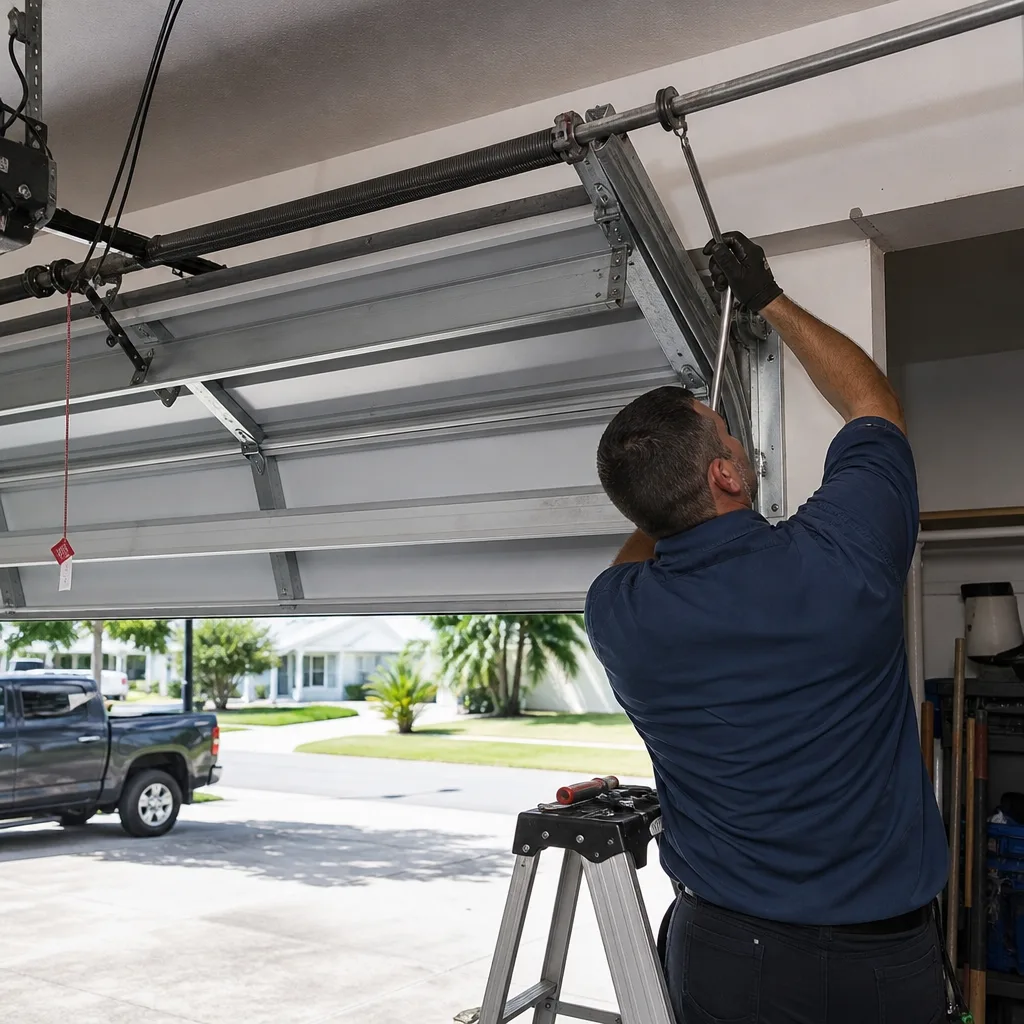 After
When to Call a Professional
Any time a permit is required, a licensed professional should be the one determining scope, pulling the permit, and managing the inspection. That’s true for full door replacements and any work involving structural modification. But beyond permits, there are other signals that warrant a call rather than a DIY attempt. If your door is original to a home built before 2010 and shows rust at the track mounts, sag at the top panel strut, or daylight visible at the jamb seals, the wind-load performance may already be compromised. If you’re unsure whether your door meets current code, a professional assessment answers that question in one visit. The Villages Garage Door Service offers free estimates throughout The Villages and the surrounding communities, including Mascotte. We work on the brands you already own, including LiftMaster, Chamberlain, Genie, and Clopay, and we’ll tell you honestly whether your door needs repair or full replacement. The Villages Garage Door Service can be reached at (855) 382-0952.
Frequently Asked Questions
Most garage door permits in Florida cost between $50 and $200 depending on the county and the declared value of the work. Lake County fees typically fall toward the middle of that range. The permit fee is separate from the installation cost and the inspection fee, which is often included in the permit or billed separately at $50 to $100 per visit.
No permit is required for a straight opener swap using existing wiring and mounting points. If new electrical wiring is added or the circuit is modified, an electrical permit applies. Opener replacement is one of the services we handle regularly without involving the building department.
Most residential garage doors in Lake County, including the Mascotte area, must withstand wind speeds between 130 and 150 mph, corresponding to a design pressure rating of DP 35 to DP 50 depending on site exposure. The specific requirement for your home depends on the home’s location, height, and surrounding terrain, and it’s calculated during the permit review.
Yes, Florida allows owner-builder work on your own home. You must pull the permit yourself, sign the owner-builder affidavit, complete the installation to code, and pass the inspection. The risk you assume is full liability for any code violations or future failures, with no contractor license as a backstop.
Your insurance company may deny or reduce the claim because the door was not properly permitted and inspected. Florida insurers routinely check permit records during storm damage claims, and an unpermitted door gives them grounds to reject the claim. The avoidance strategy is straightforward: pull the permit before the work happens.
A straightforward residential garage door replacement permit is usually issued same-day or next-day in Lake County. The inspection follows within one to three business days after the work is complete and the inspection is requested. The entire process, from permit application to closed permit, typically runs seven to ten days.
The Bottom Line
Florida garage door permits exist because garage doors are structural components with life-safety implications during wind events. The process is not burdensome: a small fee, a paperwork step, and a short inspection that confirms your door will hold when it needs to. Skip it, and you trade a hundred dollars in fees for a liability that follows your property through every insurance renewal and resale. If you’re in The Villages, Mascotte, or anywhere in Lake County, pull the permit, pass the inspection, and keep the paperwork. When you hire us, we handle every step on your behalf, with brand-specific knowledge of the doors you own and honest guidance on whether repair or replacement makes more sense. Explore more guides & resources on our blog.
Written by the team at The Villages Garage Door Service, serving The Villages since 2016.