Last updated October 31, 2026
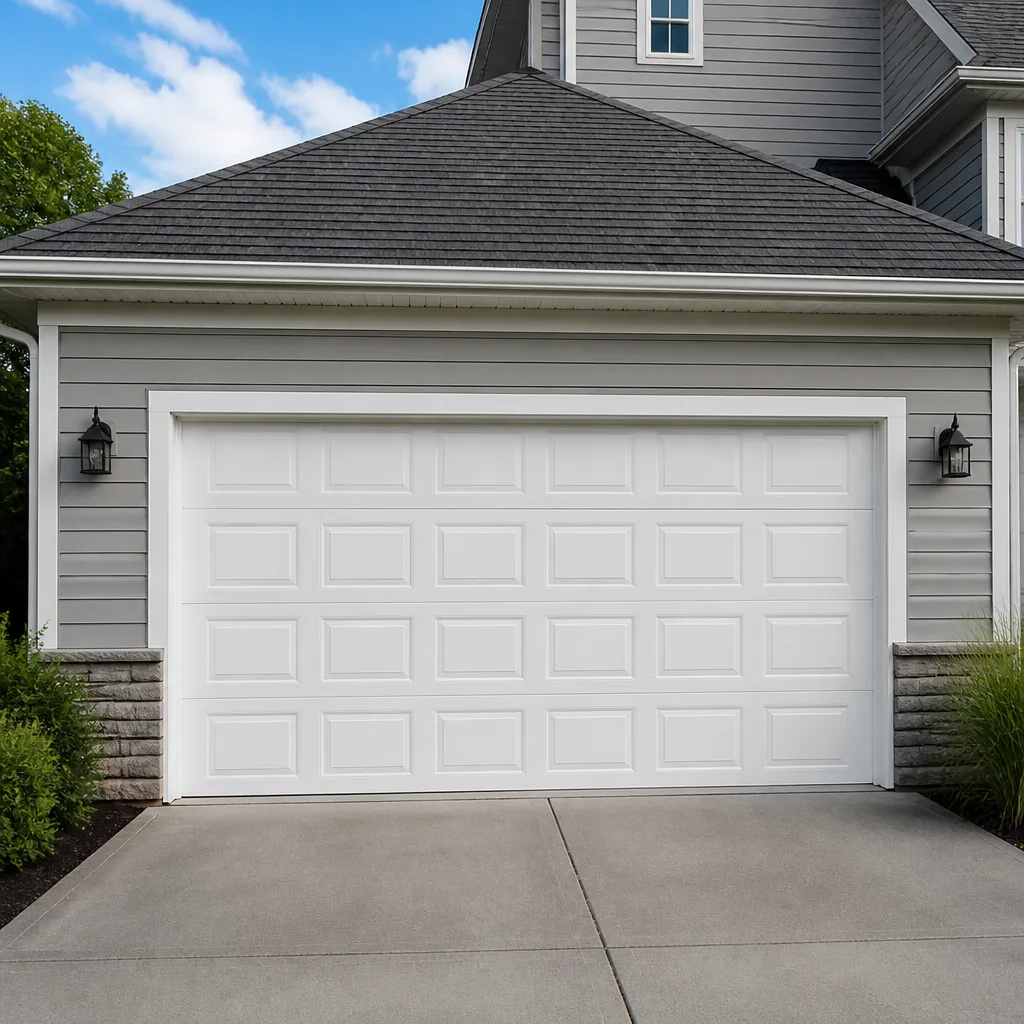 Raised-panel steel
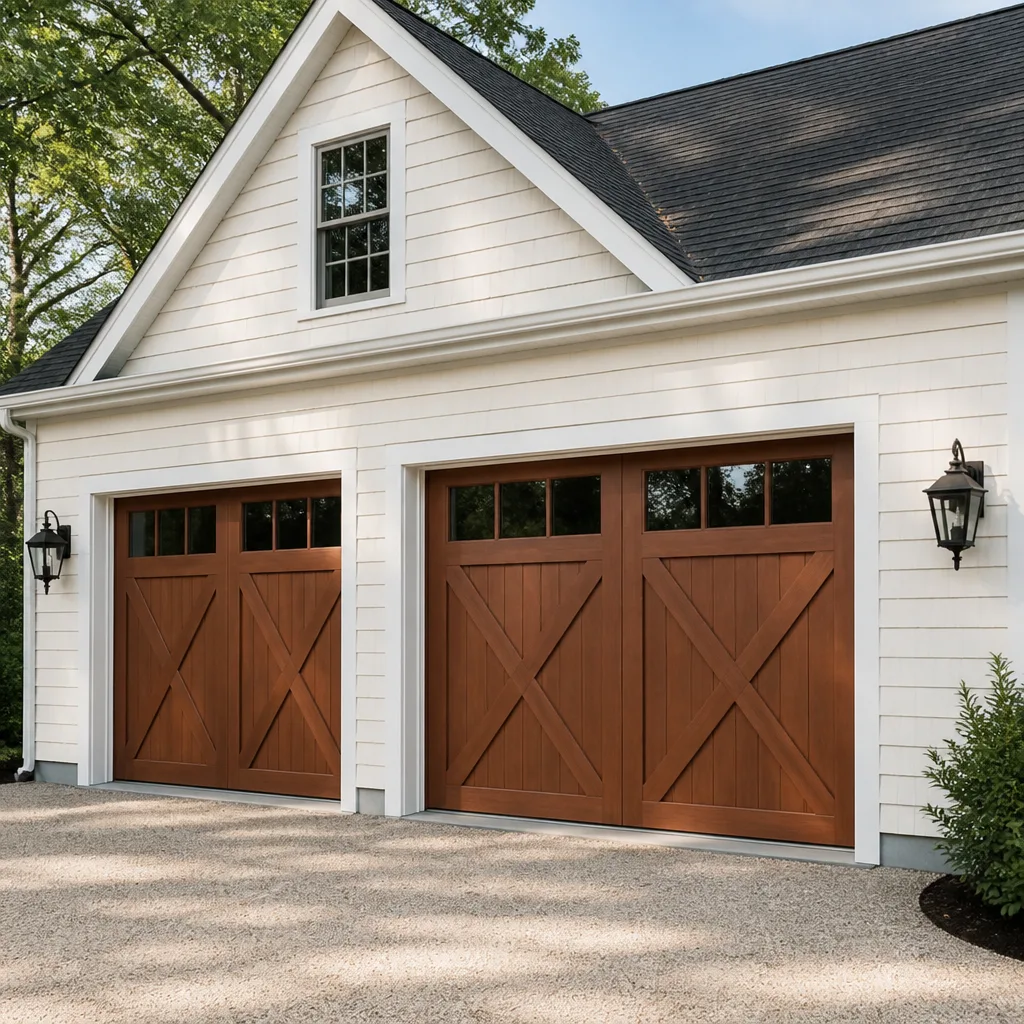 Carriage house
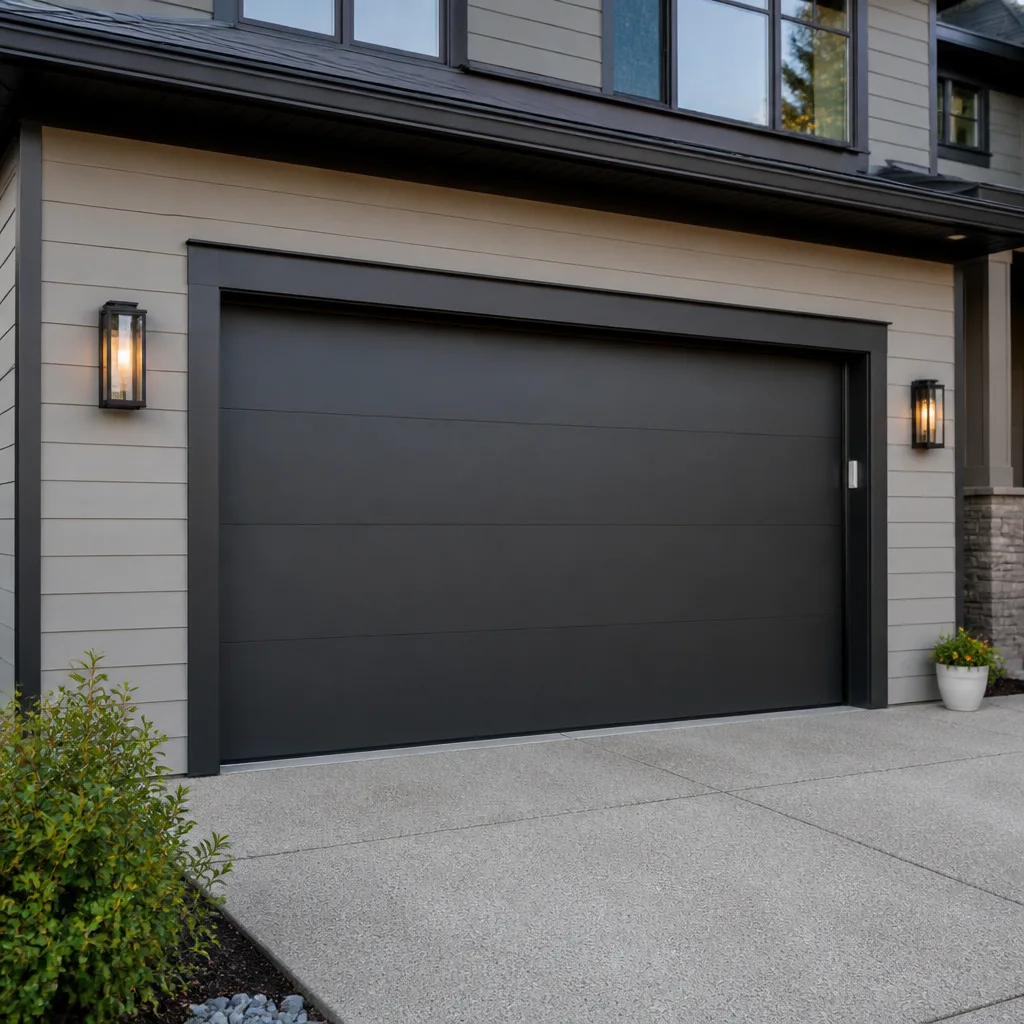 Modern flush
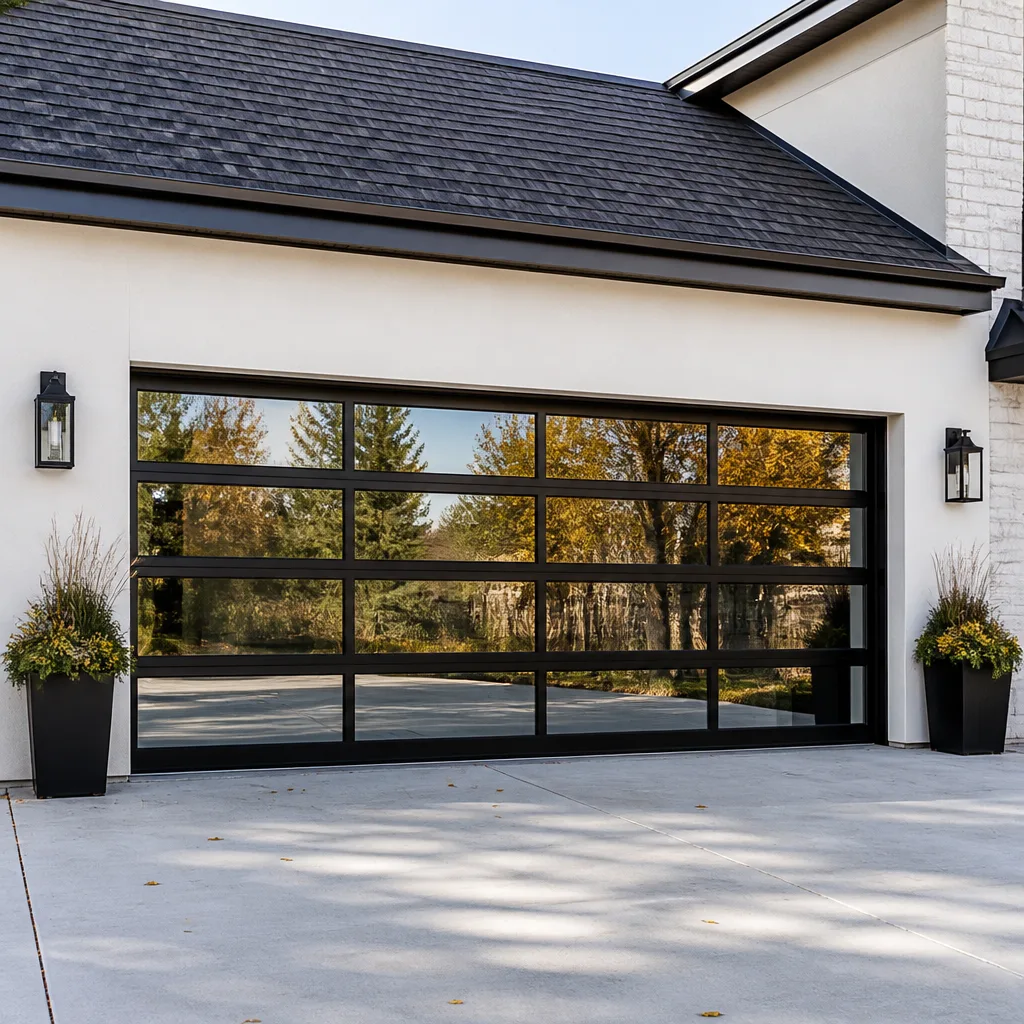 Full-view glass
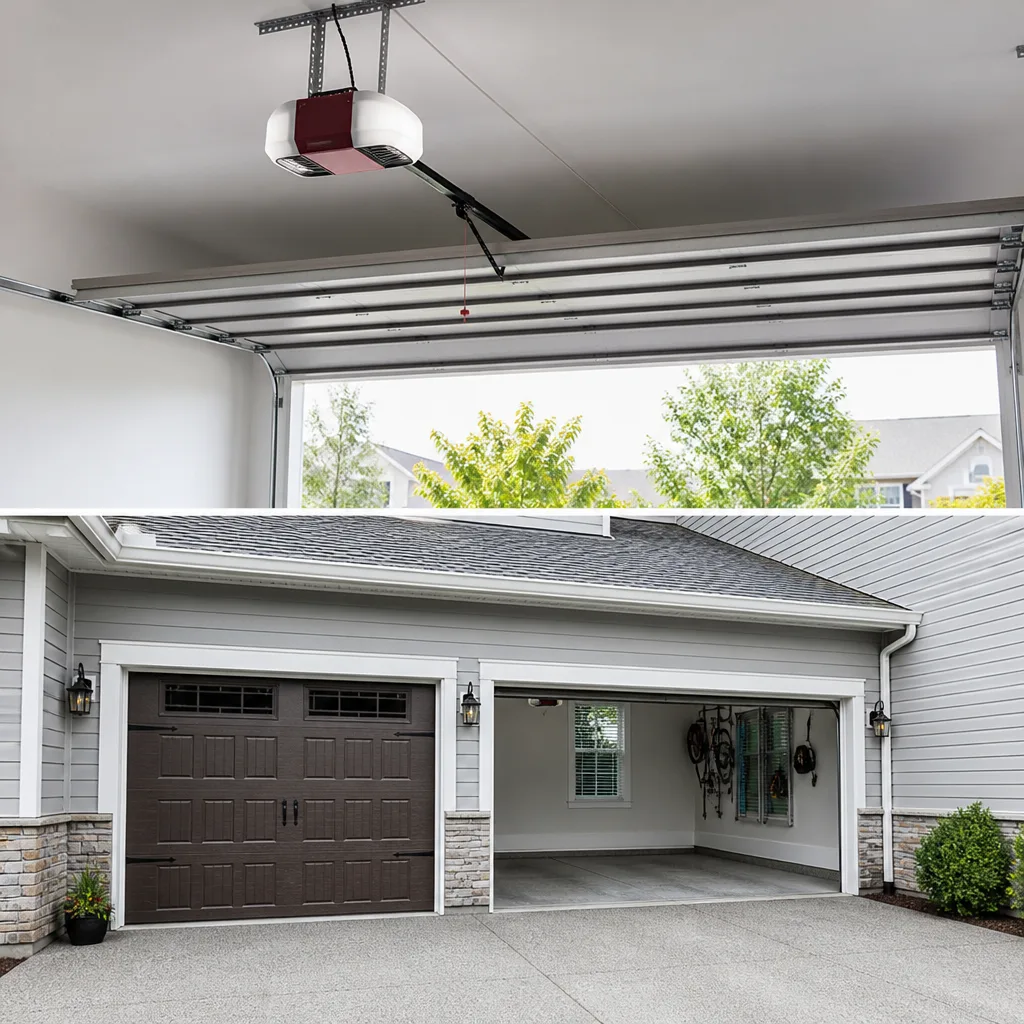 LiftMaster openers
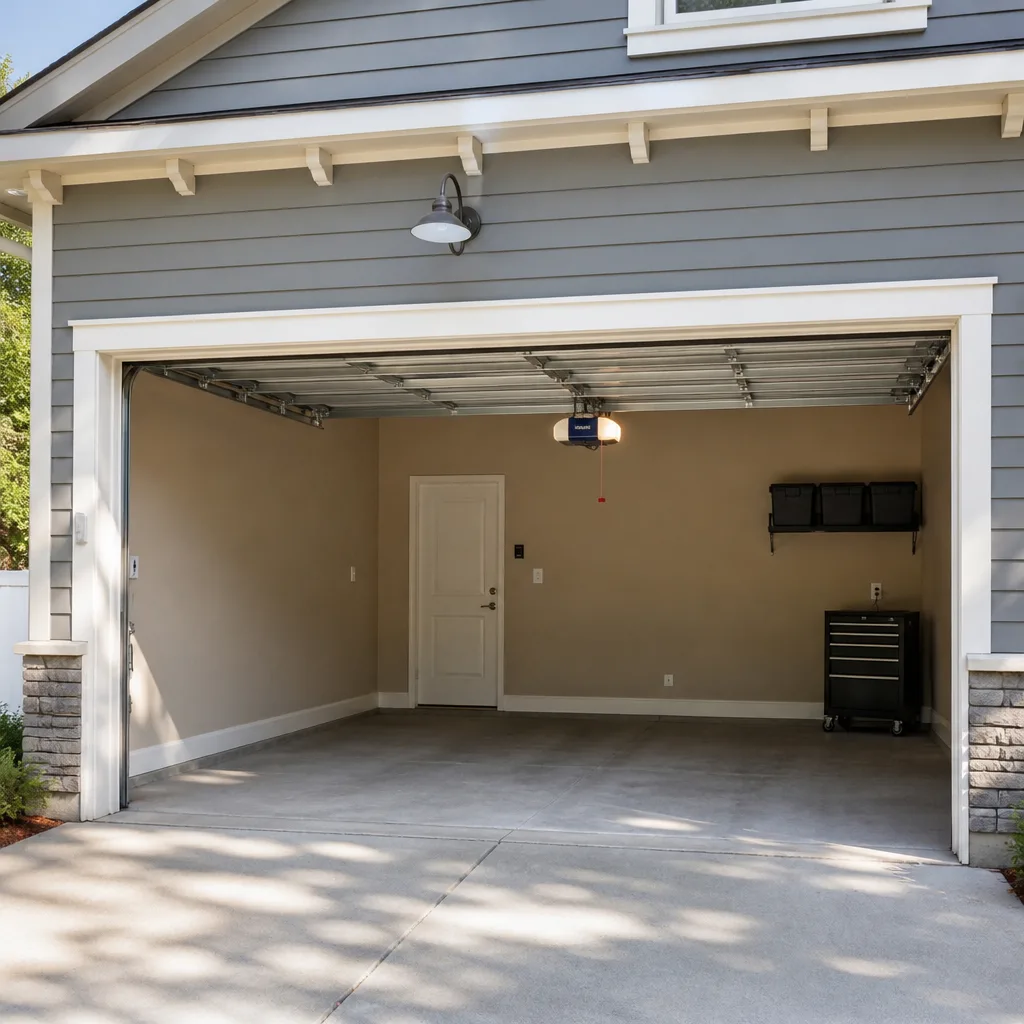 Chamberlain openers
Full 25-point door and opener safety check with every visit - springs, cables, rollers, tracks, and your LiftMaster or Chamberlain opener included
You get a price before we start. It does not change when the truck arrives.
Get your free estimateGarage Door Emergency Preparedness Guide for The Villages Homes
Here’s a counterintuitive fact most homeowners never consider until it’s too late: a garage door that won’t close is statistically more dangerous to your safety and belongings than one that won’t open. An open garage is an invitation – to opportunistic thieves, to wildlife, to wind-driven rain, and to anyone passing by who can see exactly what’s stored inside. In The Villages, where many homes sit along golf course paths and walking trails with steady foot traffic, that open door represents a real vulnerability. This guide walks you through the three very different emergency scenarios you’re most likely to face – a door that won’t open, a door that won’t close, and a door that fails during or after a Florida storm – and what to do in the critical first minutes of each.
Styles & brands we work with
Quick Answer
Garage door emergencies in The Villages fall into three categories, and each needs a different response: a door that won’t open calls for patience and a careful manual release, a door that won’t close demands immediate security measures to protect your home and belongings, and a door damaged by a storm requires cautious assessment and often professional intervention. This guide covers all three scenarios step by step, including how to operate your specific opener type manually, how to secure your home while you wait for service, and what information to have ready when you call for help, so a bad day never turns into a worse week. For more, see our Garage Door Repair Troubleshooting: Common Problems and How to Fix Them.
Table of Contents
- The Three Garage Door Emergencies Every The Villages Homeowner Should Expect
- How to Manually Operate Your Opener – Before You Need to Do It in the Dark
- The Won’t-Close Emergency: Securing Your Home Immediately and Correctly
- Storm and Hurricane Damage: Assess First, Act Second
- Battery Backup and Why It Matters in Central Florida Storm Season
- What to Have Ready When You Call for Emergency Garage Door Service
- Common Mistakes to Avoid During a Garage Door Emergency
- When to Call a Professional
- Frequently Asked Questions
- The Bottom Line
The Three Garage Door Emergencies Every The Villages Homeowner Should Expect
In our experience working on garage doors across The Villages and the surrounding communities, the word “emergency” gets used for three very different situations, and treating them all the same leads to costly mistakes. The first type is a door that won’t open. Your morning routine grinds to a halt, your car is trapped inside, and you’re late. Frustrating and inconvenient, but rarely dangerous. The second type is a door that won’t close. This one is a security crisis. Your home is exposed, and in The Villages, where many residents split time between Central Florida and northern homes, that exposure might last longer than you think. The third type is a door that fails during or immediately after a severe storm, often due to flying debris, extreme wind pressure, or flooding. Each of these scenarios has its own protocol, and knowing the difference before you’re standing in your driveway at 11 p.m. makes a genuine difference in the outcome.
Why These Distinctions Matter
- A door that won’t open is primarily a mobility problem. Your car is stuck, but your home is secure. You have time to troubleshoot.
- A door that won’t close is a security and liability problem. Your belongings are exposed, and anyone can walk in. This needs immediate action.
- A storm-damaged door is a safety hazard first and a repair job second. Bent tracks and broken springs can cause serious injury if handled incorrectly.
Understanding your opener type and your door’s basic anatomy changes how you handle each of these situations. Let’s walk through them one at a time.
How to Manually Operate Your Opener – Before You Need to Do It in the Dark
Every automatic garage door opener, whether it’s a LiftMaster, Chamberlain, Genie, Raynor, or any other brand, has a manual release mechanism. This is the red cord, or sometimes a red handle, that hangs from the trolley attached to the door. Pulling that cord disengages the door from the opener’s drive system and lets you operate the door by hand. Knowing how to use this feature on your specific equipment, and practicing it at least once while the door is working normally, is the single most valuable piece of emergency preparation you can do. Waiting until your opener fails in the middle of a storm, or during a power outage, means fumbling with an unfamiliar mechanism in poor light while the wind picks up.
Step-by-Step: How to Manually Operate Your Garage Door
- Identify your release mechanism. Most residential openers have a red-handled cord hanging from a carriage that travels along the rail above the door. Some newer models, including certain LiftMaster and Chamberlain units, have a wall-mounted release switch instead of a hanging cord.
- Make sure the door is fully closed. If the door is open and the spring breaks, the door can come crashing down with violent force. Never disengage the opener while the door is in the open position unless you are supporting it with another person and you know the springs are intact.
- Pull the release cord straight down. You’ll hear a click as the carriage disengages from the chain or belt drive. On most models, you’ll need to pull again to re-engage the mechanism, and some models require you to pull the cord down and toward the door to release.
- Test the door by hand. A properly balanced garage door should lift easily with one hand and stay in the raised position when opened halfway. If the door is heavy, difficult to lift, or drifts downward, that’s a signal the spring system is failing or already broken, and you should not force it.
- Secure the door in the open or closed position as needed. A helper can hold the door while you secure it, or you can use C-clamps or locking pliers on the track just below a roller to hold the door in place. This is a temporary measure only, but it prevents the door from moving unexpectedly while you wait for service.
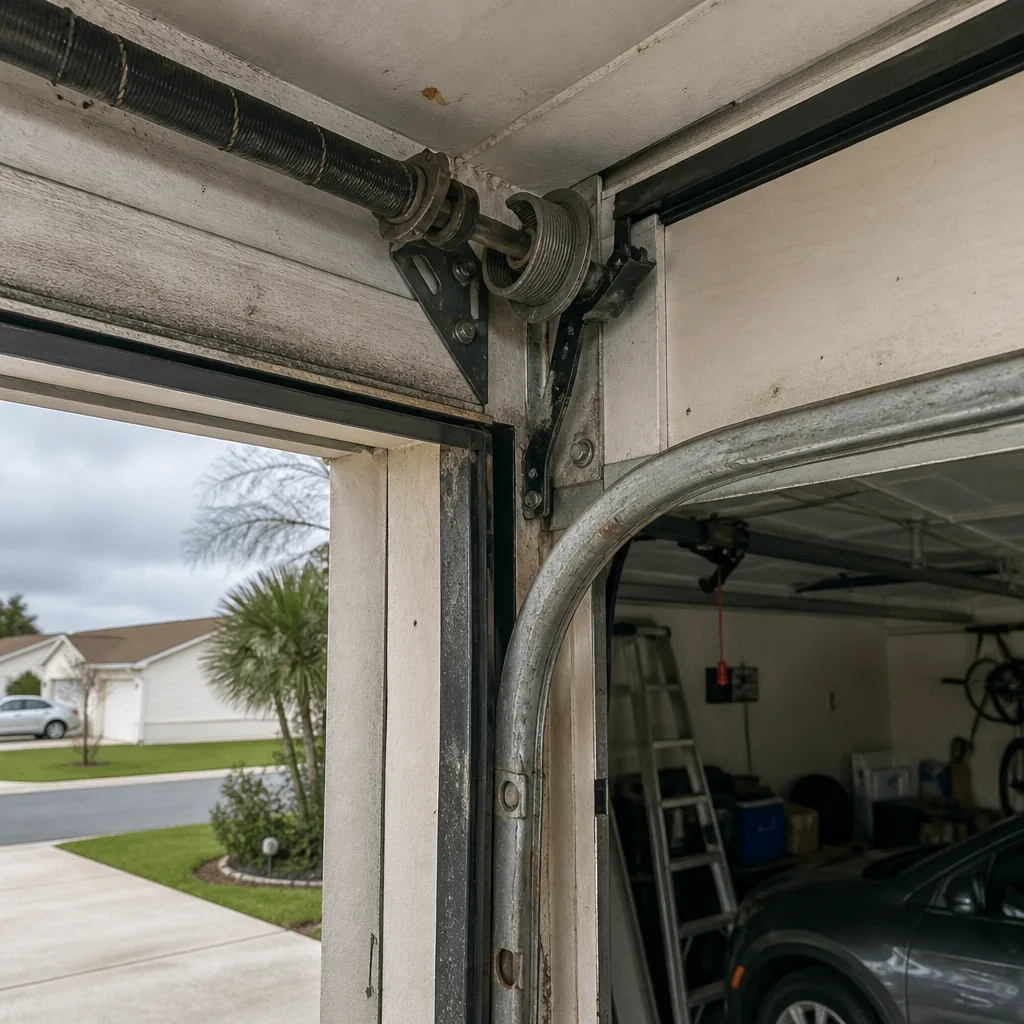
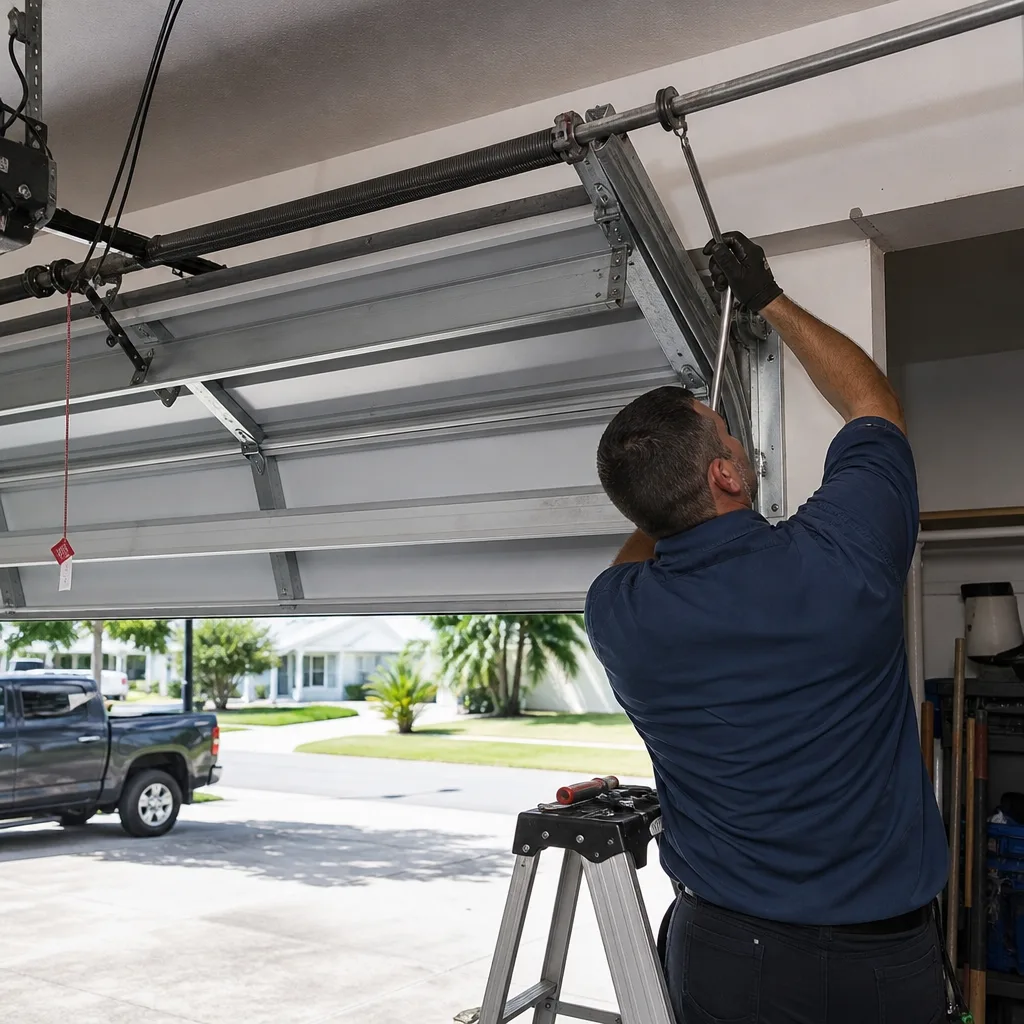
Important safety note: the manual release mechanism is designed to let you move the door by hand, but it does not neutralize the danger posed by the torsion springs. Those springs are under enormous tension at all times, even when the opener is disconnected. Do not, under any circumstances, touch the springs, cables, or mounting hardware on a torsion spring system. Spring replacement is a job for a trained technician with the right tools and experience. In The Villages and the surrounding area, we routinely see torsion spring failures in homes that are 8 to 12 years old, and the release mechanism works fine, but the door cannot be safely moved without professional help. Regular inspections help catch these issues early—see our Garage Door Repair Maintenance Checklist for The Villages Homeowners for guidance.
The Won’t-Close Emergency: Securing Your Home Immediately and Correctly
A garage door that refuses to close is a different animal entirely. Your priority is no longer mobility; it’s protecting whatever is in that garage and, by extension, whatever connects to it. Many The Villages homes have interior doors leading from the garage into the laundry room, kitchen, or main living area. An unsecured garage door means those interior doors could be the only remaining barrier between a stranger and your home. You need to think and act quickly.
Immediate Steps When Your Garage Door Won’t Close
- Check the sensor alignment. Modern garage door openers have a photo-eye safety system mounted near the floor on both sides of the door track. If anything blocks the beam – a broom, a leaf, a cobweb, a child’s toy – the door will stop and reverse. This is the single most common reason a door won’t close, and it requires no tools to fix. Look for a small light on each sensor; if one is blinking or dark, clean the lens and adjust the angle.
- Check the manual lock. Many garage doors have a slide bolt or manual lock on the inside of the door. If that bolt is partially engaged, it can catch on the track and stop the door from moving. Slide it fully open and try again.
- Try the wall-mounted button, not the remote. A dead remote battery will prevent the door from responding to the opener from your car or pocket. The wall button bypasses the remote entirely. If the door operates from the wall switch but not from the remote, your problem is the remote, not the door.
- Look at the door itself. Run your eyes along the tracks, the cables, and the springs. If you see a broken cable, a separated spring, or a bent track, stop testing the door. Continuing to operate a door with a broken spring or cable can cause the door to twist, fall, or damage the tracks further.
- Secure the door manually if it won’t close on its own. Pull the red release cord to disengage the opener, then lower the door by hand. If the door is too heavy to move, or if it won’t stay in the closed position, use a clamp or a friend to hold it while you secure your home. Never assume a door that won’t respond to the opener will stay in place by itself.
- Lock the interior door and call for service. Secure the pass door between your garage and your home. Then call for professional help. At The Villages Garage Door Service, we work on the brand you already own, and when you call, the technician asks specific questions about what the door is doing so the right parts and tools arrive on the truck.
What NOT to Do When Your Door Won’t Close
If the door begins to move downward and then reverses, do not hold the wall button down to force it closed. That’s exactly how fingers get pinched, objects get crushed, and doors get knocked off their tracks. The safety reversal feature exists because something is blocking the door’s path or because the force sensor has detected resistance. Overriding that system defeats its purpose and can turn a nuisance into an injury. It’s also a fast way to damage the opener itself, and replacing an opener is always more expensive than addressing the root problem. If the door is going down unevenly, if one side dips or the door shudders, stop and call a professional. The Villages Garage Door Service covers garage door opener repair and full garage door repair, so one call gets someone to your driveway who can diagnose the issue regardless of the brand involved.
Storm and Hurricane Damage: Assess First, Act Second
Central Florida’s storm season runs from June through November, and The Villages sits in a part of the state that regularly catches the outer bands of tropical systems even when the eye stays offshore. High winds, torrential rain, and flying debris can all damage a garage door. The aftermath of a storm is not the time to experiment. The protocol is simple: assess first, act second, and when in doubt, call someone who knows what they’re looking at.
What to Look For After a Storm Passes
- Visible panel damage. Dents and small punctures are cosmetic and rarely require immediate attention. A panel that’s bowed inward more than an inch, or one that’s split at the seam, may have compromised the structural integrity of the entire door.
- Water intrusion. Look for water pooling inside the garage, water stains on the walls, or a puddle near the base of the door. Water getting into the tracks or the opener motor housing can cause electrical issues if not addressed promptly.
- Debris in the tracks. Leaves, twigs, and mud can collect in the bottom tracks during a heavy rain. Clear away debris that’s sitting loosely on top of the track, but do not dig into the track mechanism itself. If debris is wedged inside, that’s a job for a technician.
- Misalignment. Run your eyes along the vertical and horizontal tracks. If the gap between the door and the track varies, or if you can see that one side of the door sits lower than the other, the track may have shifted. A door that runs on a misaligned track will get progressively worse every time it opens and closes.
- Strange sounds. After a storm, listen before you decide to operate the door. Grinding, grinding, squealing, or popping sounds indicate something is amiss, and continuing to run the door can worsen the damage. If you hear anything unusual, stop and get a professional opinion.
When to Call Before Trying Anything
If you see any of the following after a storm, do not attempt to operate the door manually or by remote. Call for professional garage door repair in the area right away. If the door is off its track at any point, if a cable is dangling or snapped, if a spring is visibly separated or broken, or if the door frame shows signs of shifting or warping, the door itself may be unsafe to move. A door that comes off its track can weigh several hundred pounds, and if it falls, the result is property damage at best and serious injury at worst. Our technicians at The Villages Garage Door Service work with the exact parts, codes, and mechanisms of your specific door or opener, whether it’s a Raynor from the original build or a LiftMaster installed as a retrofit. We stay current on all Garage Door Permits, Codes & Inspections in FL: What You Need to Know requirements. That brand-specific knowledge means we can often identify the issue from a quick description over the phone.
Battery Backup and Why It Matters in Central Florida Storm Season
Power outages are part of life in The Villages during hurricane season. When the power goes out, most garage door openers stop working, which leaves your car trapped in the garage and your door stuck in whatever position it was in when the power failed. A battery backup system changes that equation, and some recent model openers have the feature built in. Knowing what you have, and what you don’t, is the difference between riding out the storm safely and watching the lights go out with a nervous eye on the garage.
Which Opener Brands Offer Built-In Battery Backup
LiftMaster and Chamberlain have been aggressive about integrating battery backup into their opener lines. Several LiftMaster models, including units from the Professional and Elite series, have a battery backup compartment built into the motor housing. The same is true for many Chamberlain units marketed as “Power Drive” or “Belt Drive with Battery Backup.” These systems automatically switch to battery power when the main power fails, typically providing enough run time for several open-and-close cycles. The battery recharges when power returns, and the system handles the transition without any homeowner intervention.
Genie has introduced battery backup on some of its newer “Integrated” and “Smart” opener lines, though not as broadly as LiftMaster or Chamberlain. Raynor has similar technology available, though it’s more common on newer models than on the older units many The Villages homes were originally built with. If you don’t know whether your opener has battery backup, the easiest way to check is to look for a small battery icon on the wall control pad or to open the motor housing and look for a rectangular battery pack. If you don’t see one, you can often add an aftermarket battery backup kit to your existing opener, and that’s something we can discuss with you during a service call. For The Villages homeowners who spend part of the year away, battery backup is worth particular consideration, because a power outage during an empty-house window leaves the garage door inoperable until the power returns.
A practical note: even with battery backup, manual operation remains important to know how to do. Batteries fail, get old, or lose capacity over time. The manual release cord is always there. Treat the battery backup as a convenience feature, not a replacement for knowing how to disengage the opener by hand.
What to Have Ready When You Call for Emergency Garage Door Service
When you call for emergency service, the clock is running. The technician needs to know what they’re walking into, what parts they should bring, and what kind of door and opener you have. Having this information ready shortens the phone call and gets help to your driveway faster. It also means the technician can often identify the part they need from the truck, which is the difference between a first-trip fix and a return visit.
The Six Pieces of Information That Save Time and Money
- Opener brand and model. LiftMaster, Chamberlain, Genie, Raynor – the brand matters because motors, logic boards, and remote codes are not universal. The model number is typically printed on a sticker on the side of the motor housing.
- Door brand and approximate age. Many The Villages homes were built with specific door brands depending on the builder and the year. Knowing the brand and approximate age helps us identify the track profile, spring type, and likely part specification before we arrive.
- What happened and when. Did it stop working this morning? During the storm? After a loud bang? The sequence of events is a diagnostic tool. A door that stopped with a bang usually points to a spring; a door that just stopped responding points to the opener.
- What you’ve already tried. If you pulled the release cord and the door still won’t move, that’s different from a door that moves manually but won’t move via remote. If you cleaned the sensors and replaced the remote battery, tell us. It saves us tracing steps you’ve already completed.
- Whether the door is stuck open, stuck closed, or stuck halfway. This affects everything from safety to part choice. A door stuck open is a security problem. A door stuck halfway might have a track issue. A door stuck closed with a broken spring is a different job than a door stuck open with a snapped cable.
- Your address and any gate or community-access instructions. The Villages has numerous residential areas with different entry systems. If there’s a gate code, a security guard, or a specific access point, let us know. It saves the technician from getting turned around at the community entrance.
Having this information ready when you call The Villages Garage Door Service means the technician hits your driveway with the right parts already on the truck. We work on the brand you already own, and because we carry parts and knowledge for eight major brands – LiftMaster, Chamberlain, Genie, Clopay, Amarr, Wayne Dalton, Craftsman, and Raynor – we’re well positioned for a first-visit fix in most cases.
Common Mistakes to Avoid During a Garage Door Emergency
- Forcing the door to move when it’s resisting. A garage door that won’t move easily is telling you something. Forcing it risks breaking cables, bending tracks, or causing the door to jump off the track entirely. That turns a minor repair into a major one.
- Overriding the safety reversal feature. Holding down the wall button to force the door closed is something we see in The Villages homes far too often. The safety reversal feature exists to prevent injury and damage. Defeating it is never worth the risk.
- Attempting a DIY spring replacement. Torsion springs carry hundreds of pounds of tension. A spring that lets go while you’re working on it can cause severe, even fatal, injury. This is not a task for a YouTube tutorial and a wrench. Call a professional.
- Waiting to secure a door that won’t close. An open garage is an invitation. We’ve talked to homeowners across The Villages who lost tools, golf clubs, and in one case a set of car keys, because they assumed the open door was fine for a few hours. It wasn’t.
- Neglecting to practice the manual release. Knowing where the cord is and how to pull it is theoretical knowledge if you’ve never done it. When the power is out and the storm is coming, your hands won’t know what your head knows. Practice it once while the door works fine.
- Leaving water damage unaddressed. After a storm, water that sits inside the garage can ruin stored items, warp the door panels, and corrode the track hardware. If you see water, address it. If the water came through the door itself, that’s a door problem that needs a professional look.
- Using the wrong remote or keypad code, then assuming the door is broken. We get calls from The Villages residents who’ve changed a keypad battery or reprogrammed a remote, then found the door unresponsive. If the wall button works, the problem is the remote, not the door. Replacing the opener for a remote-coding issue is a costly, and unnecessary, decision.
When to Call a Professional
Some garage door problems are safe to troubleshoot and resolve at home: a blocked sensor, a dead remote battery, a tripped circuit breaker. But many are not. If the spring is broken, the cable is snapped, the door is off its track, or the opener motor is making noise without moving the door, you need a trained technician. Safety first means knowing the boundary between a five-minute fix and a job that carries real risk.
The Villages Garage Door Service offers free estimates in The Villages, and we encourage you to call before a problem becomes an emergency. We’re glad to walk you through a quick diagnosis over the phone, and if it turns out you don’t need us to visit, we’ll tell you that, too. Call (855) 382-0952 for fast, honest help from a neighbor who knows the doors and openers in this community. From a broken spring to a brand-new door, one call handles the whole job.
Frequently Asked Questions
Check whether anything is blocking the photo-eye sensors near the bottom of the track, and clean the sensor lenses. If the door still won’t close, disengage the opener with the red release cord and lower the door by hand. If it’s too heavy to move, stop and call a professional, because a heavy door usually means a broken spring. Then call Garage Door Repair in Mascotte service area for help securing and repairing your door.
Pull the red release cord hanging from the opener rail to disengage the door from the drive mechanism. Then lift the door by hand using the handle. If the door is properly balanced, it should lift with one hand and stay in the raised position. If it’s heavy or won’t stay open, the spring is likely broken and you should not force it. The team at The Villages Garage Door Service can help you understand your specific opener’s release mechanism over the phone before you need it.
Only if your opener has a battery backup feature. Many LiftMaster and Chamberlain models have built-in battery backup that automatically engages when the main power fails, typically providing enough power for several open-close cycles. Some Genie models offer the same feature. Check your wall control for a battery icon, or look for a battery pack in the motor housing. If you don’t have battery backup, you’ll use the manual release cord to operate the door by hand.
It depends on what you see when you inspect it. If the door is on its track, the cables are intact, the springs are in one piece, and the door opens and closes smoothly without unusual noises, it’s probably safe to use. If you see a bent track, a snapped cable, a separated spring, or water intrusion around the track or opener, don’t operate the door. Call a professional for a storm-damage assessment first.
Have your opener brand and model number, your door brand and approximate age, what happened and when, what you’ve already tried, whether the door is stuck open, closed, or halfway, and your address with any community access instructions. That preparation lets the technician arrive with the right parts on the truck, and often means a first-trip repair. For The Villages homes, mention your specific residential area, because many communities here have entry gates with access codes.
Pricing depends on the specific problem, your door’s brand and age, and the parts needed. A broken spring, for example, typically runs differently than an opener replacement or a track repair. The Villages Garage Door Service quotes every job up front before any work begins, so there are no surprises. Call (855) 382-0952 for a free estimate, and we’ll give you an honest number for your specific situation.
The Bottom Line
A garage door emergency is manageable if you know what you’re dealing with and what to do in the first five minutes. A door that won’t open is an inconvenience; a door that won’t close is a security problem; a door damaged by a storm is a safety issue. Each needs a different response. Learn how to operate your opener manually before you need to. Keep your sensors clean, your remote batteries fresh, and your pass door locked when the garage door is acting up. And when you call for help, choose someone who works on the brand you already own. Call The Villages Garage Door Service at (855) 382-0952 for free estimates and honest advice. We’ll tell you the truth about repair versus replacement, we handle every major brand, and we do it all from The Villages Garage Door Service home base in your community.
Written by the team at The Villages Garage Door Service, serving The Villages since 2016.
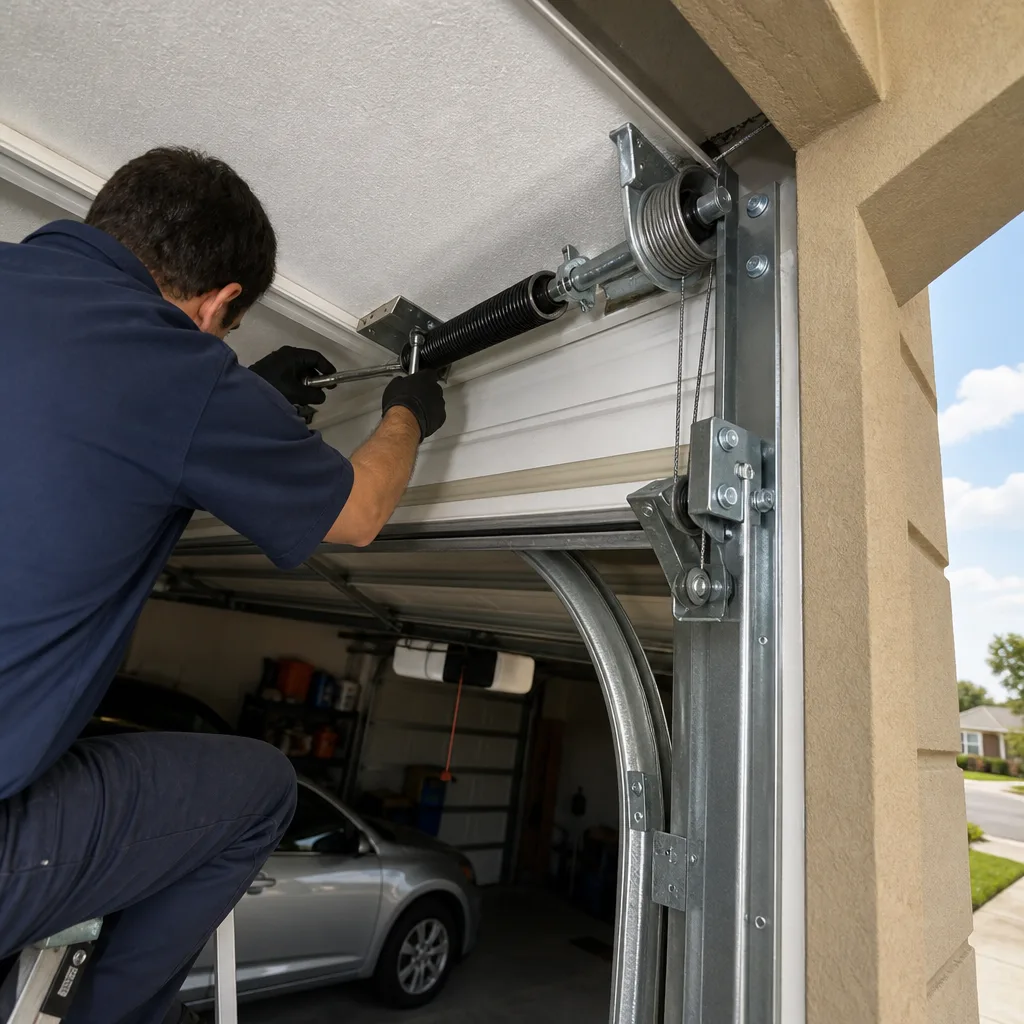
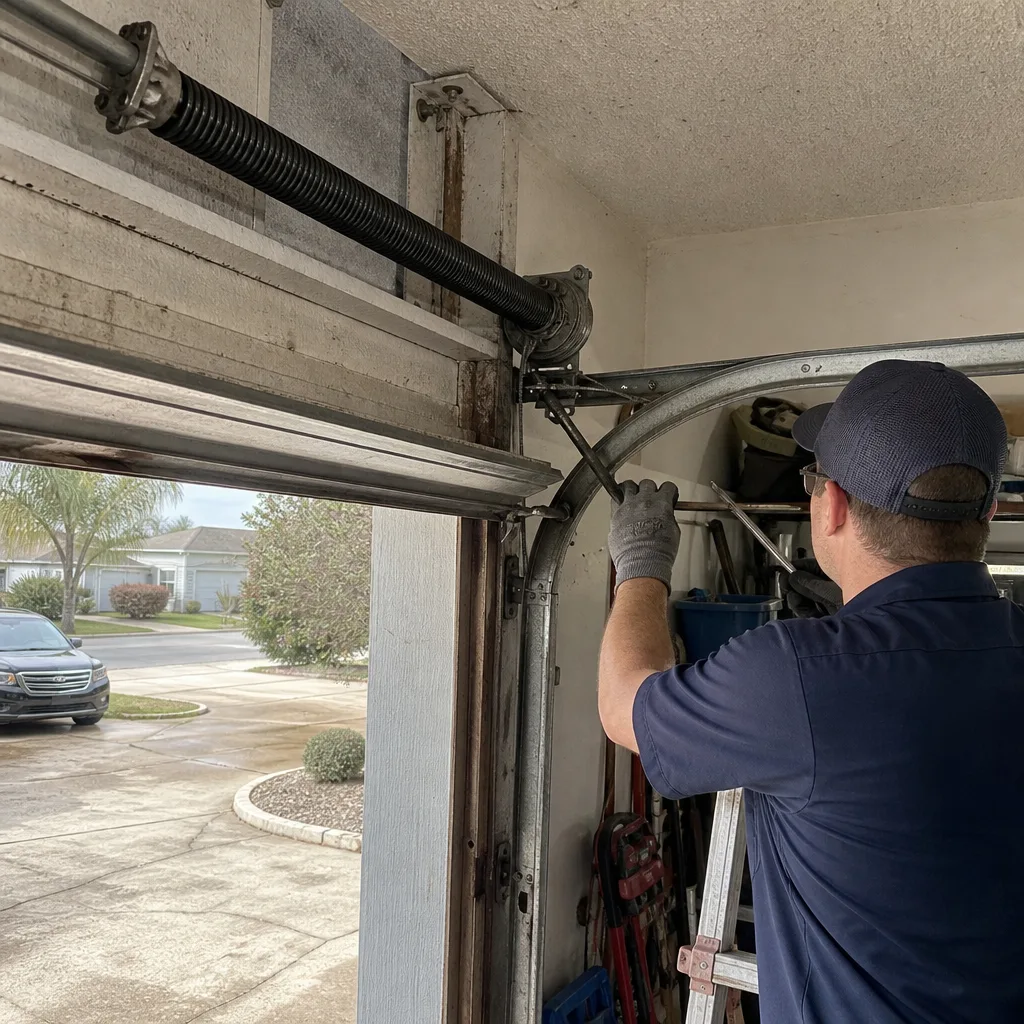
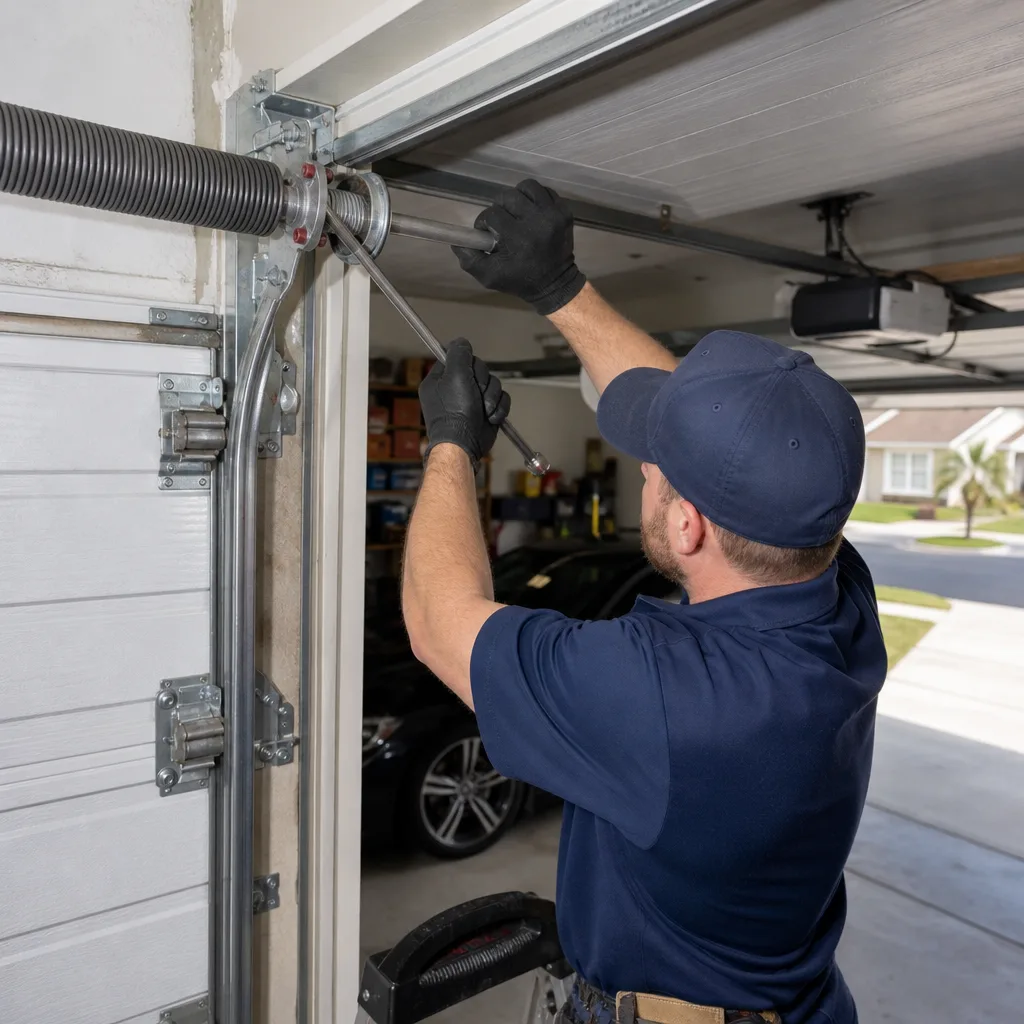
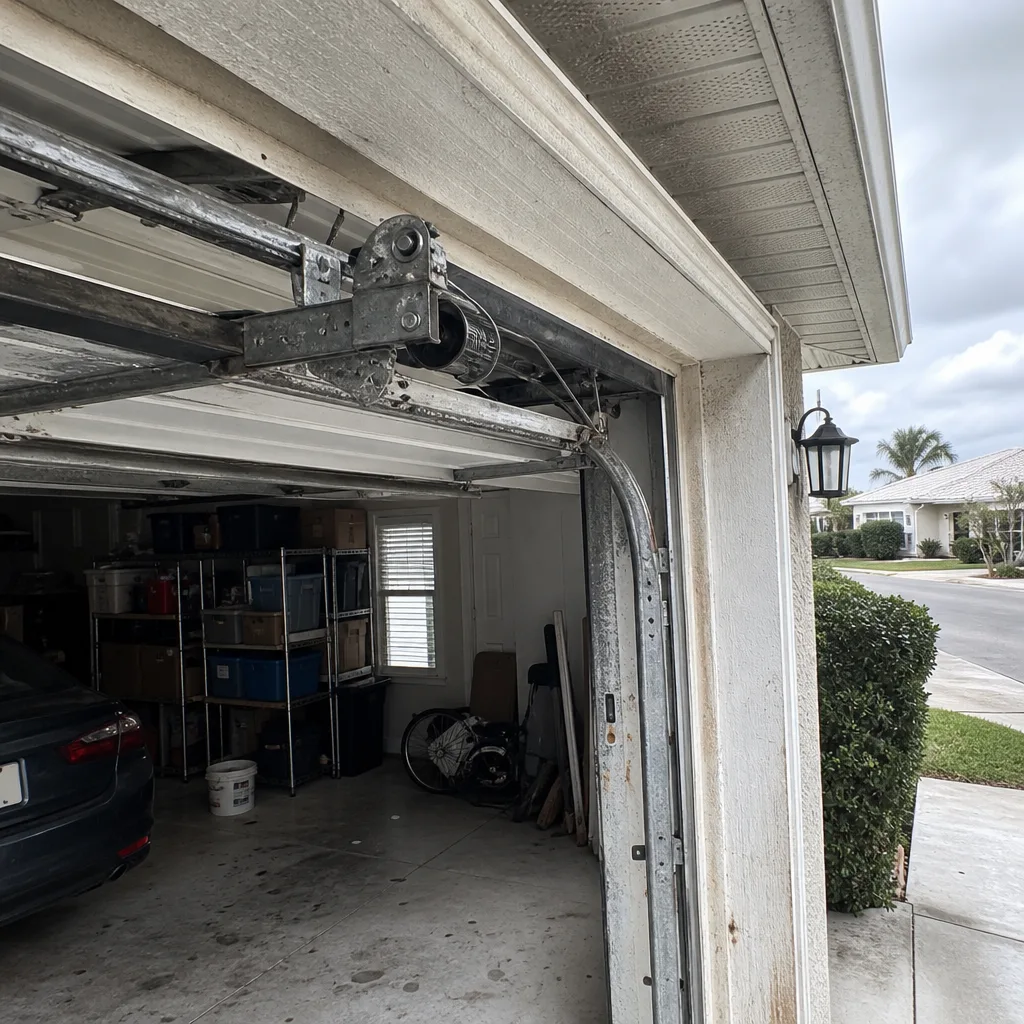
See the difference
 Before
 After
 Before
 After
 Before
 After