Last updated October 31, 2026
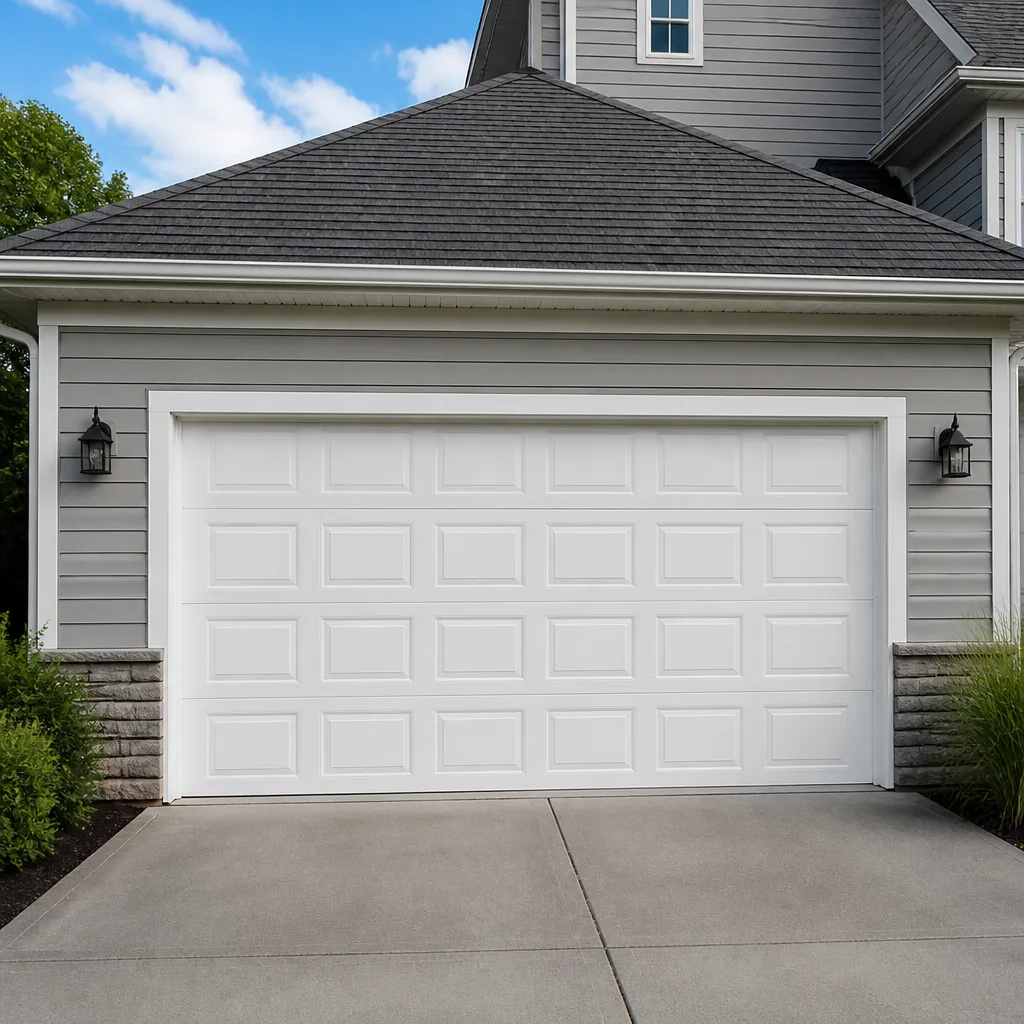 Raised-panel steel
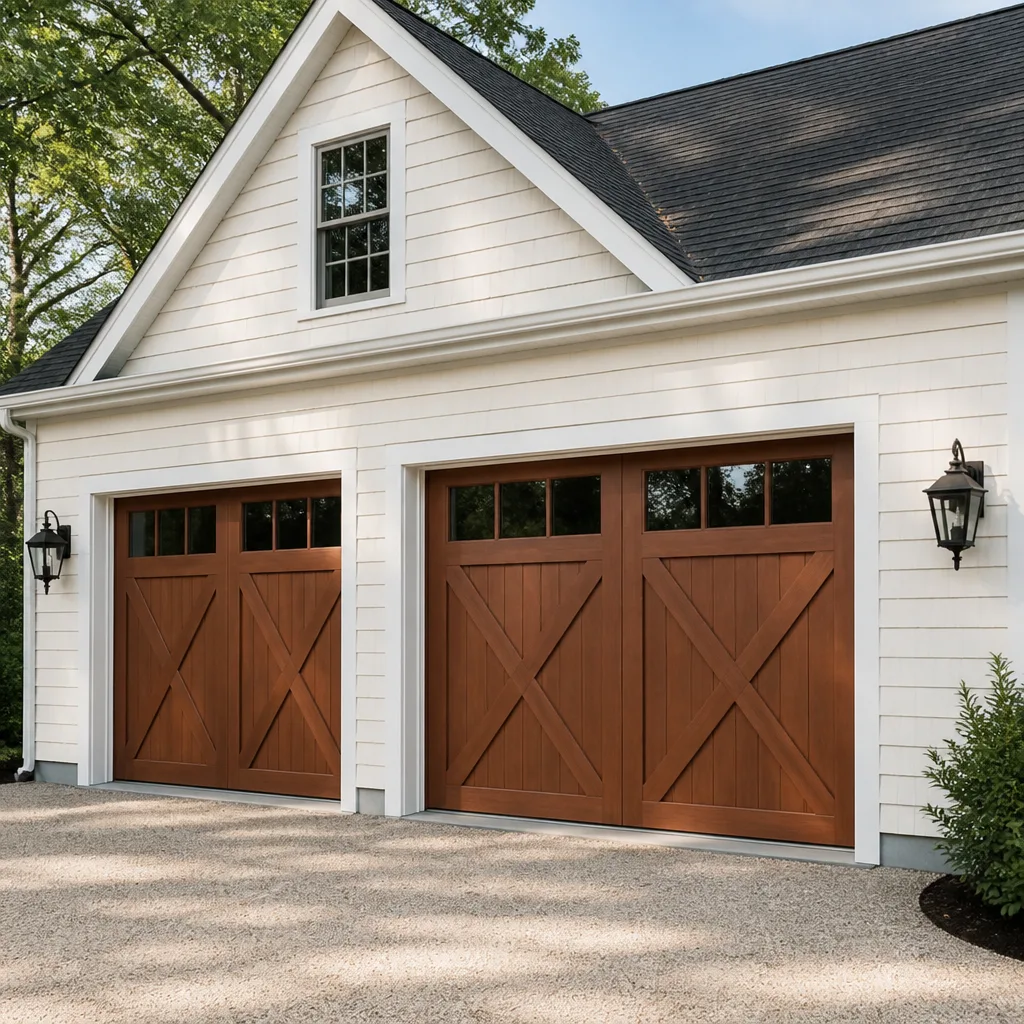 Carriage house
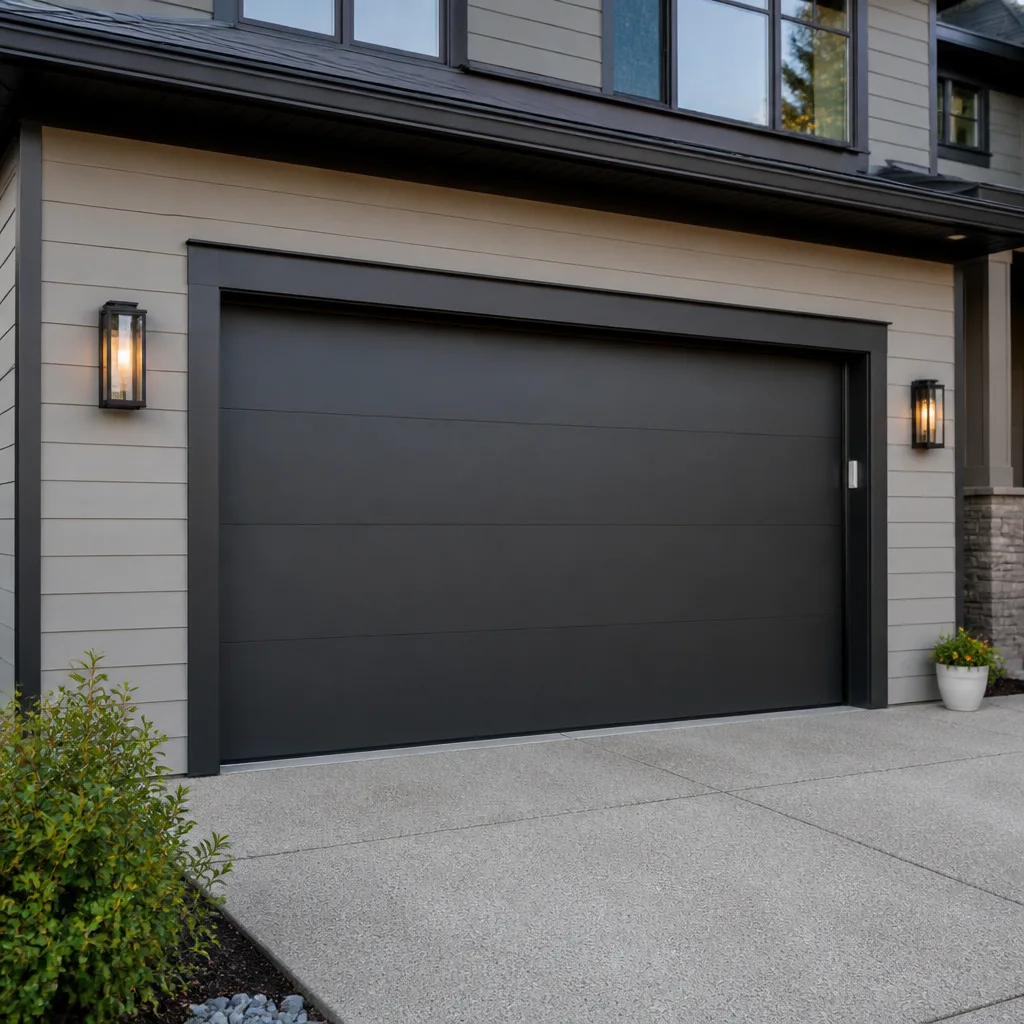 Modern flush
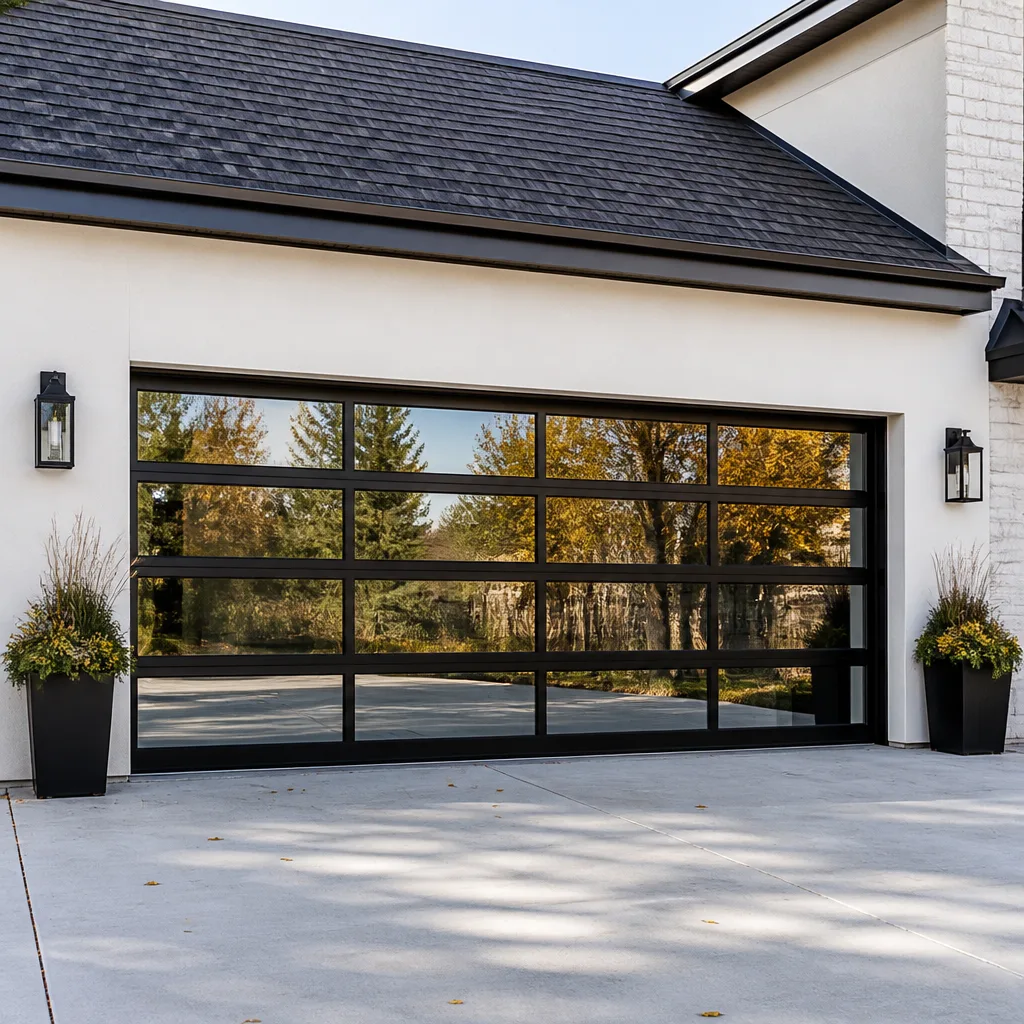 Full-view glass
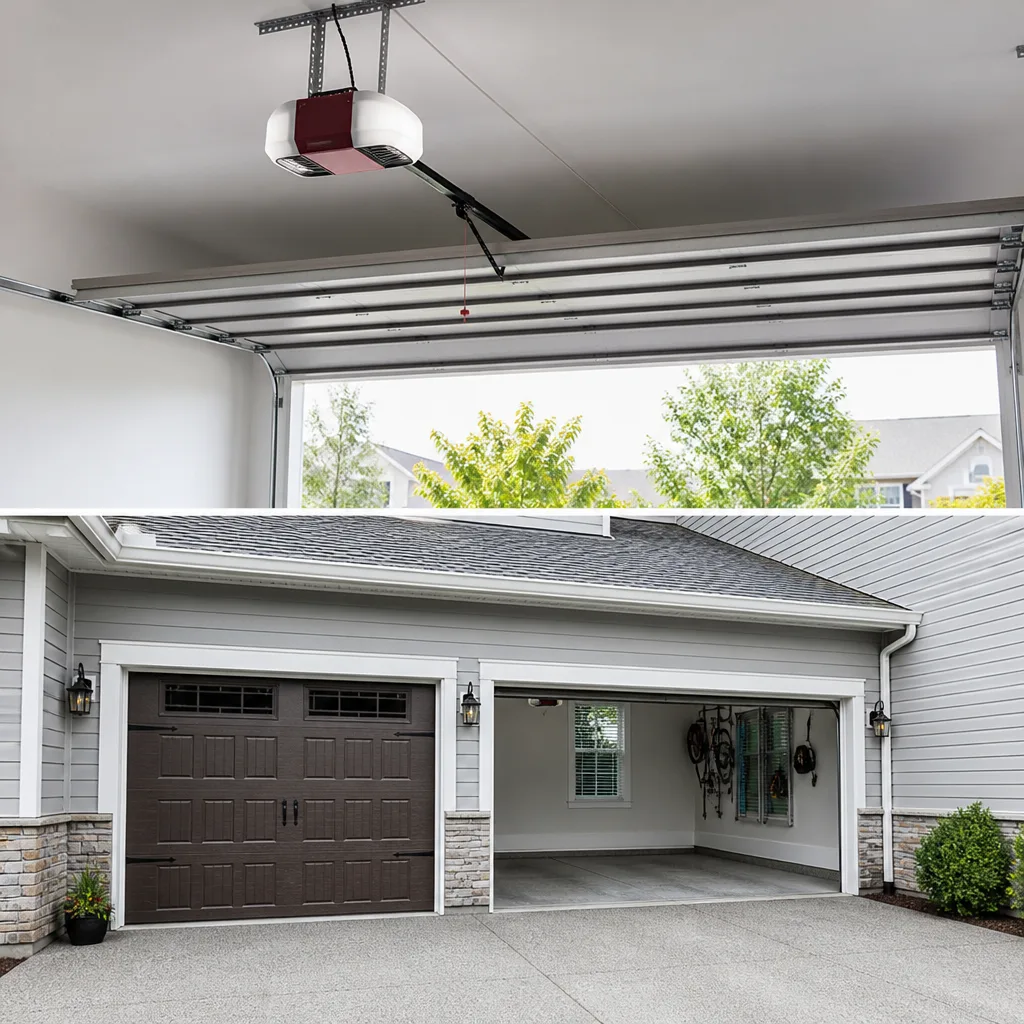 LiftMaster openers
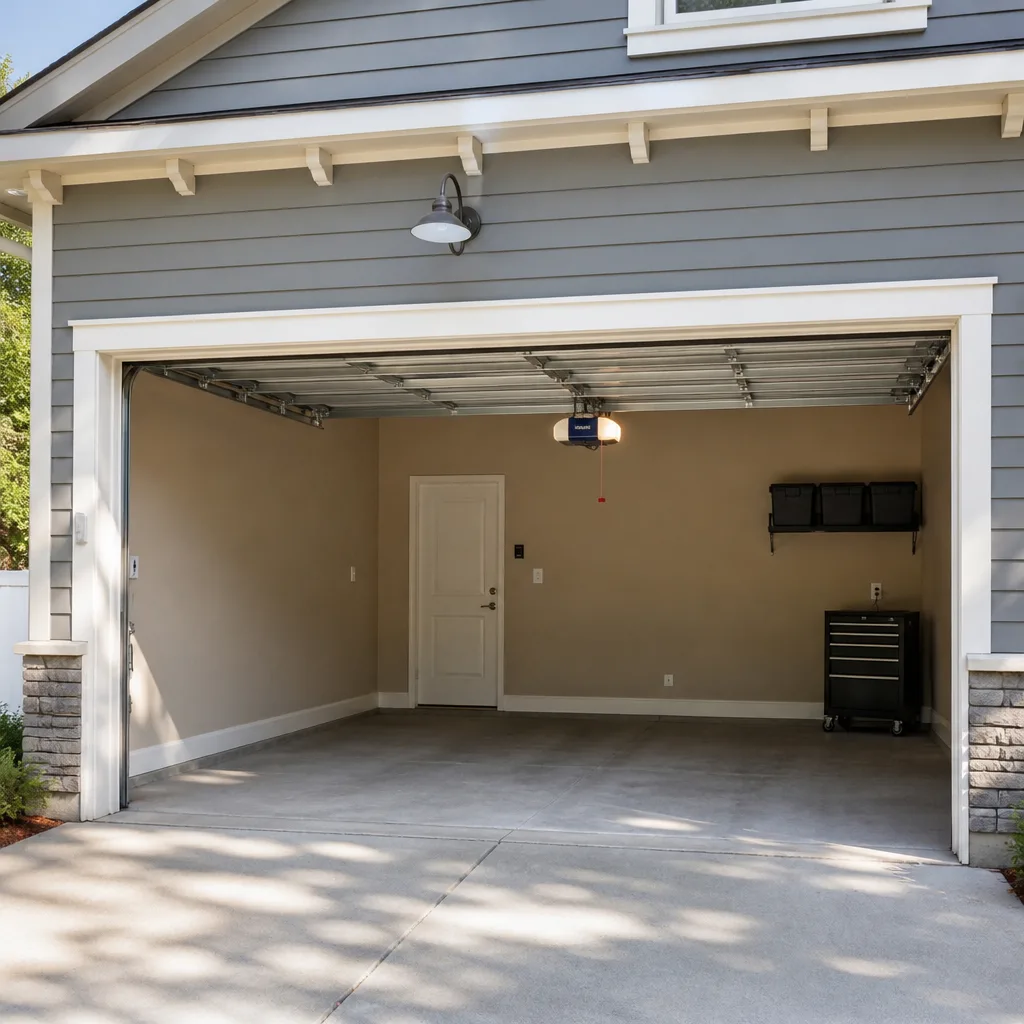 Chamberlain openers
Full 25-point door and opener safety check with every visit - springs, cables, rollers, tracks, and your LiftMaster or Chamberlain opener included
You get a price before we start. It does not change when the truck arrives.
Get your free estimateDIY vs Professional Garage Door: The The Villages Homeowner’s Decision Guide
Garage door springs are under hundreds of pounds of stored tension. A single mistake during a DIY spring replacement sends people to the ER, not urgent care, and it happens to experienced people who “did it before” without incident. This guide draws a hard, honest line between what a The Villages homeowner can safely handle on a weekend afternoon and what genuinely requires a trained professional, and points you to more guides & resources for ongoing maintenance. You’ll learn which tasks are truly safe, which ones carry legal complications in Florida, and how to calculate the real cost of doing it yourself when things go sideways.
Styles & brands we work with
Quick Answer
For The Villages homeowners, the DIY vs. professional decision comes down to three tiers: lubrication, sensor alignment, and remote pairing are genuinely safe DIY tasks; spring replacement, cable work, and opener motor repair carry serious injury risk and require professional tools; and any task touching structural modification or new installation involves Florida legal requirements that make professional work the practical choice. We service LiftMaster, Chamberlain, Genie, Clopay, Amarr, Wayne Dalton, Craftsman, and Raynor systems, so we work on the brand you already own.
Table of Contents
- What’s Genuinely Safe to DIY on a Garage Door
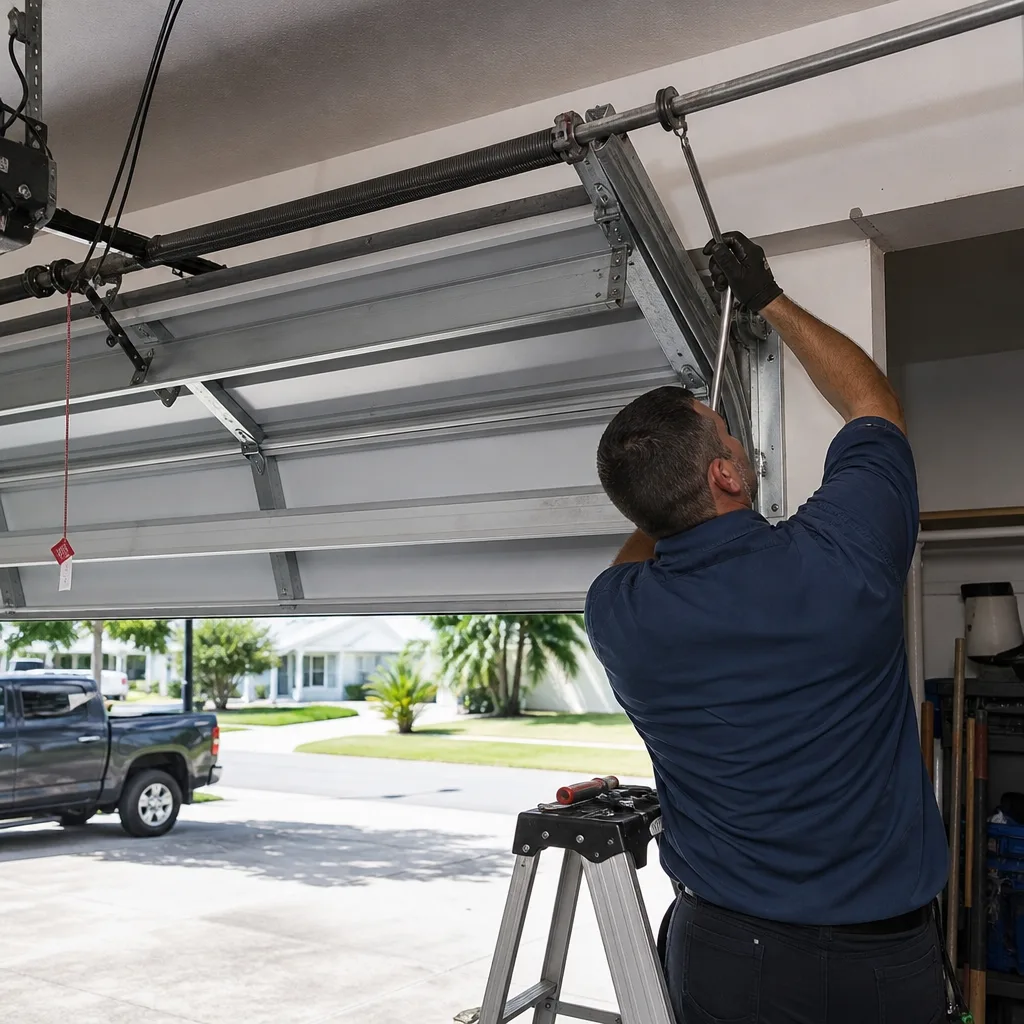
- The Spring Replacement Argument: Why This Task Is Different
- Florida Legal Gray Areas: Permitted Work and What That Means
- The Real Cost of DIY: Tools, Time, and the Fix-It-After Cost
- What “Voiding the Warranty” Actually Means in Practice
- Why Brand-Specific Knowledge Changes the DIY Calculation
- Common Mistakes to Avoid
- When to Call a Professional
- Frequently Asked Questions
- The Bottom Line
What’s Genuinely Safe to DIY on a Garage Door
Let’s start with what you can actually do without calling us. The list is shorter than most YouTube videos would have you believe, but these three tasks are genuinely safe for a careful homeowner with basic hand tools and a step stool.
1. Lubrication: The 20-Minute Task That Prevents Most Problems
Garage doors in The Villages face a specific enemy: Florida humidity plus fine dust. That combination turns lubricant into paste faster than in drier climates. A door that sounds like a dying animal when it opens is usually just crying for lubricant, not a replacement part.
You’ll need white lithium grease for the metal-on-metal contact points: hinges, rollers, and the bearing plates at each end of the spring tube. For the spring itself, use a spray lubricant like WD-40 Specialist or a dedicated garage door lube. Do this every 6 months and you’ll prevent a surprising number of service calls.
2. Photo Eye Sensor Alignment: A 10-Minute Fix Anyone Can Do
When your door starts closing and then reverses for no reason, the photo eyes at the bottom of each track are usually misaligned. One small bump from a garbage can or a Florida afternoon thunderstorm’s wind pressure can knock them a fraction of an inch out of line.
To check: look at the small LED indicators on each sensor. If one is blinking or both are off, loosen the wing nut holding the sensor, adjust until both lights are steady, and tighten. That’s it. No tension, no stored energy, no danger. If both lights are on and the door still reverses, call us, because that means something else is wrong.
3. Remote and Keypad Programming: Usually a 5-Minute Phone-Free Task
New remotes and wireless keypads from Genie, Chamberlain, or LiftMaster come with clear programming instructions. For most post-2011 openers, you press the learn button on the motor unit, then press the button on the remote within 30 seconds. The keypad follows the same principle with a temporary PIN entry step.
Where this goes wrong: older systems, rolling code mismatches, or openers that use dip switches. If your opener has a wall of tiny switches inside the remote compartment, that’s a pre-1996 system and programming is genuinely fiddly. We handle that type of thing regularly. All three of these tasks are safe because none of them involve the parts of the door that store energy.
The Spring Replacement Argument: Why This Task Is Different
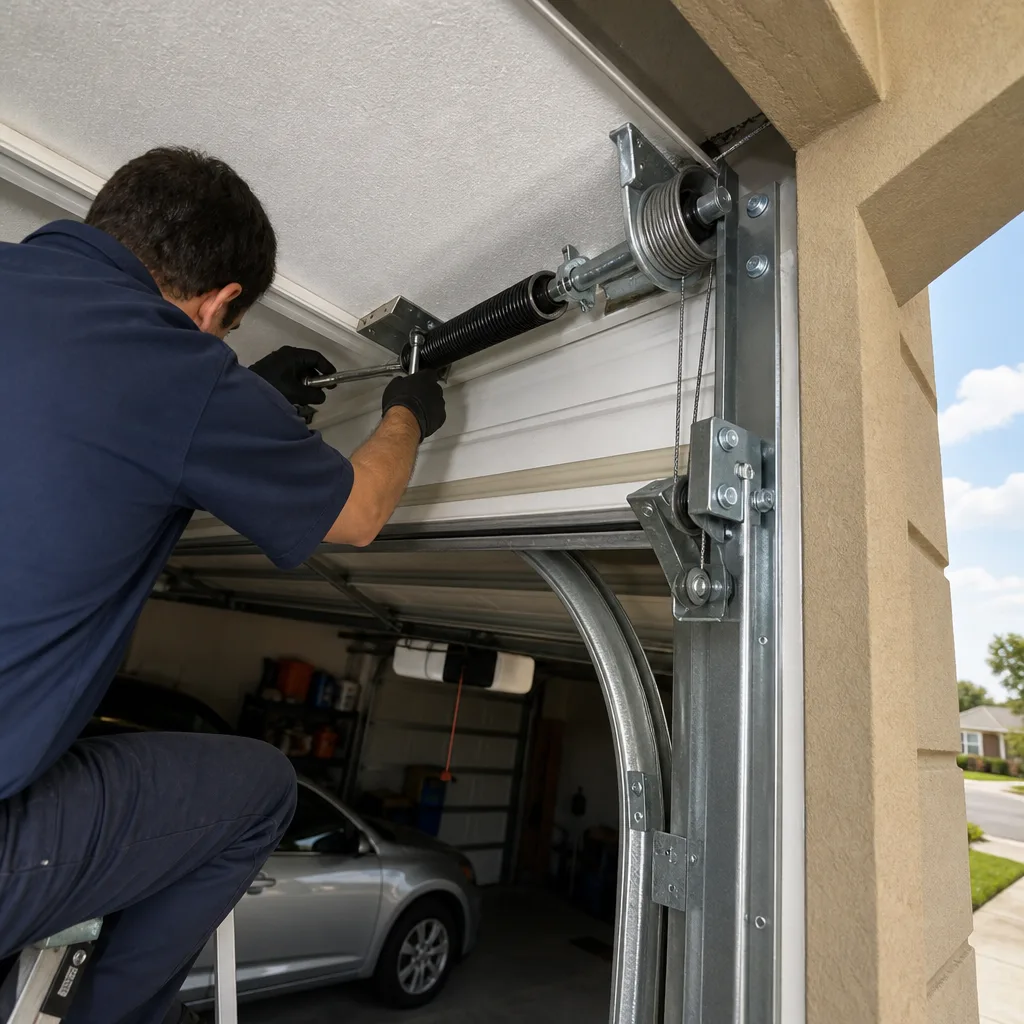
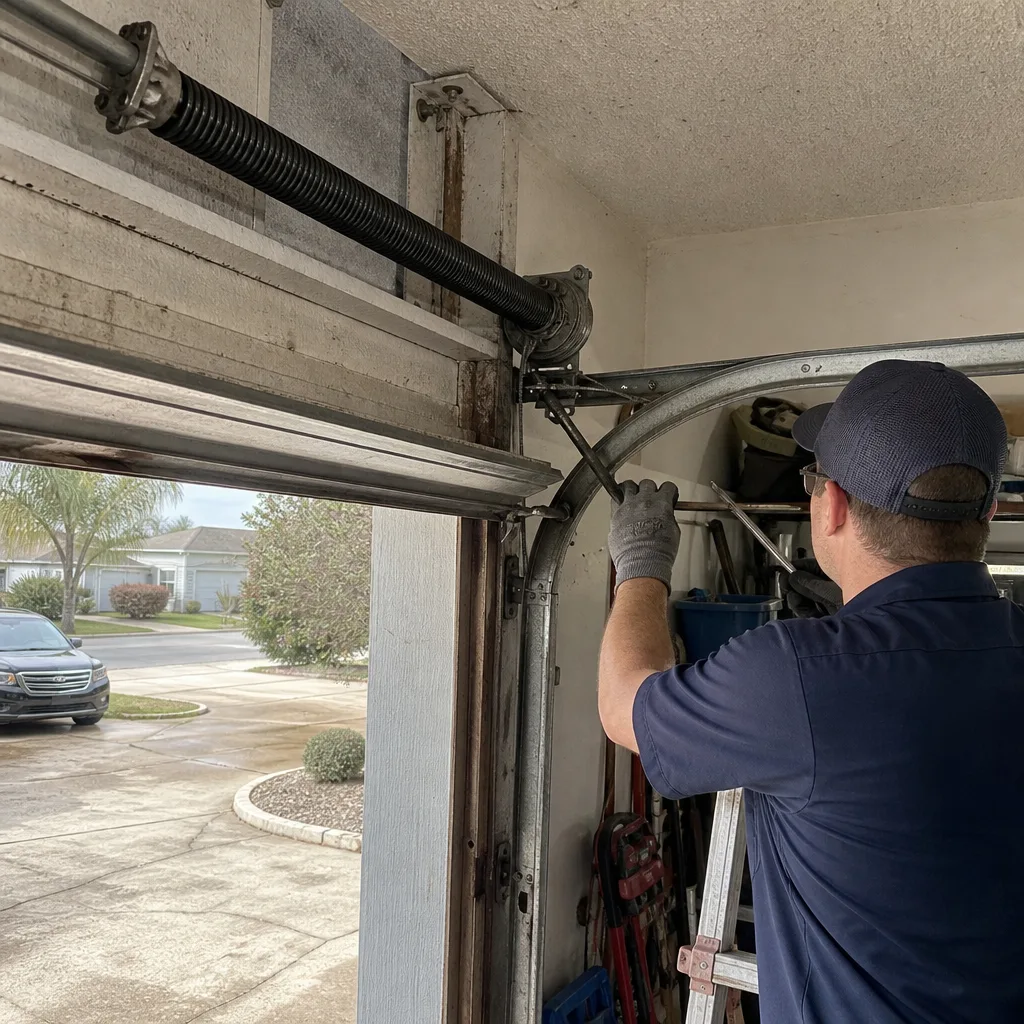
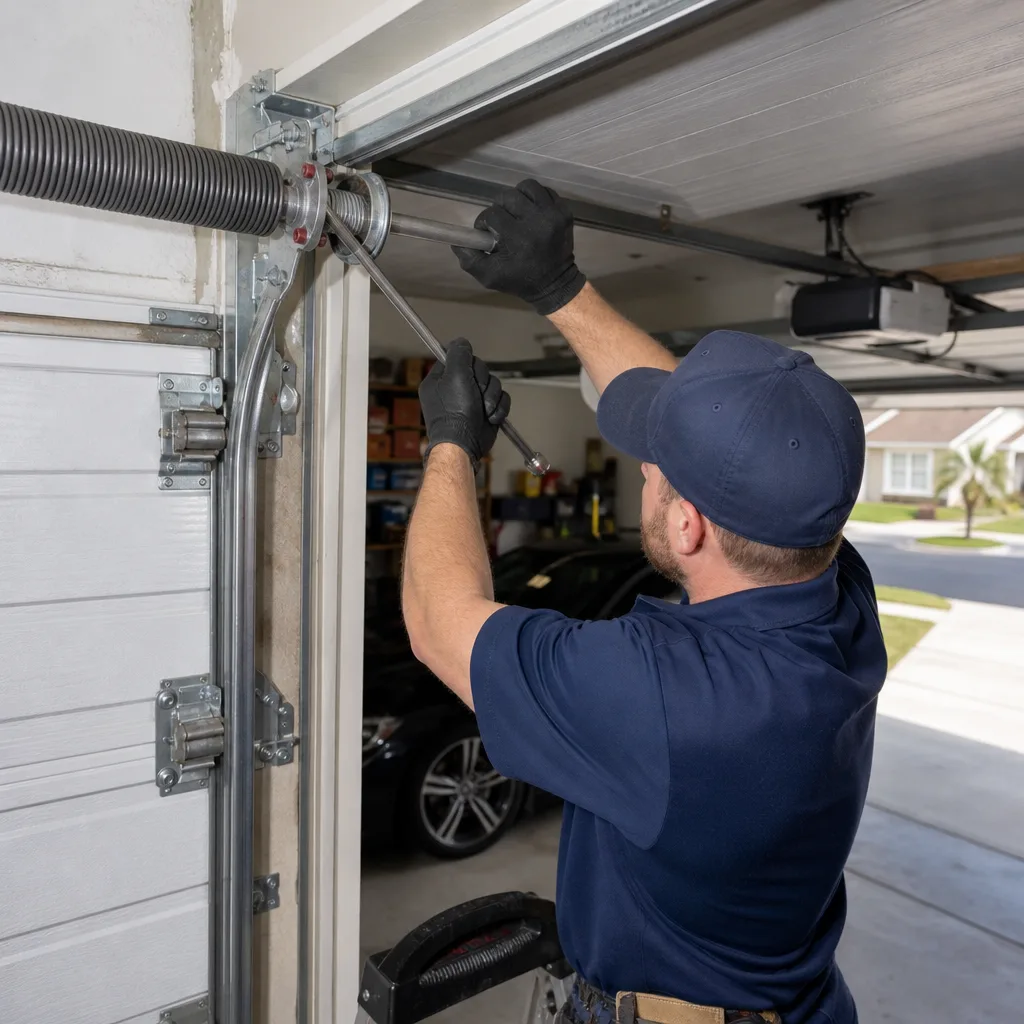
Everything else on your garage door is mechanical. Springs are also mechanical, but they operate on a completely different physics principle: stored kinetic energy. A torsion spring above your door holds enough tension to lift 150 to 400 pounds of door panel. All of that energy is wound into coiled steel. When a spring snaps or when someone unwinds one incorrectly, that energy releases instantly.
According to the U.S. Consumer Product Safety Commission, garage door injuries send over 20,000 people to emergency rooms annually. The vast majority of these involve springs. In our experience at The Villages, we’ve seen torsion springs that blew through a homeowner’s drywall, bent a steel ladder, and cracked a windshield on a parked car. Not hypothetical, actual service calls we’ve walked into after the fact.
Here’s the part that surprises people: the danger isn’t just the spring snapping while you work. It’s the winding and unwinding process itself. Professional-grade winding bars cost about $40. That’s cheap. But knowing exactly how to seat them, how to apply force gradually, and how to react if the spring starts to slip, that’s not a YouTube skill. Experienced mechanics still treat this operation with genuine respect because a fully wound spring can break an arm or a jaw if a bar kicks back.
The other false comfort: “I did it once before and it was fine.” Every professional garage door technician has heard this from someone in a hospital bed. Doing it once proves you got lucky once. Spring metallurgy varies by manufacturer. A Wayne Dalton spring, for example, uses a different winding cone style than a Clopay spring. What worked on one door may not transfer to another.
Our recommendation is blunt: if the spring is broken or needs replacement, call us. The cost is not just labor; you’re paying for training and for someone else to take the risk. The price of a professional spring replacement runs a few hundred dollars. The price of a single ER visit for a spring injury starts around the same amount and goes up from there, before you factor in lost work time or a surgery.
Florida Legal Gray Areas: Permitted Work and What That Means
This is the section most guides skip, and it matters for The Villages specifically. Florida building code treats garage doors as part of the building envelope, and that has legal consequences. A new garage door installation is not a handyman job in Florida. It’s permitted work.
Here’s what that means in practice. When you pull a permit for a new door installation in Lake, Sumter, or Marion County, the permit requires the installation to meet current wind load requirements. Florida’s wind codes are among the strictest in the country because of hurricane exposure. A door rated for inland Ohio is not rated for central Florida’s wind pressure zones. If you install the wrong door without a permit, you’ve created a code violation on your own property title. When you sell the house, that violation surfaces.
Even if you buy a wind-rated door from Amarr or Clopay, the installation itself must be done to the manufacturer’s wind load specification. That spec includes specific anchor types, specific reinforcement, and specific header connection methods. A homeowner can physically complete this work. But doing it without a permit and without a licensed inspection creates a liability that follows the property, not just the person who installed it.
The gray area appears with track adjustment and opener replacement. These typically don’t require permits in most Florida jurisdictions because they’re considered maintenance, not structural modification. But “typically” is doing a lot of work in that sentence. If your door has a reinforcement strut and you remove or reposition that strut, you’ve potentially changed the wind load rating of the door. That moves you into permitted territory without you realizing it.
What we do at The Villages Garage Door Service: we install doors to current Florida Building Code wind load requirements, and we pull the permit when the job requires one. Handing that responsibility to a professional isn’t a luxury; it’s how you avoid a title defect.
The Real Cost of DIY: Tools, Time, and the Fix-It-After Cost
Here’s a math exercise most DIY articles skip. Let’s take the most commonly attempted DIY repair: replacing a broken torsion spring. We’re using this example because it’s the one where homeowners most often underestimate the true cost.
The DIY Spring Replacement Cost Breakdown
- Two winding bars: $35-$50. You can’t safely use screwdrivers or pry bars, despite what forums suggest.
- Replacement spring pair: $80-$150, depending on wire size and door weight. Online purchase, not local.
- Spring measuring tape (to determine wire size correctly): $5-$10. Or you guess and buy the wrong spring.
- Vise grips or C-clamps to lock the door in place: $20-$40 if you don’t already own them.
- Time invested: 3-6 hours for a first-timer, including the measuring, the research, the purchase wait time, the installation, and the adjustment period.
- The cost of a professional fix when something goes wrong: $150-$300 in additional repairs if you damage the door, the cable, or the bearing plate during the attempt. This happens often enough that it’s a standard line item in our service experience.
Total DIY cost: roughly $190 to $290 in materials and tools, plus a Saturday. Total professional cost: $250 to $450 in most cases, done in 1-2 hours. The gap narrows to almost nothing when you factor in time and risk, and it flips negative if the DIY attempt damages something. We’ve also seen the opposite problem in The Villages: someone buys the spring, attempts the repair, gives up halfway, and now has a door stuck open with a partially unwound spring. That’s more dangerous than a broken door, because a partially wound spring is under uneven tension and can release unpredictably.
For tasks like opener replacement, the DIY cost math is better because the safety risk is lower. But opener replacement still involves 110V electrical connections and garage door force adjustments that most homeowners get wrong on the first try. Balanced against that: Genie, Chamberlain, and LiftMaster openers come with brand-specific installation instructions designed for competent DIYers. If you’re comfortable with basic wiring and have a helper, an opener swap is reasonable DIY territory. Just don’t skip the safety reverse test at the end, because that adjustment is what prevents the door from crushing a pet or a child.
What “Voiding the Warranty” Actually Means in Practice
The fear phrase “voids the warranty” gets thrown around a lot, but most homeowners don’t know what it actually covers. Here’s the practical version for branded door systems like Clopay, Amarr, and Wayne Dalton.
Manufacturer warranties on garage doors typically cover specific components: the door sections, the hardware, and in some cases the springs. The warranty language almost always includes a clause stating that improper installation or unauthorized modification voids coverage. The key word is “improper.” Installing a new door yourself doesn’t automatically void the warranty. Installing it incorrectly and then filing a claim for the resulting damage? That’s where the voiding happens.
What actually happens in practice, though, is more subtle. When a homeowner installs a new Amarr door themselves and then has a hinge failure six months later, the manufacturer asks for installation documentation. No receipt from a licensed installer, no warranty claim. The manufacturer has no way to verify the door was installed to spec, so they deny the claim. Not because they’re being unreasonable; because they can’t separate installation error from manufacturing defect.
For spring replacements on existing door systems: most manufacturers’ spring warranties are pro-rated and conditioned on professional installation. If you buy a Clopay door with a “lifetime spring warranty” as an upgrade, that lifetime coverage applies only if a factory-trained professional installs the springs. Install them yourself and the spring warranty drops to whatever the base coverage is, often 1-2 years.
The other practical warranty issue: mixing brands. If you put a third-party spring on a Clopay or Wayne Dalton door, the door manufacturer can deny a future claim on the hardware, because the spring wasn’t part of the factory system. This isn’t theoretical. We’ve helped homeowners navigate warranty claims after a DIY attempt damaged their door, and the first thing the manufacturer asks for is the installation history.
Our position is straightforward: The Villages Garage Door Service home page has the details on how we handle brand-specific warranty work on the eight major brands we service. When we install a door or replace a spring, we provide the documentation that keeps your warranty intact. That documentation is part of what you’re paying for.
Why Brand-Specific Knowledge Changes the DIY Calculation
Here’s something most online guides don’t tell you: garage doors are not interchangeable. A Genie opener uses a different travel module than a Chamberlain opener. A Clopay door with an IntelliCore insulation system handles differently than an Amarr door with a steel-back construction. When a DIY tutorial shows a “typical” garage door, you’re often looking at a model that works differently from the one you own.
We see this play out in The Villages all the time. A homeowner watches a video of someone replacing a Wayne Dalton TorqueMaster spring, then applies that procedure to their Clopay torsion spring system. Those are fundamentally different mechanisms. The TorqueMaster is a self-contained spring tube with no exposed torsion spring, designed specifically to be safer for homeowners. The Clopay system is a traditional exposed torsion spring. What’s safe and simple on one becomes dangerous on the other.
The same pattern applies to openers. Genie’s Intellicode remote system pairs differently from LiftMaster’s Security+ 2.0. A programming sequence that works on one brand fails on the other. When a homeowner calls us after an hour of trying, the fix usually takes us five minutes because we know the specific system. The time saved is not because we’re smarter; it’s because we’ve done this same brand repair hundreds of times.
This brand-specific knowledge matters for repair decisions too. Certain Amarr door models have known hinge wear patterns. Certain Chamberlain opener models have a specific capacitor failure signature. If you’re diagnosing your own door, you don’t have access to that pattern library. You’re starting from scratch, which means more time, more frustration, and a higher chance of replacing the wrong part.
Here’s the honest framework we use: if a task is brand-neutral, like lubricating hinges or cleaning photo eye lenses, DIY is reasonable. If a task is brand-specific, like spring replacement, opener motor repair, or panel replacement, the DIY risk multiplies quickly. Garage Door Opener Repair in Mascotte is one of our core services for exactly this reason. These are brand-specific systems that reward experience.
Common Mistakes to Avoid
- Using screwdrivers as winding bars. This is the single most dangerous shortcut we see referenced online. A screwdriver in a winding cone will slip. When it slips, the cone spins with the full force of the stored spring tension. People lose fingers and break hands this way. Buy proper winding bars or call us.
- Disconnecting the door from the opener while it’s in the open position. If you pull the emergency release cord with the door up and the spring is broken, the door comes down with nothing to slow it. A 200-pound door falling from head height can kill someone. Always disconnect with the door in the closed position.
- Ignoring the cable twist. When a spring breaks, the lifting cable on one side often unwinds from the drum and becomes a tangled mess. Some homeowners see that and try to re-spool the cable without replacing the spring first. That puts you directly in the path of a broken spring system with residual tension. Don’t touch it.
- Buying the wrong spring wire size. Torsion springs come in different wire diameters for different door weights. A spring that’s one size too weak will fail in months. A spring that’s one size too strong will overpower the door. Matching the spring to the door requires knowing the exact door weight and dimension, plus the spring’s inner diameter and length. Guess on any of these and the repair doesn’t hold.
- Skipping the safety reverse test after any opener work. After replacing or adjusting an opener, you’re supposed to place a 2×4 on the ground and confirm the door reverses on contact. Many homeowners skip this. That reversal mechanism is what prevents a closing door from crushing a child, a pet, or you. Test it every time.
- Doing permitted work without a permit in Florida. New door installation in The Villages is not a cosmetic upgrade. It’s structural permitted work subject to wind load code. Doing it unpermitted creates a title issue when you sell. The buyer’s inspector will flag it. This one mistake can cost you thousands at closing time.
When to Call a Professional
Call a professional when the spring is broken. Call a professional when the door is off its track. Call a professional when you’ve adjusted something and the door now behaves worse. Call a professional when you’re not sure what the problem is and you’ve spent more than 30 minutes trying to figure it out. Call a professional when the repair requires a permit. Call a professional when you see a cable that’s frayed, loose, or no longer in its groove. None of these are situations where a YouTube tutorial makes the risk worth it. The pattern we see in The Villages is consistent: homeowners who call early save money. Homeowners who call after a DIY attempt has made things worse pay for two repairs instead of one.
The Villages Garage Door Service offers free estimates in The Villages. Call (855) 382-0952 and we’ll take a look before you spend a dollar. If it’s a safe DIY fix, we’ll tell you that too. Repair or replace? We’ll tell you the truth.
Frequently Asked Questions
Spring replacement in The Villages typically runs $250 to $450 including the spring pair and labor, depending on wire size, door weight, and whether you have a single or double spring system. The exact price depends on your specific door and we always quote the total before any work starts. Call (855) 382-0952 for a free estimate on your door.
You legally can, but you should not. Florida code doesn’t prohibit homeowner spring replacement, but the risk is genuinely severe and the savings, after tools and time, nearly always disappear. Most homeowners who attempt this tell us afterward they wouldn’t do it again.
No. New garage door installation in Florida is permitted work subject to wind load building code requirements. A handyman without the proper license cannot pull the permit. A homeowner can, but shoulders the legal and safety responsibility for code compliance.
It can. Most manufacturer warranties, including Clopay and Amarr, condition coverage on professional installation for springs and structural components. If you install a spring yourself and it fails, the manufacturer will likely deny the claim because they can’t verify installation to spec.
Lubricating hinges and springs, aligning photo eye sensors, and programming remotes are genuinely safe tasks for any careful homeowner. None of them involve stored spring tension. Do these as routine maintenance and leave everything that touches the spring or cables to a professional.
No. We quote the exact price after diagnosis and before any work begins. What we quote is what you pay. Call (855) 382-0952 and we’ll walk you through it.
The Bottom Line
The DIY vs. professional garage door decision in The Villages isn’t about how handy you are. It’s about which parts of the door store energy and which parts don’t. Lubricate, align, and program on your own. Leave springs, cables, structural work, and permitted installation to pros who do it every day. The cost difference, when you calculate tools, time, risk, and the potential cost of a failed attempt, is smaller than it looks. And in some cases, especially spring work, the professional price is actually cheaper once a DIY attempt goes wrong. One call, any garage door issue. From a broken spring to a brand-new door, Garage Door Repair in Mascotte and Garage Door Installation in Mascotte cover the full range. Call (855) 382-0952 and we’ll help you decide which side of the line your task falls on.
Written by the team at The Villages Garage Door Service, serving The Villages since 2016.
See the difference
 Before
 After
 Before
 After
 Before
 After