Last updated October 31, 2026
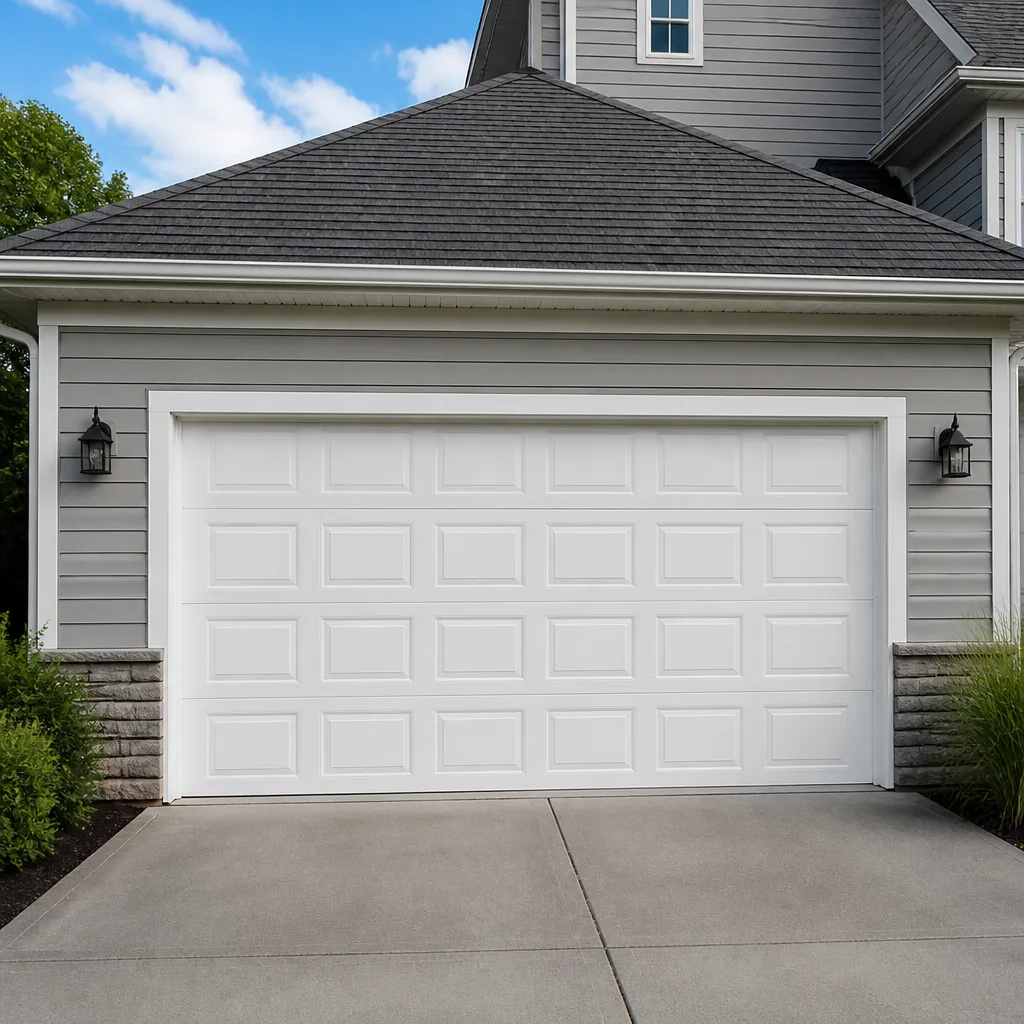 Raised-panel steel
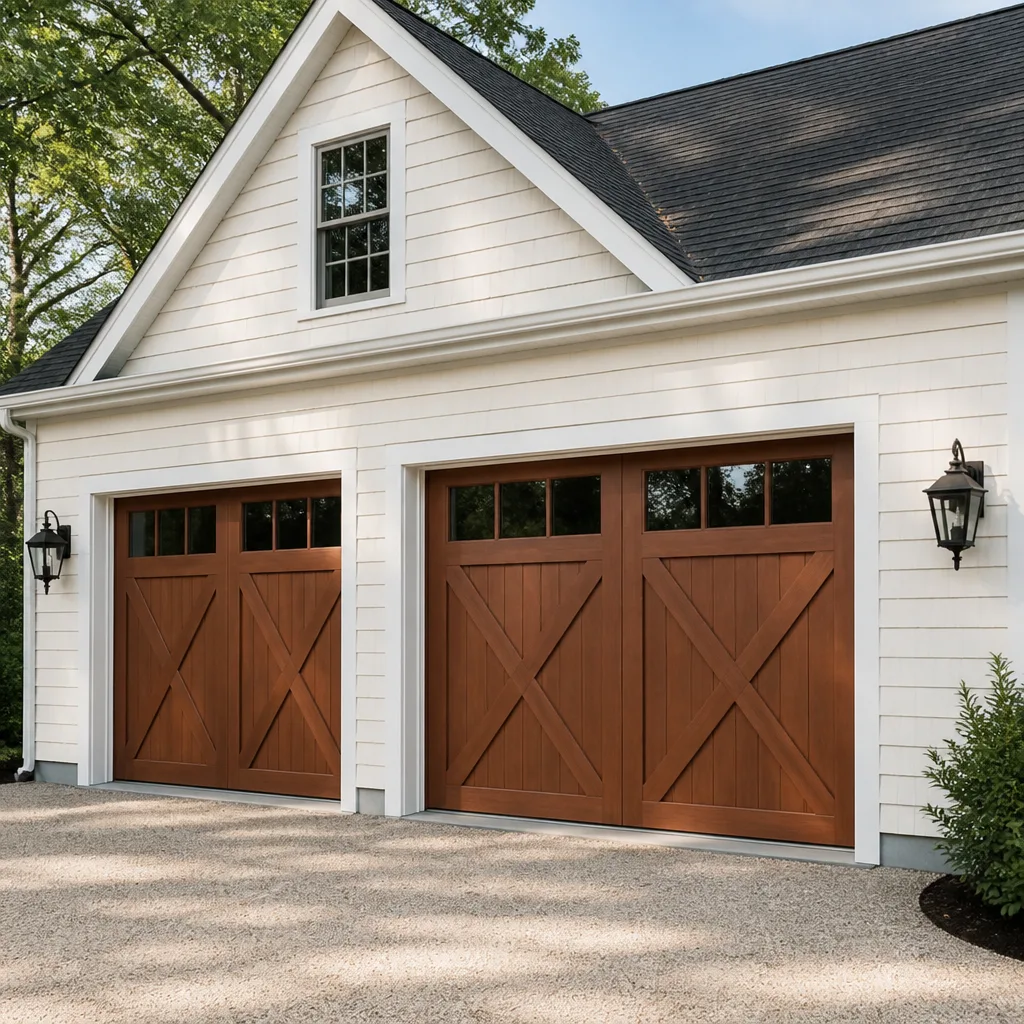 Carriage house
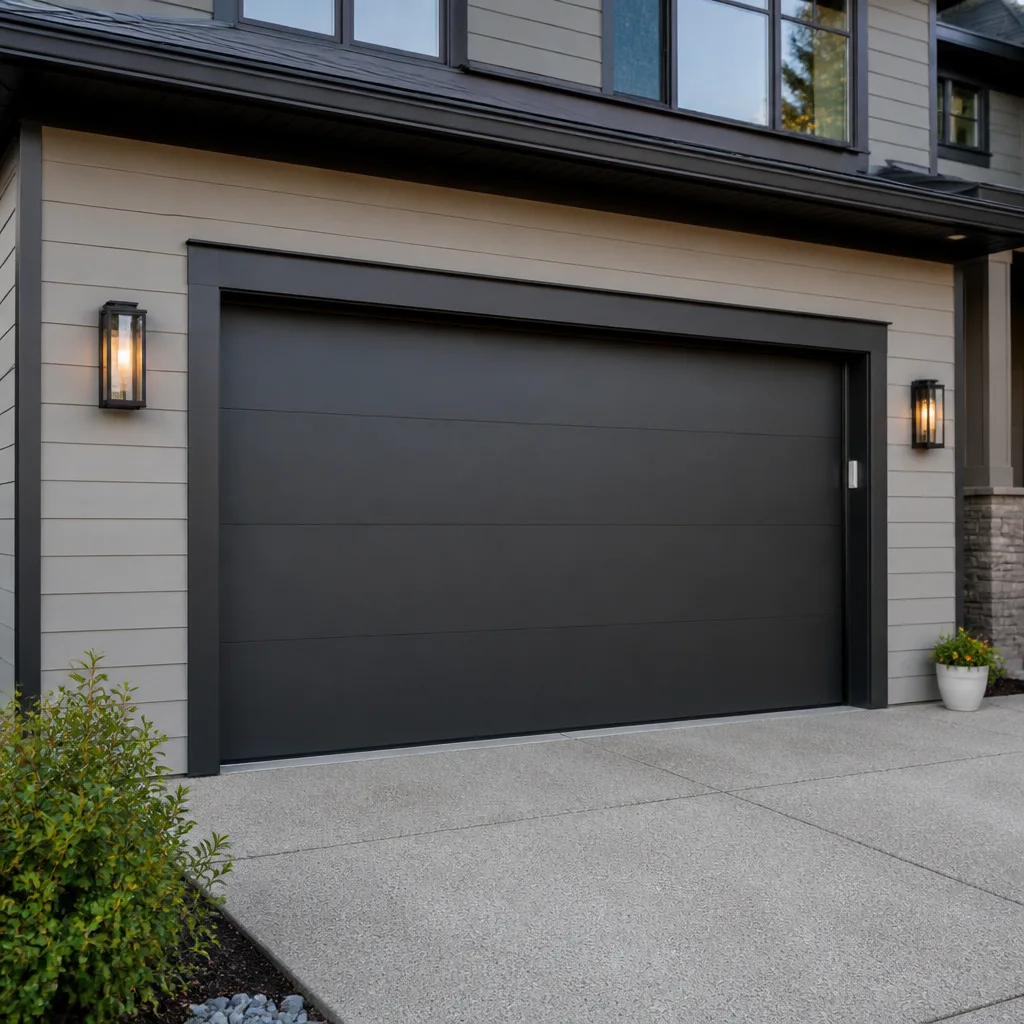 Modern flush
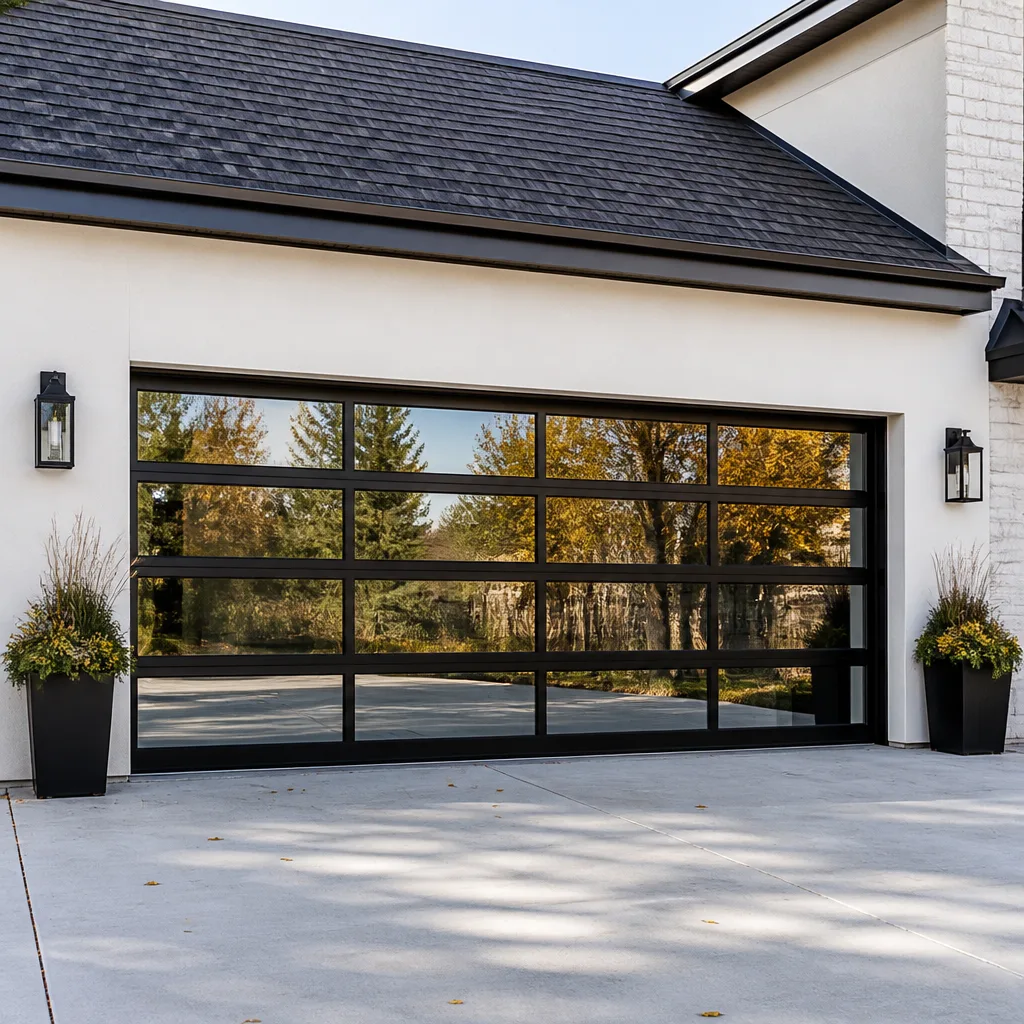 Full-view glass
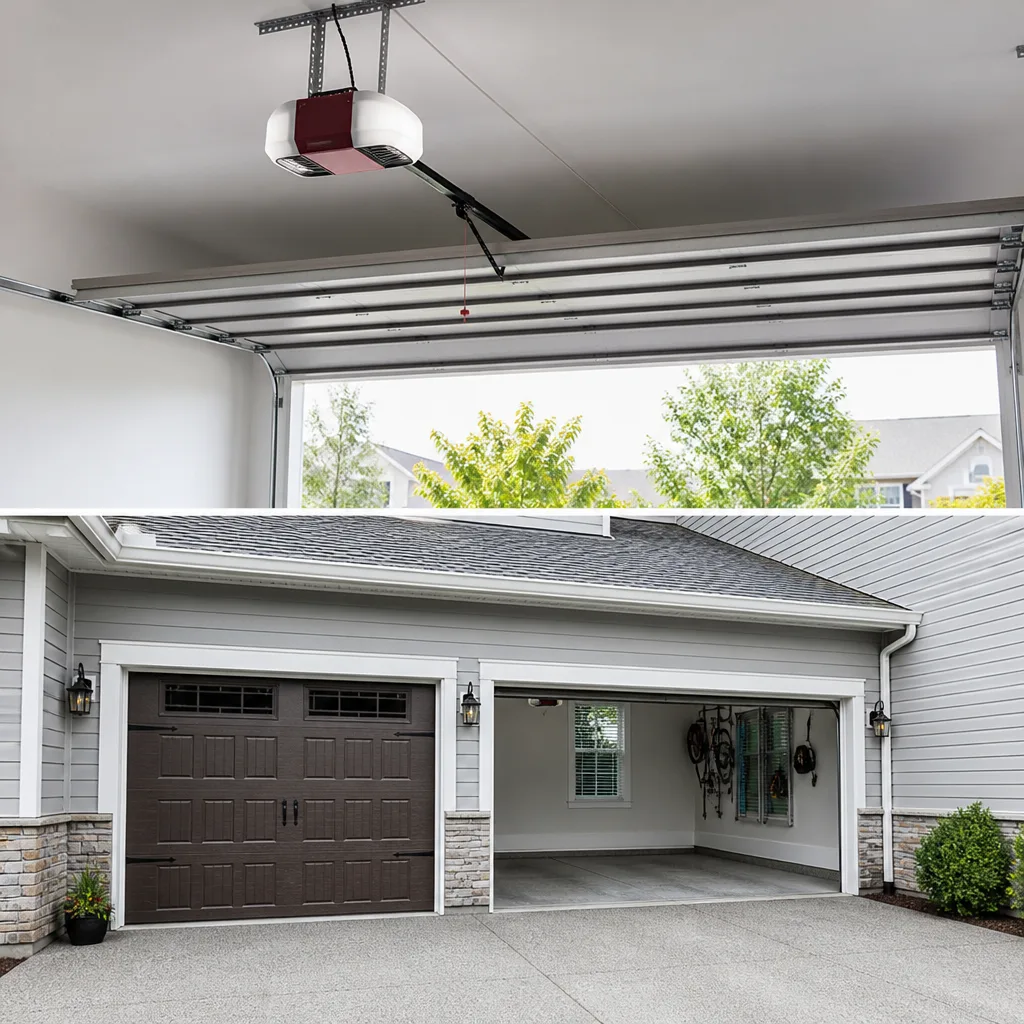 LiftMaster openers
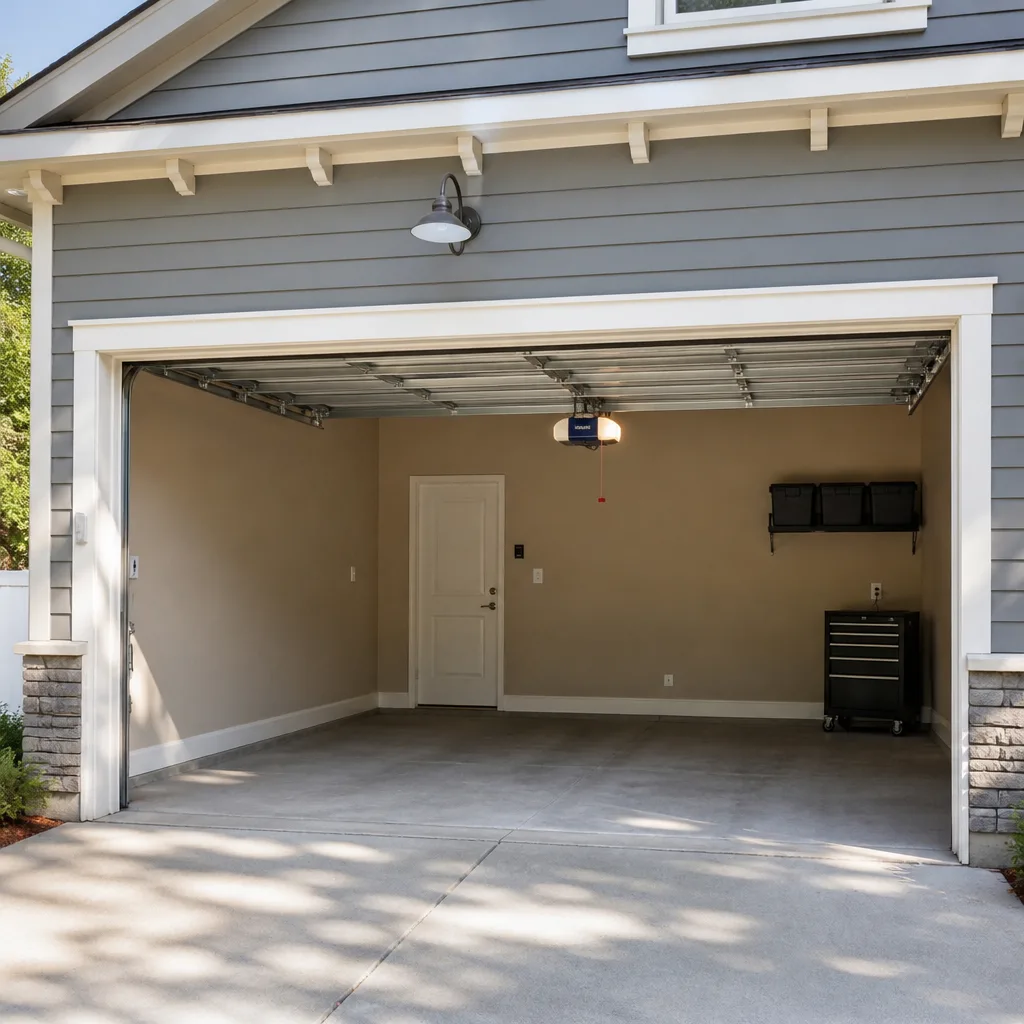 Chamberlain openers
Full 25-point door and opener safety check with every visit - springs, cables, rollers, tracks, and your LiftMaster or Chamberlain opener included
You get a price before we start. It does not change when the truck arrives.
Get your free estimateThe Complete Guide to Garage Door in The Villages
Most homeowners in The Villages spend more time choosing exterior paint than they do choosing a garage door, despite the door covering nearly 30% of their home’s curb-facing facade. That’s a costly blind spot. In a community like The Villages, where humidity sits high for months, HOAs keep a close watch on aesthetics, and the garage often doubles as a workshop or golf-cart bay, the door is not a background detail. It is the hardest-working exterior surface on the house. This guide maps every decision point, from first installation to eventual replacement, against the conditions that actually exist here in The Villages, and points to more guides & resources for deeper dives.
Styles & brands we work with
Quick Answer
A garage door in The Villages should be selected for three things at once: material that holds up to Florida humidity, a style that clears HOA architectural review, and an opener matched to the door’s weight and your daily-use frequency. The Villages Garage Door Service handles all three paths, repair, opener service, and full replacement, across LiftMaster, Chamberlain, Genie, Clopay, Amarr, Wayne Dalton, Craftsman, and Raynor systems. Call (855) 382-0952 for a free estimate on any door issue.
Table of Contents
- Choosing a Door Material That Survives Florida Humidity
- HOA Style and Color Approval: How The Villages Communities Work
- Lifecycle Cost Comparison: Budget vs. Mid-Grade vs. Premium
- Why the Door and the Opener Must Be Selected Together
- Service Intervals That Actually Matter in a Warm Climate
- Repair or Replace? A Decision Framework for Villages Homeowners
- Common Mistakes to Avoid
- When to Call a Professional
- Frequently Asked Questions
- The Bottom Line
Choosing a Door Material That Survives Florida Humidity
National garage door guides tend to rank steel, aluminum, and wood without accounting for what a humid subtropical climate does to each material over five to ten years. In The Villages, the humidity corridor changes the math. Steel is not automatically the safe default. Wood is not automatically the premium choice. Here is what we’ve observed across hundreds of doors in this specific region.
Steel remains the most common option and it performs well when it carries a proper rust-resistant coating. The problem is that many homeowners buy a steel door rated for general use, then watch the bottom panel develop rust bloom within three to four years. In The Villages, the doors that hold up best are those with factory-applied rust protection on the interior side of the panel as well as the exterior. That interior coating is the part national guides rarely mention, and it is the part Florida humidity tests hardest.
Aluminum doors are lighter and naturally resistant to corrosion, which makes them a sensible choice for coastal-adjacent climates like ours. The trade-off is durability. Aluminum dents more easily than steel, and in a community where golf carts and bicycles are parked in the garage, dings happen. If you choose aluminum, a thicker gauge and a reinforced bottom section are worth the small upcharge.
Wood doors are beautiful and almost never the right call in The Villages unless they are owned by someone willing to reseal them twice a year. Humidity makes wood swell. Summer storms drive water against the lower panels. Within two years, a neglected wood door in this climate will show warping, peeling, or rot at the seams. We recommend wood-look materials, like steel with a wood-grain finish by Clopay or Amarr, for the aesthetic without the maintenance burden.
One more note: any door in The Villages should have a proper weather seal at the bottom and along the sides. The seal is not a cosmetic add-on. It is the difference between a dry garage floor and a persistent mildew smell in August.
HOA Style and Color Approval: How The Villages Communities Work
If you live in a deed-restricted community in or around The Villages, and most homeowners do, your garage door is subject to architectural review. The process is not complicated, but it is predictable, and predicting it saves weeks of delay. Most Villages-area HOAs require submission of the manufacturer, material, color, and often a photo or digital rendering of the proposed door before installation begins. Some communities have a pre-approved palette. Others accept a range of neutral and earth tones and reject anything that reads as a contrasting accent.
The practical consequence is simple: do not buy a door on impulse because it looks sharp in a showroom. Check the color against your community’s approved list first. In our experience, the most commonly approved colors across Villages-area HOAs are white, beige, sand, taupe, and occasionally a muted brown. The most commonly rejected are dark charcoal, black, and any color that is not also represented on the home’s trim or fascia.
The process in The Villages typically works like this:
- Download or request your community’s architectural modification form, usually available through the management office or homeowner portal.
- Collect the door specs, including manufacturer, model, material, color name and code, and insulation R-value.
- Include a photo of your current facade so the review board can see how the new door will sit in context.
- Submit and allow for the stated review window, which in many Villages communities runs one to three weeks.
- Once approved, schedule installation. Do not remove the existing door before written approval arrives.
We help homeowners compile the specs they need for submission. A door that ships with clear, documented color codes and material data makes the approval step faster than one with vague or generic labeling. Brand-specific documentation matters, which is one reason we stock spec sheets for every door line we install.
Lifecycle Cost Comparison: Budget vs. Mid-Grade vs. Premium
The purchase price of a garage door is the smallest number in the conversation. In a warm, humid climate like The Villages, the real number is the cost of ownership over 10 to 15 years, including maintenance, repairs, and how early the door needs replacement. See our Garage Door Cost Breakdown: The The Villages Homeowner’s Reference for 2026 for full pricing, or read on for a practical comparison of three tiers.
| Tier | Typical Material | Upfront Range | Expected Lifespan in The Villages | Likely Maintenance | Best For |
|---|---|---|---|---|---|
| Budget | Thin-gauge steel, single layer, no insulation | $600-$1,100 installed | 6-10 years | Rust repair on bottom panel, spring replacement sooner, noisier operation | Rental properties, planned short-term ownership |
| Mid-Grade | Insulated steel, 1-3/8″ to 2″ thick, rust-treated both sides | $1,200-$2,200 installed | 12-18 years | Annual lubrication, occasional sensor alignment, spring replacement at 7-10 years | Most Villages homes, daily use, golf cart parking |
| Premium | Insulated steel with wood-grain finish, or heavy-gauge aluminum, reinforced hardware | $2,500-$4,500 installed | 18-25 years | Annual lubrication, weather seal replacement every few years | Long-term owners, homes with high curb visibility, quieter operation preference |
The budget tier looks cheaper on paper and often costs more by year ten. Thin steel rusts faster in The Villages humidity, springs wear sooner because the uninsulated door has less structural rigidity, and the noise level becomes a daily annoyance. For most homeowners in The Villages, the mid-grade tier is the honest sweet spot: insulated enough to protect a golf cart or workshop from heat, treated against rust, and priced so that replacement in 15 years is a plan, not a crisis.
One more consideration: insulated doors cost more upfront but reduce heat transfer into the garage. In The Villages, where garages house not just cars but often a golf cart, tools, and sometimes a second refrigerator, that insulation pays back in lower cooling strain on whatever sits inside. The gap between an insulated and uninsulated door on a west-facing garage in August is substantial.
Why the Door and the Opener Must Be Selected Together
The door and the opener are one system, not two separate purchases. This is the most common planning error we see in The Villages: a homeowner chooses a beautiful, heavy, insulated door, then keeps an older opener that was sized for the previous lighter door. The result is a motor that strains on every cycle, wears out its gears in two years, and leaves the homeowner blaming the door.
Opener capacity is rated in horsepower, but the more useful number is the door’s weight and balance. A properly balanced door can be lifted by hand with modest effort. The opener’s job is to move that balanced weight, not to fight a door that is already misaligned. If you are replacing a single-panel wood door with an insulated steel door, the weight difference may require a different opener class.
Here is how to think about the pairing:
- Light doors, under 150 pounds: a 1/2 HP opener from Chamberlain or Genie is typically sufficient.
- Standard insulated steel doors, 150 to 250 pounds: a 3/4 HP or belt-drive opener provides smoother cycles and less strain.
- Heavy or oversized doors, over 250 pounds or double-wide: a 3/4 HP or 1 HP opener, preferably belt- or screw-drive, and a properly rated spring set.
Brand compatibility also matters more than most people realize. LiftMaster, Chamberlain, and Genie each use different logic boards, safety sensor protocols, and wall control interfaces. When the opener and the door are from different generations, you can end up with perfectly good hardware that does not talk to each other. We service all three opener brands, plus Craftsman, so we match the opener to the door’s weight, not just to the brand label on the box.
Smart-home integration adds one more layer. If you want MyQ connectivity, battery backup, or a keypad that works from the golf cart, those features live in the opener, not the door. Deciding on them after the door is already installed usually costs more than deciding at the start.
Service Intervals That Actually Matter in a Warm Climate
Garage door maintenance advice written for northern climates is overbuilt for The Villages. We do not get freeze-thaw cycles, so metal parts do not need the same seasonal prep. But we do get humidity, dust, and heavy daily use from homeowners who are in and out of the garage more often than the national average. Here is the service schedule that actually matters here.
Every six months, do two things: lubricate the rollers, hinges, and springs with a silicone or lithium spray, and wipe down the weather seal at the bottom of the door. The seal is the first thing to degrade in The Villages humidity. When it cracks or loses flexibility, replace it. A $20 seal prevents water intrusion, pest entry, and the musty garage smell that is hard to get rid of once it sets in.
Annually, check the balance. Disconnect the opener using the emergency release cord, then lift the door manually to the halfway point. If it holds, the springs are doing their job. If it drops or rises on its own, the springs are wearing unevenly and the opener is compensating. Catch this early and you replace springs. Miss it for a year and you replace opener gears too. For storm-season readiness, see our Garage Door Emergency Preparedness Guide for The Villages Homes.
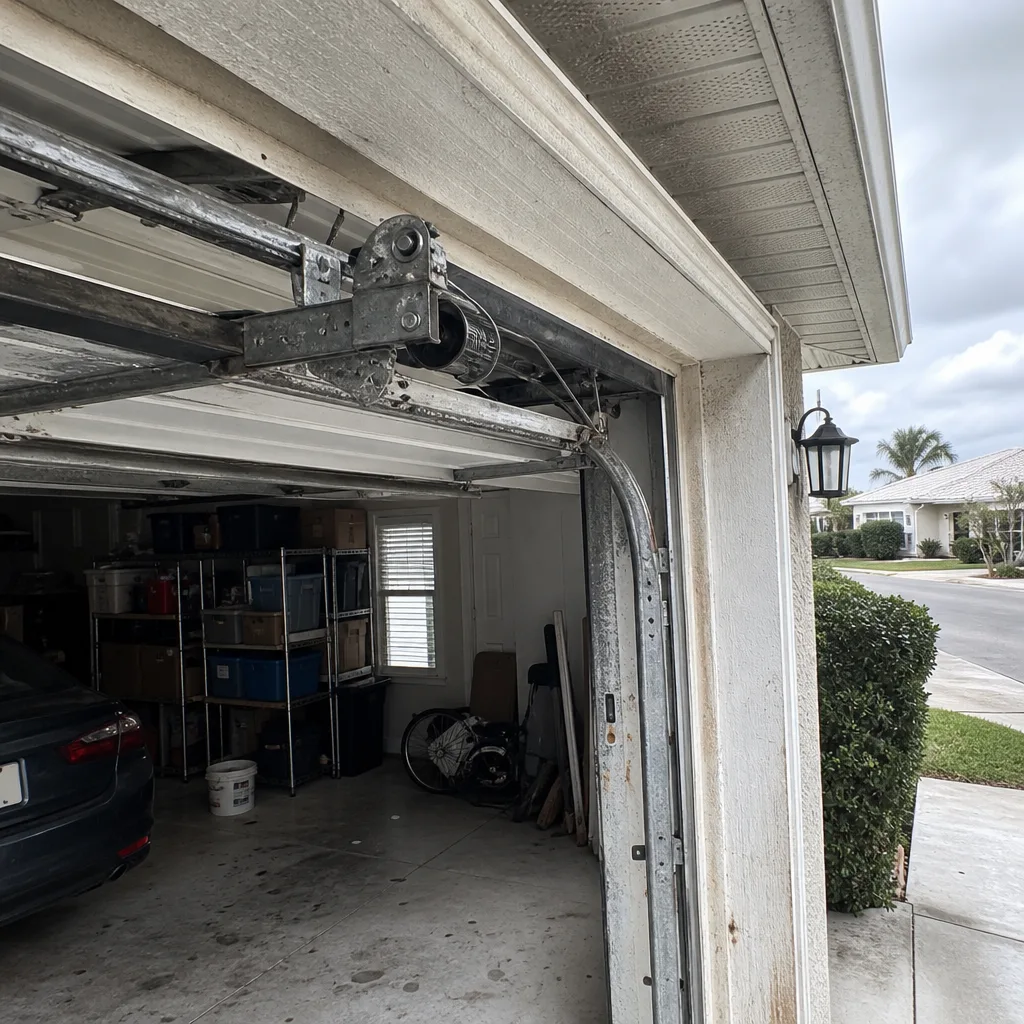
Every three to five years, have the springs and cables inspected even if nothing feels wrong. In The Villages, garage door springs live hard lives. The heat and humidity do not cause failures directly, but the constant expansion and contraction of metal across humid and dry stretches accelerates fatigue. Rust on a spring at a coastal-adjacent humidity level is a slow failure warning, not a cosmetic issue.
What you can skip: any service plan that insists on monthly lubrication, quarterly “tune-ups,” or semi-annual spring replacement. Those are upsells. A well-installed door in The Villages needs far less than that, and any honest technician will tell you so.
Repair or Replace? A Decision Framework for Villages Homeowners
When something breaks, the question is whether to fix the component or replace the whole door. Our DIY vs Professional Garage Door: The The Villages Homeowner’s Decision Guide covers when to call in help, and the honest answer depends on four factors, none of them what a salesperson wants you to hear first.
First, look at the door’s age. A steel door in The Villages that is over 15 years old has already served its expected lifespan. Repairing a broken spring on a 15-year-old door is reasonable. Replacing the panel, the track, and the springs on that same door within a single year is not. You are spending new-door money on old-door bones.
Second, check the condition of the panels. Rust along the bottom edge, especially on the interior side where Florida humidity concentrates, is a structural issue, not a paint issue. If more than two panels show visible rust or warping, replacement is usually the better call.
Third, factor in what you cannot see: the door’s insulation and weather sealing. Older doors in The Villages often have degraded inner seals that let in warm, damp air every single day. That silent inefficiency is a replacement argument even when the door still opens and closes fine.
Fourth, think about the opener. If the door needs replacement and your opener is more than 10 years old, replacing both at once is usually cheaper than doing them a year apart. The labor is consolidated, and the new door can be paired with an opener sized exactly for its weight.
Our position is simple: we will tell you if a repair buys you five more years or if a replacement is the better financial decision. We have no incentive to push one option over the other because we do both. From a broken spring to a brand-new door, one call covers it.
Common Mistakes to Avoid
- Buying a door without checking the HOA color list. In The Villages communities, a door in the wrong palette can be rejected after purchase and leave you fighting for a refund. Get approval before the order is placed, not after.
- Choosing a door by square-foot price alone. A $900 door that rusts through in seven years costs more per year than a $1,800 door that lasts fifteen. In this humidity corridor, rust resistance is not a premium feature. It is the baseline.
- Keeping an old opener on a new door. The opener and the door must be matched by weight, not habit. An underpowered opener fails early and the warranty claim gets denied because the mismatch is visible to the manufacturer.
- Skipping the bottom weather seal replacement. It is the cheapest component on the door and the one that prevents the most expensive long-term problem: moisture damage, pest entry, and mold in the garage. In The Villages humidity, a cracked seal is a slow leak.
- Ignoring a noisy door as a quirk. Grinding, squealing, or a door that shudders halfway up is usually a balance or roller issue. Every cycle you ignore it, you are adding wear to the springs, the cables, and the opener motor.
- Using a general handyman for opener electronics. Door openers in The Villages homes increasingly run on smart-home protocols specific to LiftMaster, Chamberlain, or Genie. A generalist who guesses at the wiring creates problems that cost more to undo than the original repair.
- Waiting for a full failure before calling. Springs give warning signs, cables fray visibly, and openers slow down before they die. Catching a failing component at the warning stage usually saves the cost of the cascade damage that follows.
When to Call a Professional
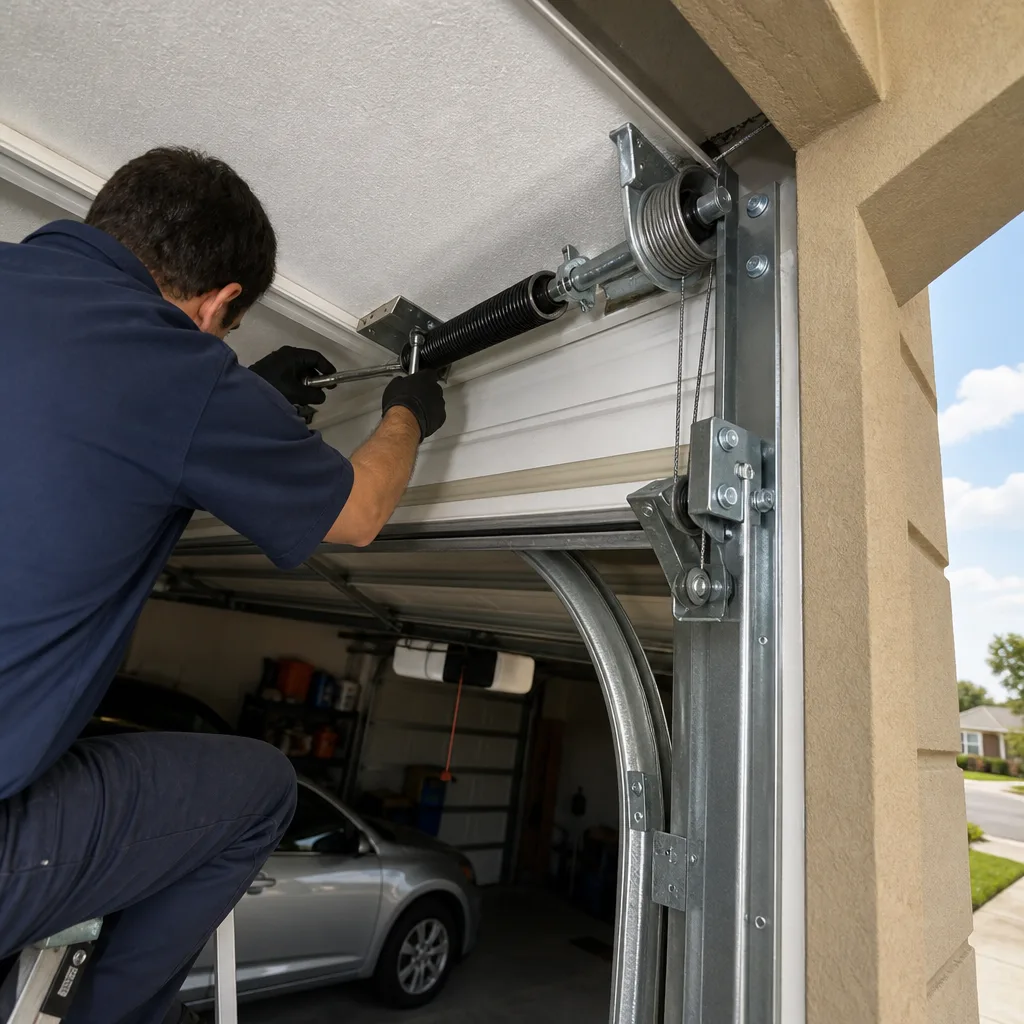
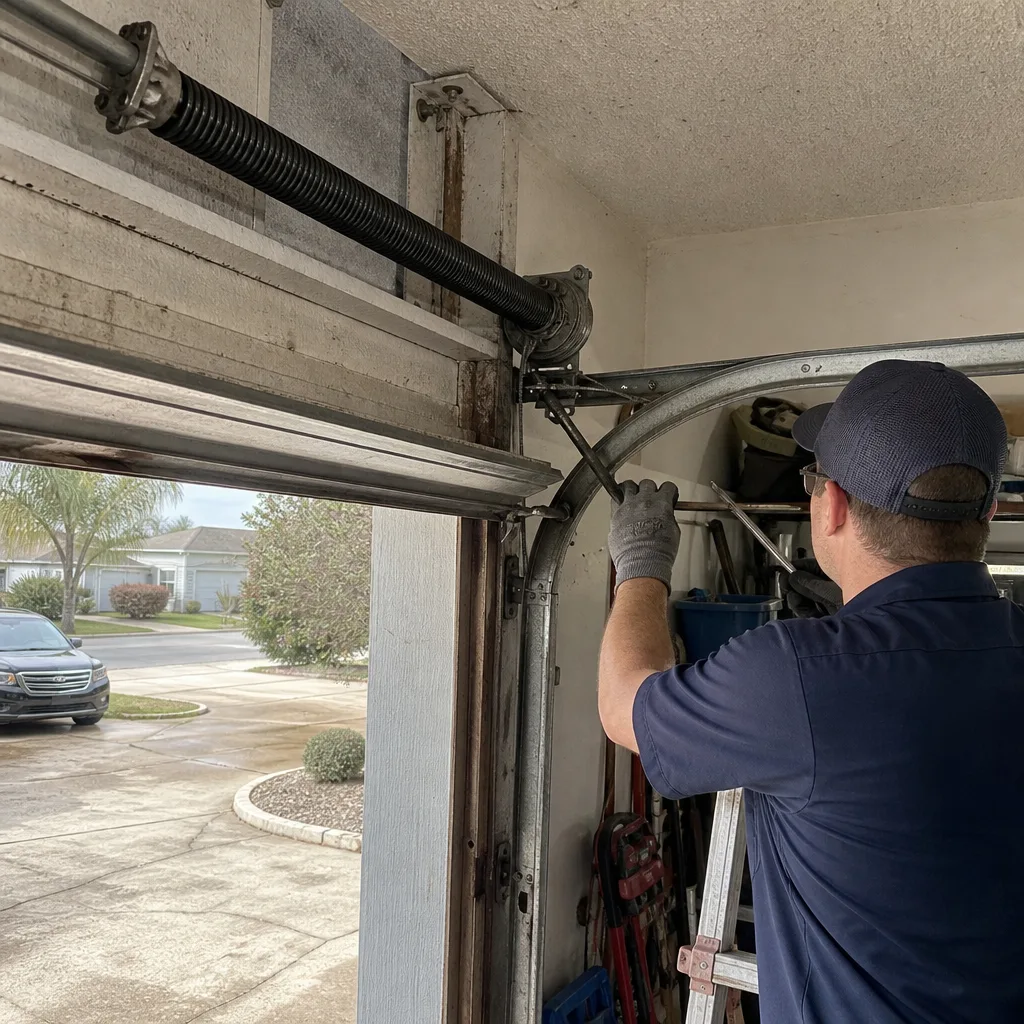
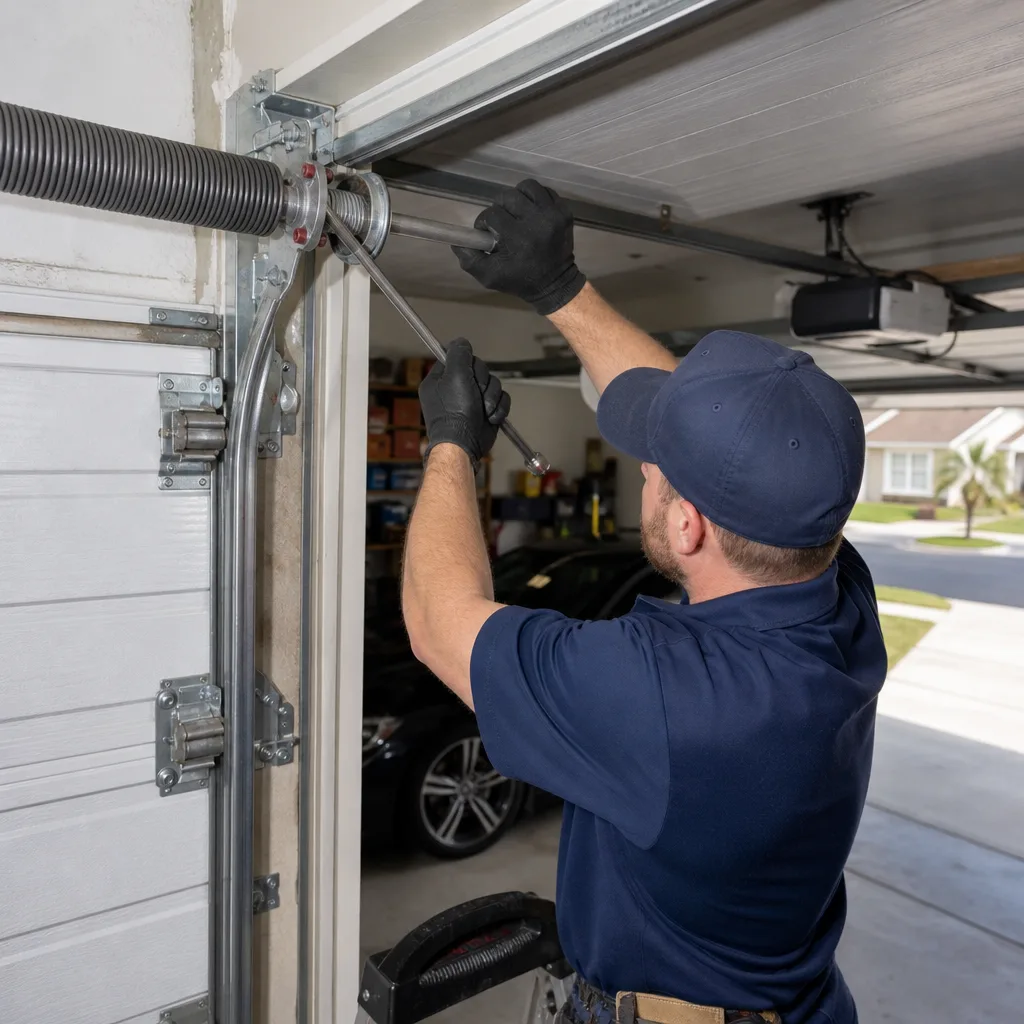
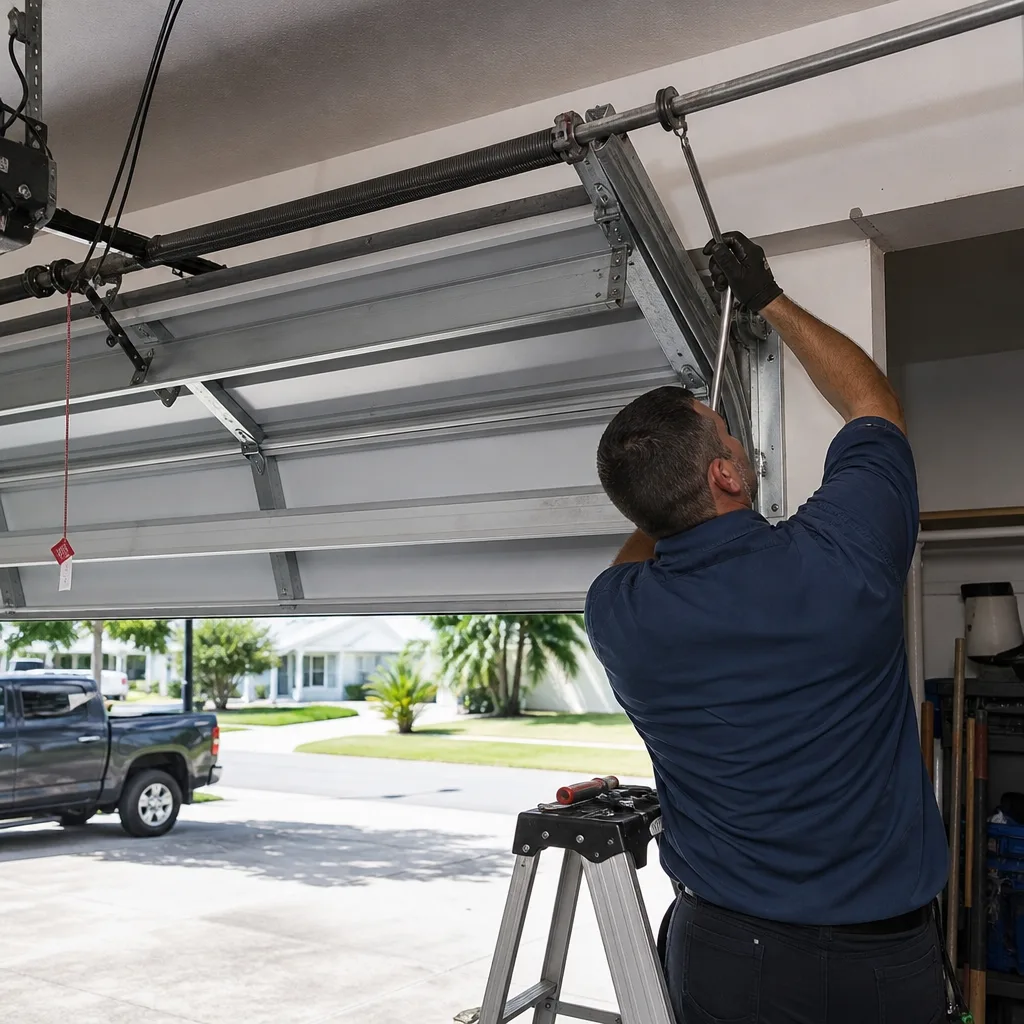
Any issue involving springs, cables, or the torsion system is a professional job. These components are under high tension, and a failed spring can release that tension instantly. Do not attempt to remove, adjust, or inspect a torsion spring yourself. The same rule applies to any opener repair that involves the motor, logic board, or safety sensor wiring. These are not DIY tasks.
You should also call a professional when you are deciding between repair and replacement and need an unbiased read on the door’s remaining life. The Villages Garage Door Service offers free estimates in The Villages, call (855) 382-0952 and we will assess the door, the opener, and the track, then give you a straight answer on the most cost-effective path.
Frequently Asked Questions
A well-maintained, rust-treated steel door in The Villages typically lasts 12 to 18 years, while a budget single-layer door usually shows significant rust or panel failure within 6 to 10 years due to sustained humidity exposure. Call (855) 382-0952 for a condition assessment if your door is over 12 years old.
Brands like Clopay, Amarr, and Wayne Dalton all produce rust-treated steel and aluminum doors that perform well in Florida humidity, provided they are ordered with interior and exterior rust protection rather than the base coating. Mid-grade insulated steel from any of these three brands is a solid choice for The Villages.
Yes, most deed-restricted communities in The Villages require architectural review and written approval before a new garage door is installed, including the manufacturer, material, and exact color code. Submitting with complete specs speeds the process considerably.
Many spring and cable repairs in The Villages can be completed the same day if the parts are standard and in stock on our trucks. Call (855) 382-0952 and we will tell you honestly whether your repair is a same-day job or requires a part order.
A budget uninsulated door in The Villages runs roughly $600 to $1,100 installed, a mid-grade insulated door $1,200 to $2,200, and a premium wood-grain or heavy-gauge aluminum door $2,500 to $4,500, with HOA-required colors sometimes adding a small upcharge. Call (855) 382-0952 for a free, written estimate on your specific home.
Not always, but if your opener is more than 10 years old, replacing it alongside the door is usually the smarter financial move because the labor is consolidated and the opener can be matched to the new door’s exact weight. We recommend evaluating both together.
The Bottom Line
A garage door in The Villages is a system, not a single purchase. The material must resist humidity, the color must clear HOA review, and the opener must be matched to the door’s weight. Budget doors often cost more over a decade than mid-grade doors. Service intervals are light in this climate, but weather seals and springs need attention more than national guides suggest. Most importantly, brand-specific knowledge saves time and money. We work on the brand you already own, from LiftMaster and Genie to Clopay and Amarr, and we handle repair, openers, and installation under one roof. One call, any garage door issue. Call (855) 382-0952 for a free estimate in The Villages.
Written by the team at The Villages Garage Door Service, serving The Villages since 2016.
See the difference
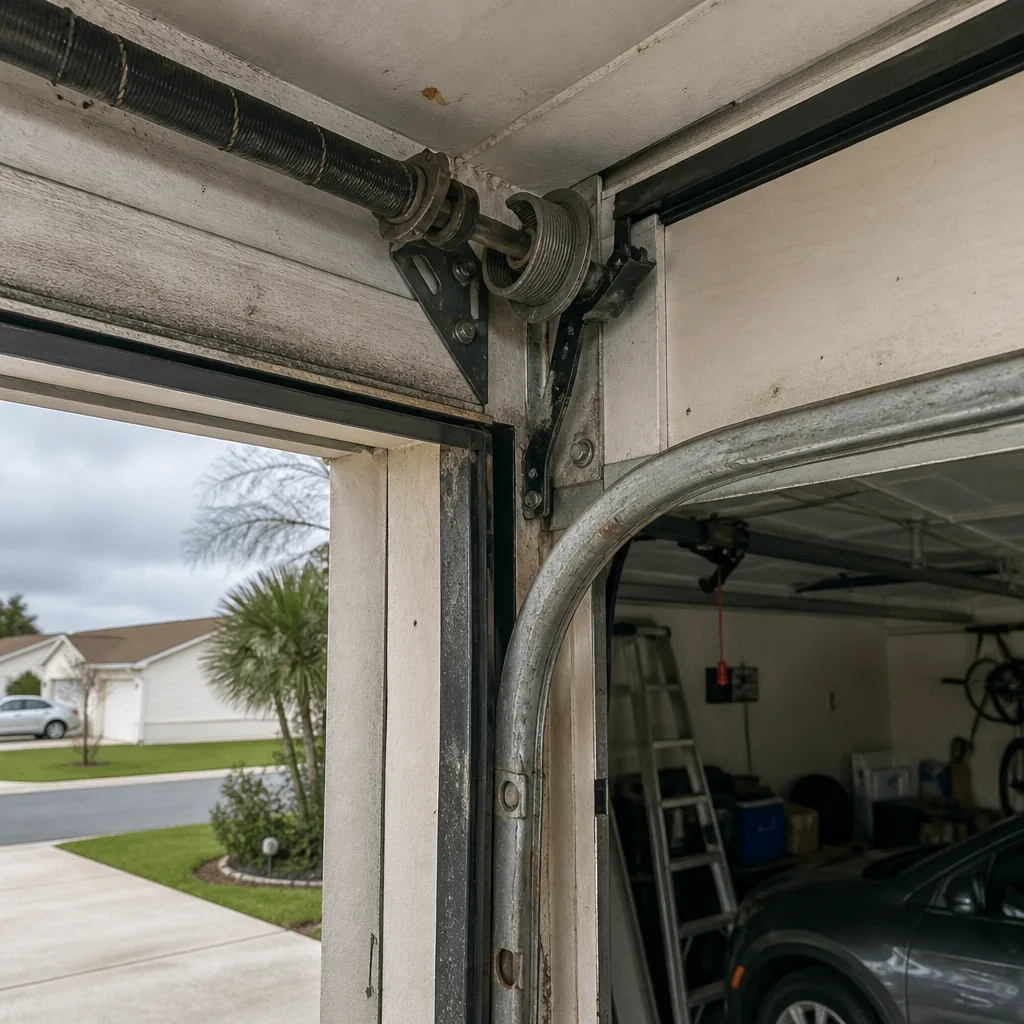 Before
 After
 Before
 After
 Before
 After